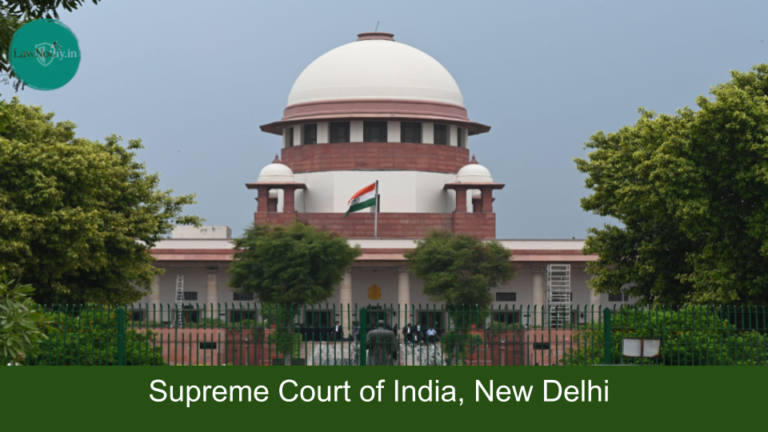
New Delhi : The Supreme Court of India has delivered a split verdict in the “larger conspiracy” case linked to the 2020 Northeast Delhi communal riots, denying bail to Umar Khalid and Sharjeel Imam, while granting bail to five other accused. The decision was pronounced by a Bench of Justices Aravind Kumar and N.V. Anjaria, which had reserved its judgment on December 10, 2025.
Allowing the appeals of Gulfisha Fatima, Meeran Haider, Shifa-ur-Rehman, Mohd. Saleem Khan, and Shadab Ahmed, the Court held that their continued detention was not justified given the “facilitatory” nature of the roles attributed to them. In contrast, the Bench concluded that Khalid and Imam stood on a “qualitatively different footing,” with prosecution material alleging their central involvement in planning, mobilisation, and strategic direction of the alleged conspiracy.
The Court said it was satisfied that the material on record disclosed prima facie allegations against Khalid and Imam, thereby attracting the statutory bar on bail under Section 43D(5) of the Unlawful Activities (Prevention) Act, 1967. At this stage, the Bench held, their release on bail was not warranted.
In a detailed interpretation of the UAPA, the Court described Section 43D(5) as a conscious legislative departure from ordinary bail principles. At the same time, it clarified that the provision does not oust judicial scrutiny. Courts must still assess whether the prosecution material crosses the statutory threshold, though bail proceedings are not meant to test defences in detail.
While examining Section 15 of the UAPA, which defines terrorist acts, the Bench observed that the provision cannot be read narrowly to cover only overt acts of violence or the use of conventional weapons. Acts carried out by “any other means” that disrupt civic life or paralyse economic activity with the intent to threaten national security may also fall within its scope.
On the issue of prolonged pre-trial incarceration, the Court acknowledged that Article 21 of the Constitution requires the State to justify extended custody, particularly where detention has crossed five years. However, it cautioned that in UAPA cases, delay in trial cannot automatically override statutory safeguards, though such delay does trigger heightened judicial scrutiny.
While denying bail to Khalid and Imam for now, the Court left the door open for future relief. It permitted them to move fresh bail applications after the examination of protected witnesses or after one year, directing that such pleas be considered independently of the present order. The trial court was also instructed to expedite proceedings and ensure that the examination of protected witnesses is carried forward without delay.
The ruling partially settles a batch of appeals challenging a September 2025 order of the Delhi High Court, which had refused bail to all accused, observing that violence in the name of protest does not amount to free speech. The prosecution has consistently maintained that the riots were a pre-planned conspiracy aimed at destabilising the government.
The case relates to communal violence that broke out in Northeast Delhi in February 2020 during protests against the Citizenship Amendment Act, resulting in 53 deaths and injuries to over 700 people. Khalid and Imam have remained in custody since September 2020 and January 2020 respectively.
Case Title: Gulfisha Fatima v. State of NCT of Delhi & Connected Matters