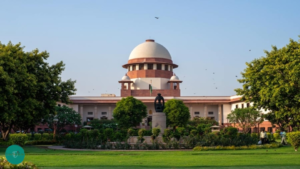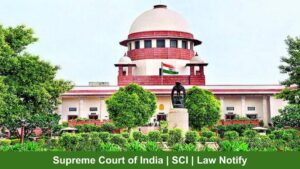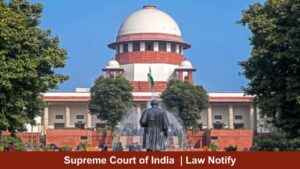
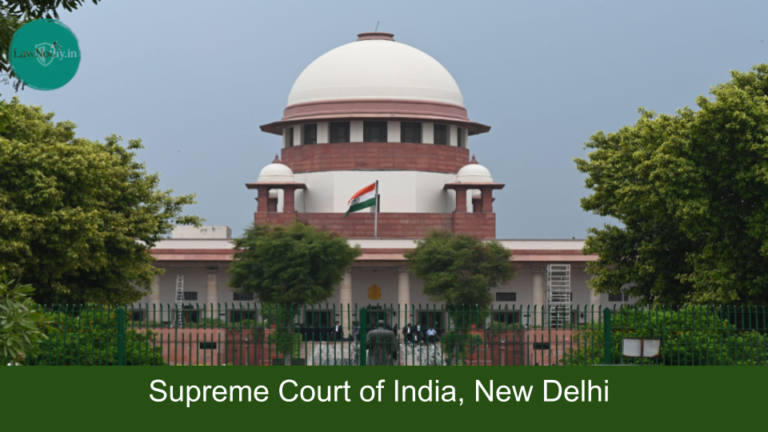
The Supreme Court of India has asked the Bar Council of India and the Union Government to respond to a petition filed by the Supreme Court Women Lawyers Association (SCWLA). The petition asks the Court to declare that the Sexual Harassment of Women at Workplace (Prevention, Prohibition and Redressal) Act, 2013, also applies to women lawyers who work and practise in courts. The petition also seeks a direction that all Bar Councils and Bar Associations in the country must set up Internal Complaints Committees under the POSH Act.
This petition challenges a judgment of the Bombay High Court delivered on 7 July 2025. The High Court had ruled that the POSH Act does not apply to complaints made by women advocates before Bar Councils because the Act is meant for situations involving an employer–employee relationship, which does not exist between Bar Councils and advocates.
Senior Advocate Mahalakshmi Pavani, appearing for SCWLA, argued that the High Court’s view defeats the purpose of the POSH Act. She said the Act is meant to protect all working women, including those who are not formally employed. She pointed out that the Act defines “aggrieved woman” and “workplace” in broad terms and includes non-traditional workplaces like courts and professional bodies. She also said that the Advocates Act, 1961, does not have confidentiality safeguards or time-bound inquiry procedures, leaving women advocates without proper remedies.
The petitioners relied on earlier Supreme Court rulings, including Vishaka and Medha Kotwal Lele, which require all institutions to put in place mechanisms to prevent sexual harassment, even if there is no employer–employee relationship. They argued that women advocates should not be forced to rely only on Section 35 of the Advocates Act, which deals with professional misconduct and does not provide proper support or relief for sexual harassment cases.
The Court also heard a connected case filed by Advocate Seema Joshi. It was noted that many Gender Sensitisation and ICC bodies in courts, including the Supreme Court GSICC, already handle complaints from independent women lawyers, which shows that POSH mechanisms apply beyond traditional workplaces.
The Bench of Justice B.V. Nagarathna and Justice R. Mahadevan said the issue is important and affects women lawyers across the country. The petitioners have asked for interim directions to ensure Bar Councils and Bar Associations continue to maintain ICCs until the matter is finally decided.
Replies from the Bar Council of India and the Government will be filed before the next hearing. The Court’s decision is expected to significantly impact workplace safety and professional regulations in the legal field.
Case details:
Supreme Court Women Lawyers Association v. Bar Council of India & Others
Tagged with: Seema Joshi v. Bar Council of India & Others
Diary No.: 49533 of 2025
Bench: Justice B.V. Nagarathna, Justice R. Mahadevan
Order Date: As per Supreme Court record
For Petitioners: Sr. Adv. Mahalakshmi Pavani, AOR Sneha Kalita, and Advocate Seema Joshi (tagged matter)