 111
111 2
2 34
34 5
5 6
6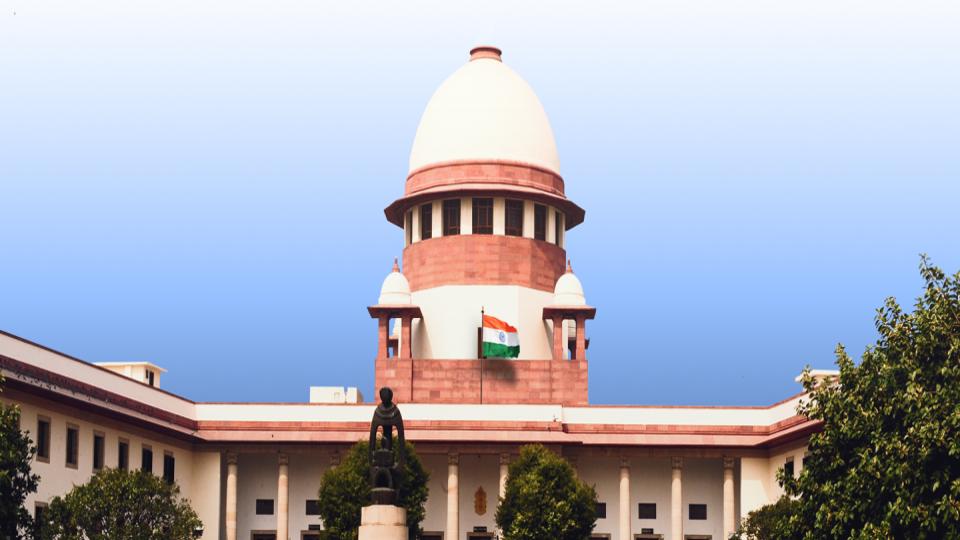 7
7 8
8 910
910
Law Notify : A writ petition questioning the constitutional validity of the University Grants Commission (Promotion of Equity in Higher Education Institutions) Regulations, 2026, was mentioned on Tuesday before the Supreme Court, with the petitioners seeking urgent listing of the matter.
The plea was orally mentioned before a Bench headed by Chief Justice of India Surya Kant. Counsel appearing for the petitioners argued that certain provisions of the newly notified regulations institutionalise differential treatment among students on the basis of caste, thereby excluding large sections of students from statutory protection against caste-based discrimination.
According to the petitioners, specific clauses in the regulatory framework restrict the definition of caste-based discrimination only to members of the Scheduled Castes, Scheduled Tribes and Other Backward Classes. It was contended that this exclusionary definition effectively denies students from other caste groups access to grievance redressal mechanisms and institutional safeguards, even where discrimination is alleged to be rooted in caste identity.
The counsel submitted that the impugned provisions violate Articles 14 and 15 of the Constitution by undermining the principle of equality and failing to meet the standard of substantive equality. It was argued that permitting the regulations to operate in their present form would result in arbitrary and discriminatory outcomes.
The Supreme Court noted that it was aware of the controversy surrounding the regulations and indicated that the matter could be listed after procedural defects in the filing are cured. The petition, titled Rahul Diwan and Others v. Union of India (Diary No. 5477/2026), is yet to be formally numbered.
The challenge primarily targets Regulation 3(c) of the 2026 Regulations, which defines caste-based discrimination exclusively as discrimination against persons belonging to SC, ST and OBC categories. The petitioners have argued that such a narrow definition adopts an exclusionary approach that is constitutionally impermissible.
A similar challenge had earlier been raised by Advocate Vineet Jindal, who contended that Regulation 3(c) lacks constitutional neutrality and violates the guarantee of equal protection of laws. That plea sought a caste-neutral definition of caste-based discrimination, extending remedial protection to all individuals subjected to discriminatory treatment based on caste, irrespective of social classification.
The 2026 Regulations were framed by the UGC pursuant to proceedings initiated in 2019, following public interest litigations filed by Radhika Vemula and Abeda Salim Tadvi, the mothers of Rohit Vemula and Payal Tadvi. The petitions sought a comprehensive and enforceable framework to address caste-based discrimination in higher educational institutions. Both students had reportedly died by suicide after alleging sustained caste-based harassment.
During the pendency of those cases, the Union government informed the Supreme Court in March 2025 that draft regulations had been prepared to address systemic discrimination on campuses. The Court stressed the need for a robust and institutionally accountable mechanism to tackle entrenched discriminatory practices.
In April 2025, the Supreme Court allowed the UGC to finalise and notify the draft regulations, while granting liberty to petitioners and stakeholders to submit suggestions. In September 2025, the Court further directed the UGC to consider stakeholder representations within a stipulated timeframe before taking a final decision.
The regulations were ultimately notified in January 2026. Their implementation has now prompted renewed constitutional scrutiny, with petitioners arguing that while the objective of promoting equity in higher education is laudable, the regulatory framework fails to conform to constitutional principles of equality, non-arbitrariness and inclusive protection, as recognised in landmark judicial precedents.
The Supreme Court is expected to consider the request for urgent listing once procedural requirements are fulfilled.