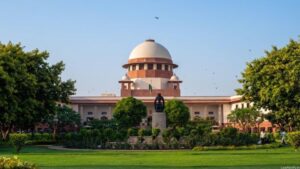
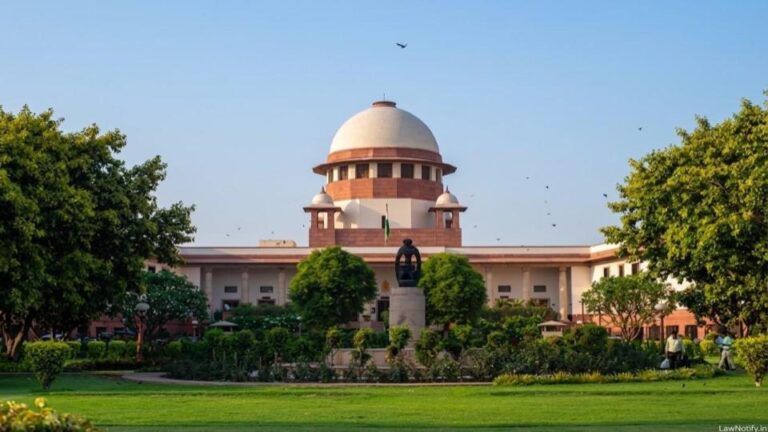
March 23, 2026 : The Supreme Court of India’s evolving approach to social media regulation reflects a calibrated attempt to reconcile two competing imperatives: the protection of free expression and the need to address the risks inherent in digital communication. As online platforms increasingly shape public discourse, the Court has recognised that the scale, speed, and impact of digital speech require a more refined legal framework than traditional modes of expression.
A Bench comprising Chief Justice of India Justice Surya Kant, Justice Joymalya Bagchi, and Justice Vipul Pancholi underscored that the constitutional guarantee of free speech under Article 19(1)(a) extends fully to digital platforms. Social media is not viewed as a separate or inferior medium, but as an extension of the democratic public sphere where individuals engage, exchange ideas, and participate in civic dialogue.
At the same time, the Court has reiterated that this freedom is not absolute. It remains subject to reasonable restrictions under Article 19(2), particularly in cases involving public order, defamation, incitement, or similar harms. Judicial observations indicate a growing concern over the misuse of online platforms, especially where content is crafted to provoke, mislead, or cause harm while being shielded as free expression.
The Court has taken note of the distinctive nature of digital speech. Unlike conventional forms, online content can be disseminated instantly and amplified exponentially, often resulting in tangible real-world consequences such as reputational injury, social unrest, and erosion of institutional trust. This has led to the recognition that unregulated digital spaces may pose systemic risks.
However, the Court has been equally cautious in guarding against excessive state intervention. It has consistently emphasised that any regulatory measure must adhere to constitutional principles, particularly necessity and proportionality. Restrictions must be narrowly tailored and must not stifle legitimate dissent or democratic participation. The judiciary has warned against overbroad regulation that could create a chilling effect on free expression.
A key dimension of the Court’s reasoning lies in differentiating between categories of speech within the digital ecosystem. Political speech, being central to democratic functioning, warrants the highest degree of protection. In contrast, other forms of expression—such as commercial content or speech targeting individuals or communities—may attract closer scrutiny where they implicate dignity, reputation, or public order.
The Court has also highlighted the need for a structured and coherent regulatory framework to address challenges such as misinformation, harmful content, and the monetisation of speech. Rather than relying solely on case-by-case adjudication, it has encouraged the formulation of comprehensive guidelines that remain anchored in constitutional values. Such a framework, the Court suggests, should be developed through a consultative process involving multiple stakeholders, reflecting the complexity of the digital landscape.
Overall, the Supreme Court’s approach represents a careful balancing exercise. It affirms social media as a critical space for democratic engagement while recognising that the absence of safeguards can undermine both individual rights and societal interests. The central challenge lies in designing regulation that curbs misuse without diluting the essence of free speech, ensuring that the digital public sphere remains both open and accountable.