 1112
1112 3
3 4
4 5
5 678
678 9
9 10
10
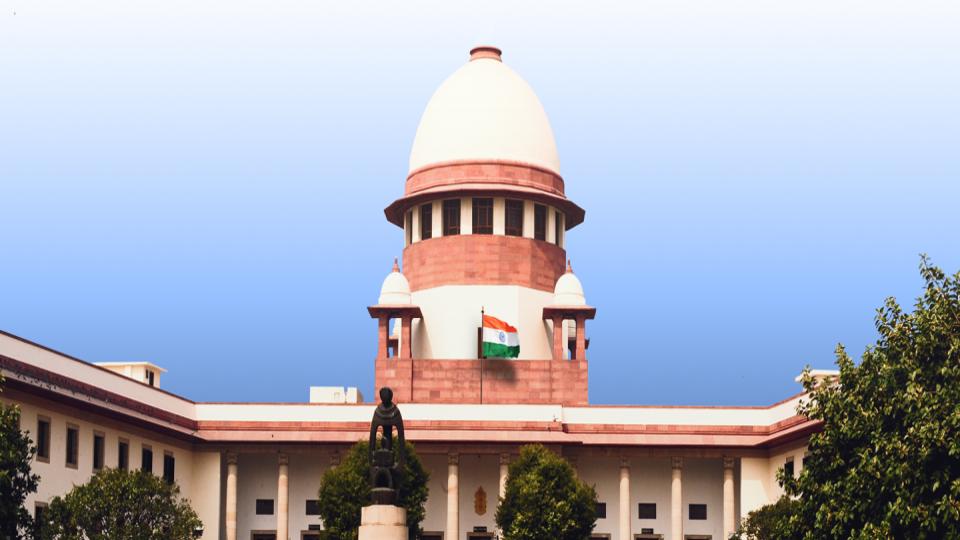
The Supreme Court of India on Wednesday directed the Directorate of Enforcement (ED) to constitute a dedicated Special Investigation Team (SIT) to carry out a comprehensive and time-bound probe into allegations of large-scale bank fraud involving Reliance Communications Limited (RCOM), its group companies, and industrialist Anil Ambani.
A Bench led by the Chief Justice underscored that the scale and complexity of the alleged financial irregularities warranted investigation under the direct supervision of senior ED officials. The Court stressed that the probe must be pursued with institutional seriousness and carried to its logical conclusion in line with the objectives of the Prevention of Money Laundering Act (PMLA), 2002.
During the hearing, the Court formally recorded an undertaking on behalf of Anil Ambani that he would not travel abroad without prior permission. This assurance was noted in view of concerns raised about potential flight risk, with the Bench directing authorities to take all lawful preventive steps to ensure the investigation is not obstructed.
The Court also issued specific directions to the Central Bureau of Investigation to examine the possible role of public sector bank officials in the alleged fraud. It observed that the agency must investigate whether loan disbursements were made in breach of banking norms or through collusion, conspiracy, or abuse of official position. The Bench clarified that the inquiry should extend to any nexus between corporate borrowers and bank functionaries, including offences under Section 120B of the Indian Penal Code and the Prevention of Corruption Act, 1988, wherever applicable.
Taking note of submissions pointing to unexplained delays by both the ED and the CBI, the Court expressed concern given the magnitude of public funds involved. Both agencies have been directed to file detailed status reports within four weeks, with the Court indicating that it would continue periodic monitoring of the investigation.
In oral observations, the Bench remarked that allegations involving the siphoning and diversion of thousands of crores of rupees could not be brushed aside as routine commercial defaults. It emphasised that investigative agencies are expected to act independently, fairly, and with adequate forensic expertise, particularly in matters posing systemic risks to the banking sector.
The proceedings stem from a petition filed by former Union Secretary EAS Sarma, who has sought a court-monitored investigation into what he describes as one of the largest corporate frauds in recent years. The petition highlights that although a CBI FIR was registered in August 2025, progress has been slow and limited in scope, addressing only a fraction of the alleged wrongdoing.
Counsel for Anil Ambani and the Anil Dhirubhai Ambani Group disputed allegations of siphoning, arguing that financial distress and corporate insolvency should not automatically be equated with criminal diversion of funds. While not opposing the formation of an SIT, they suggested that an expert-led regulatory examination would be more appropriate than a purely prosecutorial approach.
These arguments were contested by the Union of India, which relied on forensic audit reports commissioned by lending banks. According to the Union, independent auditors have found indicators of deliberate fund diversion, justifying criminal investigation. The Court observed that where prima facie intent to siphon public funds is evident, the application of criminal law cannot be ruled out.
The Union also informed the Court that insolvency proceedings under the Insolvency and Bankruptcy Code, 2016 are ongoing. However, the Bench expressed concern over the conduct of the resolution professional, noting apparent deficiencies in the corporate insolvency resolution process that may require further scrutiny.
As per the pleadings, RCOM and its subsidiaries, including Reliance Infratel and Reliance Telecom, borrowed around ₹31,580 crore between 2013 and 2017 from a consortium of banks led by the State Bank of India. A forensic audit reportedly pointed to large-scale diversion of funds, including repayment of unrelated liabilities, transfers to related parties, circular transactions, and transactions allegedly aimed at masking evergreening of loans.
The petition also flags a nearly five-year gap between the submission of the forensic audit report to SBI in October 2020 and the filing of a formal complaint in August 2025. This delay, it is argued, raises serious questions of institutional lapse and possible regulatory inaction.
Concluding the hearing, the Court indicated that sustained judicial oversight was necessary to ensure a transparent and accountable investigation into a matter involving extensive public funds and potential systemic failures within the banking framework.