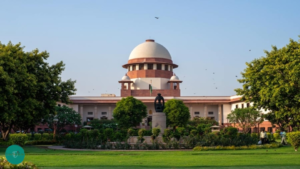

January 14, 2026 : The Supreme Court on Tuesday raised an important constitutional question: can a person’s right to vote be taken away while the Central government is still deciding whether that person is an Indian citizen?
The issue came up before a Bench headed by Chief Justice of India Surya Kant and Justice Joymalya Bagchi during hearings on a batch of petitions challenging the Special Intensive Revision of electoral rolls being carried out in several states. The revision exercise, undertaken by the Election Commission of India, involves verifying voter details and removing ineligible names from the rolls.
Senior Advocate Rakesh Dwivedi, appearing for the Election Commission, told the Court that the poll body has the legal authority to closely examine voter eligibility, including questions related to citizenship. He explained that this scrutiny is “inquisitorial” in nature, meaning election officials can examine documents and facts to decide whether a person should remain on the voter list. According to him, such scrutiny can even lead to deletion of a name from the electoral roll, even if the final decision on citizenship by the Central government is still pending.
Dwivedi argued that this power flows from Article 326 of the Constitution, the Representation of the People Act, 1950, and the Registration of Electors Rules, 1960. Together, these laws allow Electoral Registration Officers to verify whether a person meets the conditions to be a voter. He stressed that this process does not amount to a final decision on citizenship but is limited to deciding eligibility for voting.
The Court, however, expressed concern about the consequences of such deletions. It asked whether suspending a person’s voting rights while the citizenship question is yet to be decided by the Union government could result in unfair disenfranchisement.
In response, Dwivedi said that when cases are referred to the Central government under the Citizenship Act, 1955, the focus is on determining whether a person is a foreign national and whether they have the right to stay in India. For the narrower purpose of keeping electoral rolls accurate and free from ineligible names, he maintained that the Election Commission can act independently.
He added that administrative authorities often take interim decisions that affect rights while final determinations are pending. According to him, the electoral system cannot be stalled simply because some cases of doubtful eligibility are under examination. He also pointed out that affected individuals have remedies, including statutory appeals and approaching constitutional courts, if the action is illegal or unfair.
Dwivedi reminded the Court that the right to vote is a statutory right, not a fundamental one, and is therefore subject to regulation by law. He acknowledged that large administrative exercises can cause hardship but said governance requires balancing individual inconvenience with the need to protect the integrity of the electoral process.
The Supreme Court noted these submissions and listed the matter for further hearing on January 15. On the next date, the Bench is expected to closely examine the legal limits on electoral roll revisions and whether voting rights can be temporarily taken away while citizenship issues remain unresolved.