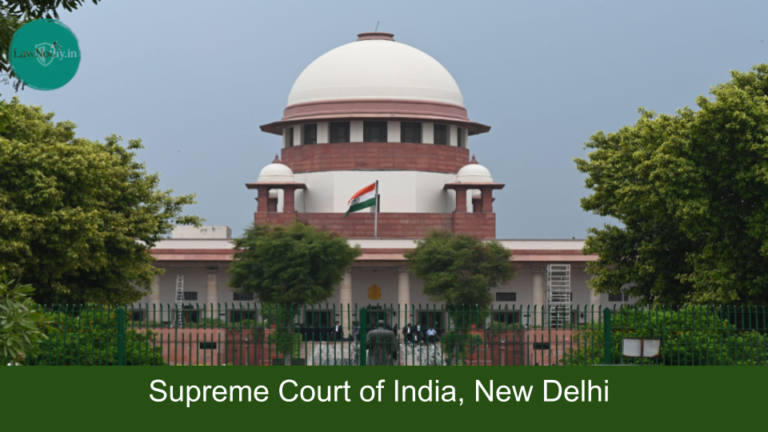
Law Notify, January 15, 2026 : The Supreme Court on Thursday reserved its judgment on a petition seeking judicial approval to withdraw life-sustaining treatment for a 32-year-old man who has remained in an irreversible permanent vegetative state for over 12 years following a fall from a building.
A Bench comprising Justice J.B. Pardiwala and Justice K.V. Viswanathan was hearing a miscellaneous application filed by the patient’s father. The plea invoked settled constitutional principles on passive euthanasia and the right to die with dignity, contending that these flow from the right to life under Article 21 of the Constitution. The application sought permission to discontinue all life-prolonging medical interventions currently sustaining the patient.
The case was argued within the framework laid down by the Constitution Bench in Common Cause v. Union of India (2018), as refined by subsequent procedural directions issued in January 2023. These guidelines mandate a structured, multi-tiered decision-making process, including evaluation by Primary and Secondary Medical Boards, before courts may permit withdrawal of life support in cases of terminal illness or permanent vegetative states. Counsel for the petitioner submitted that the entire prescribed protocol had been followed.
The Court was informed that both medical boards constituted in accordance with its directions had returned concurrent findings that the patient’s neurological condition was irreversible and that there was no realistic possibility of recovery.
Tracing the evolution of Indian end-of-life jurisprudence, counsel referred to earlier landmark rulings, culminating in Common Cause, where the Supreme Court recognised that the right to life includes the right to die with dignity and affirmed the legality of passive euthanasia subject to strict safeguards. It was argued that where both medical boards are in agreement, the process ordinarily reaches finality unless exceptional circumstances warrant further review.
The petitioner also urged broader institutional reforms, suggesting the creation of standing panels of medical specialists in government hospitals to ensure timely constitution of medical boards in such cases. Reference was made to steps reportedly taken by states such as Goa, Maharashtra and Karnataka. The substantive relief sought was the withdrawal of clinically assisted nutrition and hydration, to be carried out under recognised palliative care protocols and strict medical supervision at the Institute of Human Behaviour and Allied Sciences, Delhi.
During the hearing, the Bench considered earlier observations of the Delhi High Court suggesting that the patient was not being mechanically sustained and could survive physiologically on his own. The petitioner countered that these observations were made without a definitive medical assessment and did not reflect the patient’s actual clinical condition.
Counsel for the Union of India broadly agreed with the medical opinion that the patient was in a permanent vegetative state with no chance of recovery. The Centre also pointed out that despite the authoritative ruling in Common Cause, there appeared to be no reported instance where its directions had been fully implemented in practice, highlighting the precedential significance of the present case. It stressed that the informed views of family members and caregivers must carry substantial weight under the “best interests” doctrine.
On the legal position, it was reiterated that passive euthanasia, involving omission rather than commission, is constitutionally permissible as long as death results from the underlying medical condition and not from any affirmative medical act. A comparison was drawn with the Aruna Shanbaug case, where withdrawal of life support was opposed by caregivers and the patient showed limited responsiveness, factors said to be absent here.
As per reports placed before the Court, the Primary Medical Board noted that the patient is bedridden, dependent on a tracheostomy for breathing and a gastrostomy for nutrition, and has developed extensive pressure sores, with recovery assessed as clinically implausible. A Secondary Medical Board constituted by AIIMS reached similar conclusions. Taking note of the gravity of the situation, the Bench indicated that it would interact personally with the patient’s parents before delivering its final verdict.
The application arises from earlier proceedings in which the petitioner approached the Supreme Court in 2024 after the Delhi High Court declined to order the constitution of a medical board. While substantive relief was then refused, the State of Uttar Pradesh had undertaken to bear the cost of continued treatment. The present plea was filed citing further deterioration in the patient’s condition and the absence of any therapeutic response.