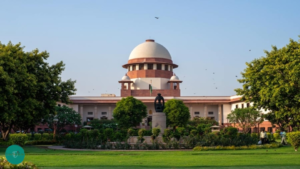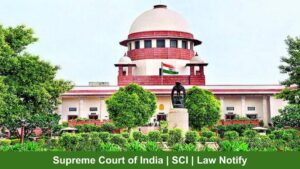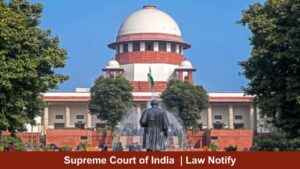
The Supreme Court has taken a firm stand against an NGO that tried to reopen a settled constitutional question about the rights of minority educational institutions under the Right to Education Act. In a sharp order, the Court imposed a cost of ₹1 lakh on the petitioner, noting that it was angered by the attempt to challenge a judgment delivered by a Constitution Bench.
The petition was filed under Article 32 and asked the Court to reconsider its 2014 ruling in Pramati Educational and Cultural Trust v. Union of India. That landmark decision held that minority institutions are exempt from certain RTE requirements, including the rule that mandates reserving a quarter of all seats for children from disadvantaged backgrounds. The NGO argued that the exemption created an uneven balance between the right to education under Article 21A and the protections given to minority institutions under Article 30. It also sought to extend the RTE Act to all minority schools, whether aided or unaided, and requested the formation of an expert committee to find a way to harmonise both constitutional rights.
A bench of Justices B.V. Nagarathna and R. Mahadevan reacted strongly. They made it clear that a writ petition cannot be used to reopen or attack a Supreme Court judgment, especially one delivered by a Constitution Bench. The judges warned that allowing such challenges would undermine judicial hierarchy and the finality of the Court’s rulings, saying the entire system would risk collapsing if litigants were permitted to revisit settled law through Article 32.
The Court also refused to let the petitioner withdraw the plea without consequence. It noted that filing such a petition reflected either a misunderstanding of constitutional procedure or a deliberate misuse of legal remedies. The bench added that those who draft or advise on such petitions may also need to be held responsible, since the legal profession plays a key role in maintaining respect for the judicial process.
By directing the NGO to deposit ₹1 lakh, the Court sent a clear message that attempts to bypass established constitutional avenues like review or curative petitions will not be tolerated. The ruling reinforces the finality of Supreme Court judgments and upholds the autonomy of minority educational institutions as recognised in Pramati, unless changed through proper constitutional means.