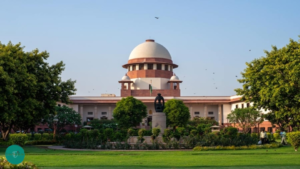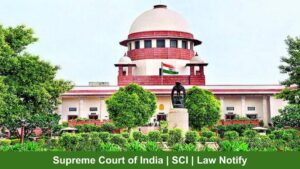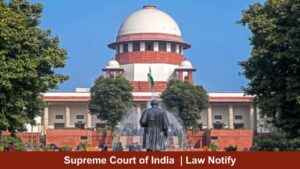
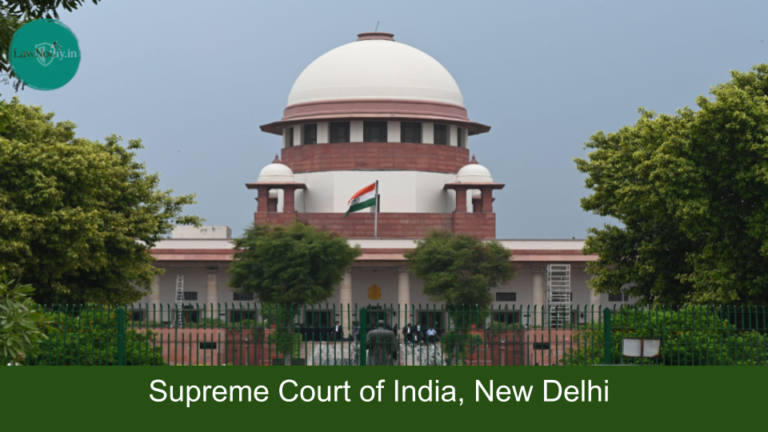
New Delhi : The Supreme Court of India has initiated a suo motu public interest proceeding to examine the legal definition and preservation framework of the Aravalli Range, one of North India’s most fragile and significant ecological systems. The matter has been listed for hearing before a Vacation Bench on December 29, 2025.
The Court’s intervention comes amid growing judicial and public concern over environmental degradation in the Aravalli region, coupled with persistent ambiguity surrounding the legal contours of the term “Aravalli Range.” Conflicting administrative interpretations have led to disputes affecting land use, mining permissions, forest protection, and regulatory enforcement across Haryana, Rajasthan, Delhi, and adjoining areas.
Taking note of reports highlighting inconsistent approaches adopted by authorities and courts, the Supreme Court observed that the absence of a clear and uniform definition has contributed to regulatory uncertainty and potential ecological harm. The Court emphasised that clarity on the scope of the Aravalli Range is essential to ensure consistent application of environmental laws and to prevent irreversible damage to the region.
The suo motu case is listed before a Vacation Bench comprising the Chief Justice of India and Justice Sanjiv Khanna. The Bench underscored the wider public interest involved, noting the Aravalli ecosystem’s critical role in groundwater recharge, air quality regulation, biodiversity conservation, and acting as a natural barrier against desertification.
As per the registry order, the Court has recognised that “the parameters for defining the Aravalli Range, for the purposes of environmental regulation and protection, require judicial examination to ensure legal certainty and ecological preservation.” The decision to list the matter during the winter vacation reflects the urgency attached to the issue.
The development follows a series of judicial proceedings across High Courts and environmental tribunals dealing with mining restrictions, forest clearance disputes, and encroachments in the Aravalli belt. These cases have repeatedly raised questions about the demarcation of forest land versus revenue land, compliance with the Forest Conservation Act, and the need for scientifically grounded mapping of the Aravalli system.
During the December 29 hearing, the Supreme Court is expected to consider whether an authoritative definition of the Aravalli Range is necessary for environmental impact assessments, land-use planning, and grant of statutory clearances. The Court may also examine whether inconsistent definitions have weakened enforcement and facilitated environmental degradation.
Legal observers see the Court’s suo motu action as part of a broader trajectory in Indian environmental jurisprudence, where constitutional courts increasingly address systemic ecological issues through proactive oversight. The case is likely to have far-reaching implications for urban development, mining regulation, and environmental governance in the Aravalli region.
Case Details:
Suo Motu Writ Petition concerning the definition and preservation of the Aravalli Range, listed before the Supreme Court of India, Vacation Bench comprising the Chief Justice of India and Justice Sanjiv Khanna, for hearing on December 29, 2025.