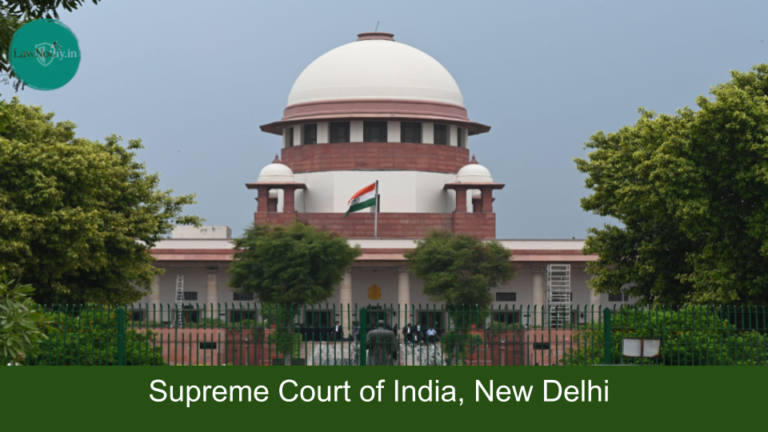
The Supreme Court of India on Wednesday, December 18, examined a medical report submitted by the All India Institute of Medical Sciences (AIIMS) in a case concerning a 32-year-old man who has remained in a persistent vegetative state for the past 12 years. The report was sought in connection with a plea seeking permission for passive euthanasia.
A Division Bench comprising Justice J.B. Pardiwala and Justice K.V. Viswanathan noted that the report had been prepared by a Secondary Medical Board constituted at AIIMS pursuant to the Court’s earlier directions. Additional Solicitor General Aishwarya Bhati informed the Bench that the report had been formally placed on record.
After perusing the medical opinion, Justice Pardiwala described it as a “sad report” and observed that the patient could not be compelled to continue living in such a condition. However, the Court refrained from passing final orders at this stage.
The Bench indicated that it wished to interact personally with the parents of the patient on January 13 before arriving at a final decision. It also directed counsel for the parties to examine the medical report closely and assist the Court through written submissions.
The plea is being considered in light of the guidelines laid down by the Constitution Bench in Common Cause v. Union of India, which regulate the withdrawal of life-sustaining treatment in cases where there is no reasonable possibility of recovery.
The case stems from a petition filed by the patient’s father. The man has been in a persistent vegetative state since 2013 after suffering severe injuries in a fall from a building. According to the plea, the patient has no chance of recovery and is surviving only on clinically assisted nutrition and life support.
In 2024, the Supreme Court had declined a similar request and directed the State of Uttar Pradesh to ensure continued medical care. A fresh application was moved in 2025, asserting further deterioration in the patient’s condition and arguing that continued medical intervention had become futile.
Pursuant to the Court’s directions, a Primary Medical Board at the District Hospital, Ghaziabad, examined the patient at his residence and opined that the chances of recovery were negligible. The Court thereafter ordered an independent assessment by a Secondary Medical Board at AIIMS, resulting in the report now under consideration.
The matter is expected to be taken up for final consideration after the Court interacts with the parents and evaluates the medical opinion on record.
Case Title: Harish Rana v. Union of India