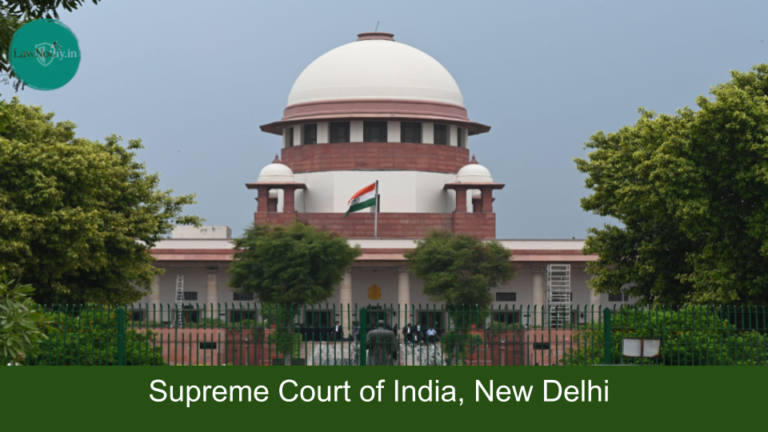
The Supreme Court has reiterated that a writ petition under Article 226 cannot be used when a proper and effective alternate statutory remedy is available before the High Court. The ruling came from a bench of Justices Dipankar Datta and Aravind Kumar, which upheld the Rajasthan High Court’s decision to dismiss a writ petition linked to a decades-old customs dispute.
The case stemmed from the confiscation of silver in 1992. The appellant had approached the Customs, Excise and Gold (Control) Appellate Tribunal (CEGAT), which reduced his penalty in 2000 but confirmed the confiscation. Instead of using the remedy provided under the Customs, Excise and Gold (Control) Appellate Tribunal Act, 1962 to seek a reference before the High Court, the appellant waited until 2003 and filed a writ petition.
The High Court dismissed the petition on the ground that a statutory remedy was already available. The Supreme Court agreed, noting that courts must respect the structure set by the legislature for appeals and references.
The bench observed that when a statute provides a specific forum capable of offering fast and effective relief, a writ petition should not be entertained. The Court also pointed out that the appellant had ignored the proper process and tried to bypass the designated remedy.
Citing earlier Constitution Bench judgments in Thansingh Nathmal v. A. Mazid and A. V. Venkateswaran v. Ramchand Sobhraj Wadhwani, the Court held that a litigant who fails to use a statutory remedy because of his own delay cannot later seek relief under Article 226.
Finding no reason to interfere, the Court dismissed the appeal.
Cause Title: Rikhab Chand Jain vs Union of India & Others