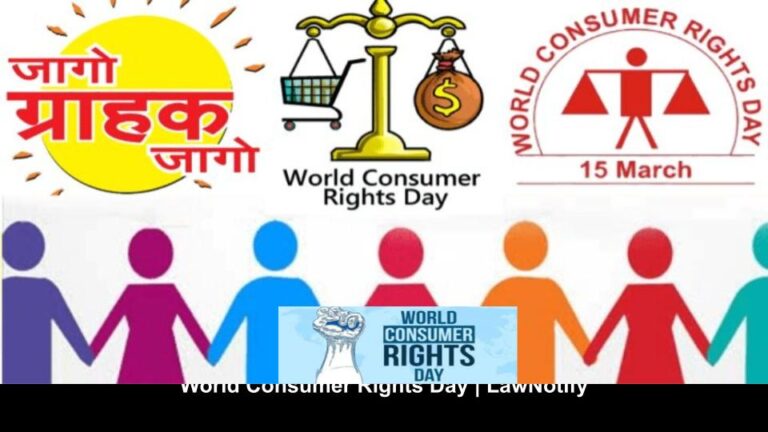
March 15, 2026 : World Consumer Rights Day is observed across the globe on March 15 every year. The day aims to raise awareness about consumer rights, promote transparency in markets, and protect consumers from exploitation. In today’s rapidly evolving marketplace, shaped by globalization and digital technology, buying and selling methods are changing quickly. In such an environment, awareness of consumer rights has become more important than ever.
Background of World Consumer Rights Day
The idea of observing World Consumer Rights Day originated from a historic speech delivered on March 15, 1962, by the then President of the United States, John F. Kennedy, in the US Congress. In this speech, he formally recognized four fundamental consumer rights: the right to safety, the right to be informed, the right to choose, and the right to be heard.
These principles later gained global acceptance. To promote consumer awareness worldwide, March 15 has been observed as World Consumer Rights Day since 1983.
Consumer Protection System in India
In a large and diverse market like India, consumer rights hold even greater significance. Millions of people use various goods and services daily, making it essential to have strong legal and institutional mechanisms to safeguard consumer interests.
To address this need, the Government of India enacted the Consumer Protection Act, 2019, replacing the earlier Consumer Protection Act, 1986. The law protects consumers from misleading advertisements, defective or substandard products, poor service, overpricing, and unfair trade practices.
Under this Act, consumer dispute redressal commissions have been established at district, state, and national levels where consumers can file complaints and seek justice. In addition, the Central Consumer Protection Authority (CCPA) works to monitor unfair trade practices and misleading advertisements in the market.
Major Consumer Rights
Consumers are entitled to several important rights that help ensure a fair and safe marketplace. These include:
- Right to Safety: Protection against goods and services that may harm life or property.
- Right to Information: Access to accurate details about the quality, quantity, price, and usage of products or services.
- Right to Choose: The freedom to select from a variety of goods and services at competitive prices.
- Right to Be Heard: The ability to raise complaints or concerns before appropriate authorities.
- Right to Seek Redressal: The right to receive compensation for loss, damage, or exploitation.
- Right to Consumer Education: Access to knowledge about consumer rights and responsibilities.
- Right to a Healthy Environment: The right to live and work in a clean and safe environment.
New Challenges in the Digital Age
The rapid growth of e-commerce, online shopping, and digital payments has brought great convenience to consumers. However, it has also introduced new risks. Fake websites, counterfeit products, cyber fraud, and data theft have become major concerns.
To address these issues, the government has launched several digital initiatives. Platforms such as the National Consumer Helpline and the e-Daakhil Portal allow consumers to file complaints online and track their cases without visiting consumer courts.
Awareness Is the Strongest Protection
In India, campaigns like “Jago Grahak Jago” have played a major role in increasing consumer awareness. These initiatives encourage people to act responsibly in the marketplace.
Simple habits such as always taking a bill while purchasing goods, checking the MRP, verifying product quality, and carefully reading terms and conditions can help consumers avoid significant losses.
World Consumer Rights Day reminds us that an informed and aware consumer forms the foundation of a strong society and a healthy economy. When consumers understand their rights and raise their voices against unfair practices, the market becomes more transparent, accountable, and consumer-friendly.
Consumer awareness not only protects individual interests but also promotes ethical business practices, transparency, and responsibility in society. For this reason, an informed consumer is considered an important pillar in building a strong and progressive nation.