News Citation : 2026 LN (HC) 5
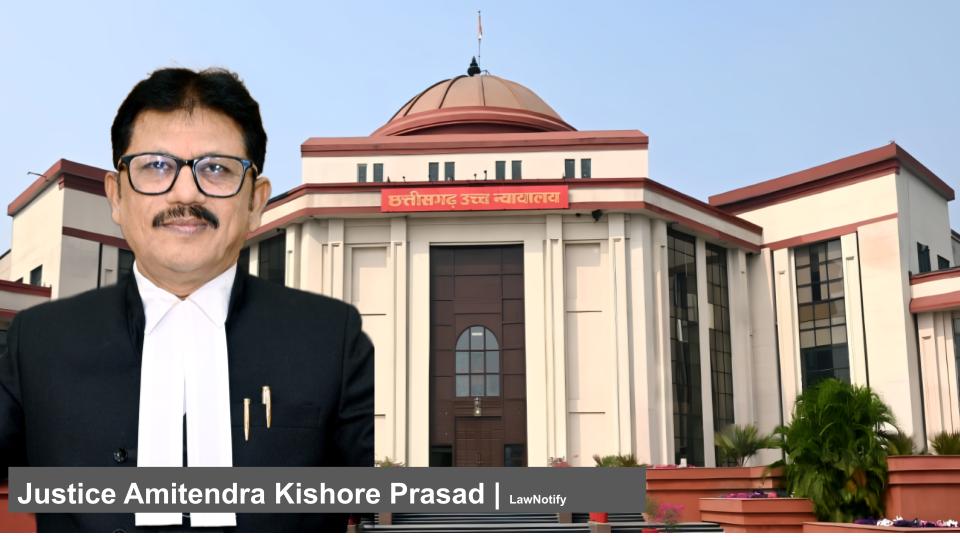
Bilaspur, 02.01.2026 : The High Court of Chhattisgarh at Bilaspur has delivered an important ruling clarifying the limits of writ jurisdiction in service disputes involving private and aided educational institutions. In a common order pronounced on January 2, 2026, Justice Narendra Kumar Vyas dismissed three writ petitions filed by teachers and a former school principal, holding that such disputes, when rooted in private contracts of service and lacking a public law element, are not maintainable under Article 226 of the Constitution.
The decision arose from three separate petitions that raised a common legal question: whether a writ petition can be entertained against private or aided educational institutions in matters relating to service conditions. The Court examined the cases together, noting that although the petitioners were associated with institutions imparting education, the nature of their grievances did not involve the discharge of any statutory or public duty.
In the first case, a senior professor of Bhilai Institute of Technology challenged her termination, arguing that the institute was bound by the statutes and service conditions prescribed by its affiliating technical university. She contended that her termination violated the university’s college code and applicable regulations. The Court, however, found that the dispute essentially arose from a private contract of employment and did not attract writ jurisdiction merely because the institution was affiliated to a statutory university.
The second petition was filed by an assistant professor of a government-aided postgraduate college in Bhilai, who objected to the withdrawal of her charge as head of department and its reassignment to a junior colleague. While acknowledging that the college received grant-in-aid, the Court held that internal administrative decisions concerning departmental charge did not amount to the discharge of a public duty and therefore could not be examined in a writ petition.
The third and oldest petition involved a former principal of Delhi Public School, Bhilai, who challenged the retrospective revision of his salary after retirement, which allegedly reduced his retiral dues. He argued that the school was effectively controlled by the Bhilai Steel Plant and should be treated as “State” under Article 12. After closely examining the structure and functioning of the school and its managing society, the Court concluded that the institution was run by an independent society and was neither owned nor deeply controlled by the government or a public sector undertaking.
In reaching its conclusions, the High Court relied on a series of Supreme Court judgments that draw a clear distinction between bodies discharging public functions and private entities governed by contracts of service. The Court reiterated that even if an institution performs a public function such as imparting education, a writ petition is maintainable only when the action complained of has a direct public law element or when service conditions are governed by statutory provisions. Purely contractual disputes, it held, must be resolved before appropriate civil or statutory forums.
While dismissing all three petitions as not maintainable, the Court granted liberty to the petitioners to pursue alternative remedies available under law. It also directed that the time spent litigating before the High Court would be excluded while computing limitation periods, ensuring that the petitioners are not prejudiced for having approached the writ court.
The ruling provides much-needed clarity on the scope of Article 226 in service matters involving private and aided educational institutions and is likely to have a wider impact on similar disputes pending across the state.
Case Reference : WPS No. 11842 of 2025, Dr. Madhurima Pandey vs State of Chhattisgarh and Others with WPS No. 11867 of 2025, Dr. Banita Sinha vs Kalyan Post Graduate College, Bhilai Nagar and WPS No. 6150 of 2014, M.P. Yadav vs Bhilai Steel Plant and Others
Counsels : For petitioner in WPS No. 11842/2025 : Mr. Prateek Sharma, Advocate. For petitioner in WPS No. 11867/2025 : Mr. Ghanshyam Kashyap, Advocate., For petitioner in WPS No. 6150/2014 : Mr. Kishore Bhaduri, Sr. Advocate along with Mr. Harsh Dave, Advocate. For State : Mr. Santosh Bharat, Panel Lawyer. For Resp. No. 3 to 6 in WPS No. 6150/2014 : Mr. Dr. Sourabh Kumar Pande, Advocate.