News Citation : 2026 LN (HC) 268 | 2026:CGHC:18118
April 21, 2026 : The Chhattisgarh High Court has set aside criminal charges against a government employee accused of circulating an audio clip containing alleged caste-based abuse, finding that the prosecution failed to establish essential legal elements of the offences.
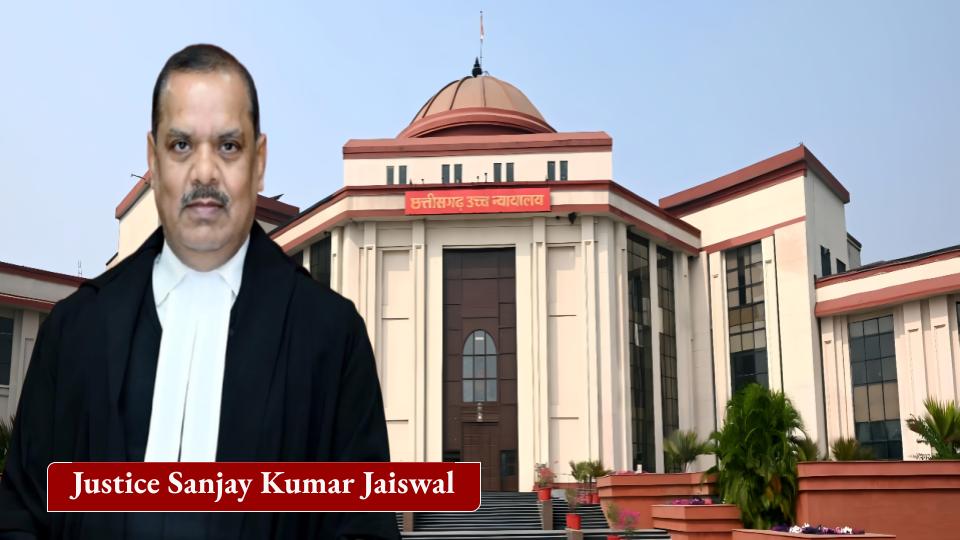
In a judgment pronounced on April 21, 2026, Justice Sanjay Kumar Jaiswal allowed the appeal filed by Santosh Mishra, a panchayat assistant from Balrampur-Ramanujganj district, and quashed charges framed under Section 296 of the Bharatiya Nyaya Sanhita, 2023 and Section 3(1)(d) of the SC/ST (Prevention of Atrocities) Act, 1989.
The case stemmed from a complaint alleging that Mishra used caste-based and obscene language against a state minister and a tribal woman legislator, and shared the remarks through a WhatsApp group. The prosecution relied on an audio clip submitted via a pen drive, supported by a certificate under the evidence law, along with witness statements claiming that the content caused outrage within the Scheduled Tribe community.
The High Court, however, identified serious evidentiary gaps. It noted that the audio recording had not been transcribed, leaving the actual words unclear and making it impossible to assess whether they met the legal threshold of obscenity or caste-based abuse. The Court also pointed out that no voice sample of the accused was taken and no forensic analysis was conducted to confirm that the voice in the recording belonged to him.
Another critical deficiency was the failure to establish the location of the alleged offence. The Court observed that the prosecution did not identify any specific place where the incident occurred or demonstrate that it took place in a public setting or within public view, which is a mandatory requirement under both provisions invoked. There was no site plan, no clear evidence of where the audio was recorded or played, and no indication that it was heard in a setting accessible to the public.
On the question of obscenity under Section 296, the Court relied on Supreme Court precedent to clarify that offensive or defamatory language does not automatically qualify as obscene unless it has a tendency to corrupt or morally degrade. In the absence of a verified transcript or specific words on record, such a determination could not be made.
While addressing who qualifies as a victim under the SC/ST Act, the Court held that members of the affected community can be treated as victims if they suffer emotional or psychological harm, even if the complaint is filed by another individual. However, this principle did not overcome the lack of concrete evidence in the present case.
Concluding that no prima facie case was made out, the Court held that continuing the trial would amount to an abuse of process. It accordingly set aside the trial court’s order and discharged the appellant of all charges.
Case Reference : Criminal Appeal No. 2273 of 2025, Santosh Mishra v. State of Chhattisgarh and Others