News Citation : 2026 LN (HC) 285 | 2026:CGHC:20024
April 29, 2026 : The Chhattisgarh High Court at Bilaspur has overturned an award passed by a Permanent Lok Adalat (PLA) in an insurance dispute, holding that the insured had suppressed crucial medical information while obtaining the policy, thereby vitiating the claim.
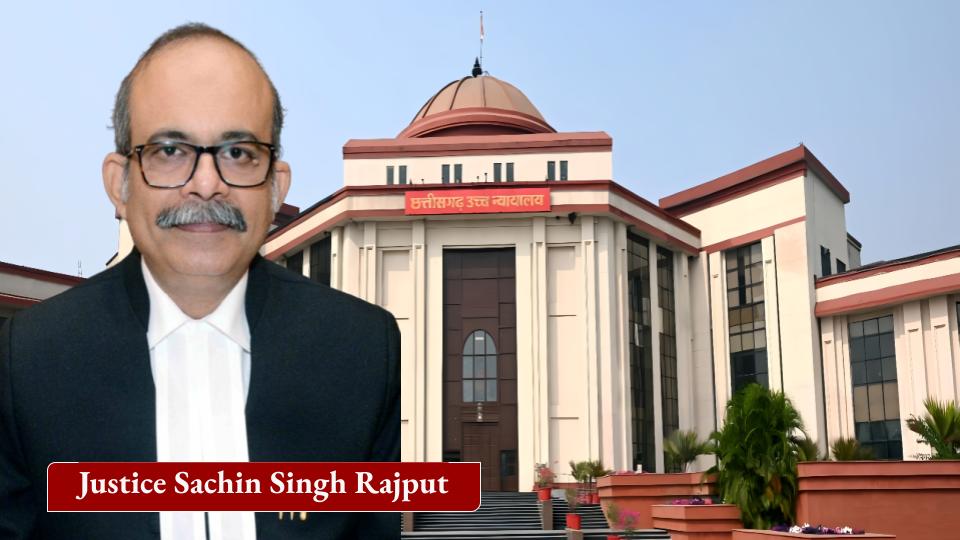
In its judgment delivered on April 29, 2026, Justice Sachin Singh Rajput allowed a writ petition filed by Bajaj Allianz Life Insurance Company, challenging a 2018 award of the PLA, Jagdalpur. The Lok Adalat had directed the insurer to pay ₹4,16,226 with 8% interest to the claimant, who was the nominee of the deceased policyholder.
The dispute arose after the death of Ayesha Hussain, who had purchased a life insurance policy and named her husband, Ahmed Hussain, as nominee. Following her death in March 2012, the insurer released only ₹83,774 instead of the claimed ₹5 lakh, prompting the nominee to approach the PLA seeking the balance amount along with compensation.
The insurance company rejected the claim on the ground that the policyholder had failed to disclose that she was suffering from ovarian cancer prior to purchasing the policy. According to the insurer, this amounted to suppression of a material fact, rendering the contract void.
Before the High Court, the insurer relied on medical records and witness testimony, including that of a treating doctor, to show that the insured had undergone surgery and chemotherapy for ovarian cancer well before the policy was issued in October 2010. The Court noted that documentary evidence, including hospital discharge summaries and referral records, clearly established that the disease predated the policy.
The Court reiterated that insurance contracts are governed by the principle of “uberrima fides” or utmost good faith, requiring full disclosure of all material facts by the proposer. It observed that when specific health-related questions are asked in a proposal form, the proposer is under a legal obligation to answer them truthfully.
Rejecting the findings of the Lok Adalat, the High Court held that the insurer had successfully discharged its burden of proving suppression of material facts. It found that the insured had knowingly provided incorrect information regarding her health condition despite being aware of her illness.
The Court also referred to established Supreme Court precedents emphasizing that non-disclosure of pre-existing illnesses entitles insurers to repudiate claims, particularly when such facts directly influence risk assessment. Concluding that the PLA had committed a material irregularity in granting relief, the High Court set aside the award and allowed the writ petition.
Case Reference : WPC No. 4259 of 2019, General Manager/Chief Executive Officer (C.E.O.), Bajaj Allianz Life Insurance Company Limited & Another v. Ahmed Hussain; Counsels: For Petitioners – Shri Ravi Bhagat, Advocate; For Respondents – Shri G.M. Hasan and Shri Galib Dwivedi, Advocates.