News Citation : 2026 LN (HC) 295 | 2026:CGHC:20543-DB
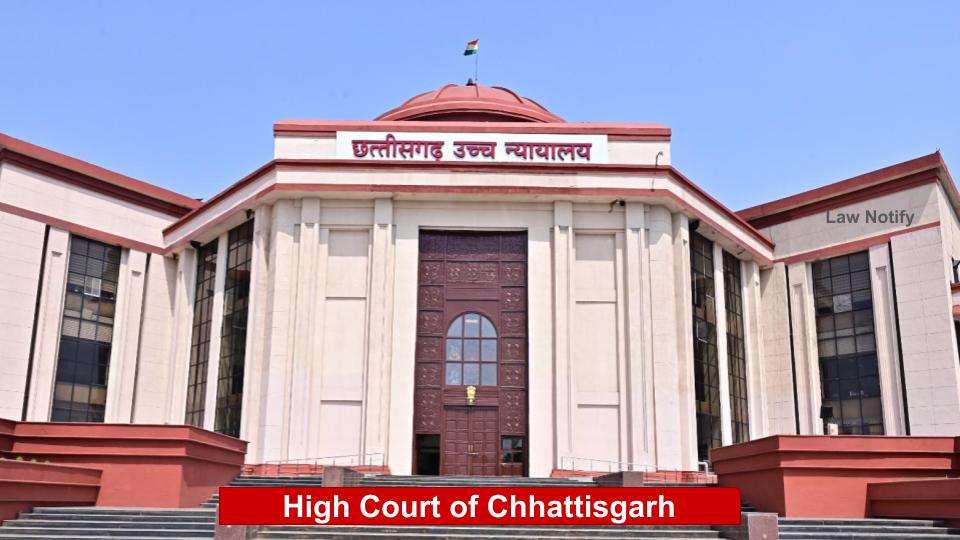
May 1, 2026 : The High Court of Chhattisgarh has declared a marriage between two first cousins void under the Hindu Marriage Act, holding that a claimed community custom permitting such unions was neither properly pleaded nor proved.
In a judgment delivered on May 1, 2026, a Division Bench of Justices Sanjay K. Agrawal and Sanjay Kumar Jaiswal allowed an appeal filed by Ramshankar Patel, setting aside a Family Court ruling that had upheld the marriage on the basis of an alleged custom within the Patel community.
The couple had married in April 2018 according to Hindu rites. It was undisputed that their mothers were real sisters, placing the parties within the “degrees of prohibited relationship” under Section 3(g) of the Hindu Marriage Act, 1955. Under Section 5(iv) of the Act, such marriages are barred unless a valid and legally recognised custom permits them.
The husband had approached the Family Court seeking a declaration that the marriage was void ab initio. While the Family Court accepted that the relationship fell within prohibited degrees, it held that a custom existed in the Patel community allowing such marriages and dismissed the plea.
The High Court disagreed.
It noted that merely asserting the existence of a custom is insufficient in law. For a custom to override statutory prohibitions, it must be specifically pleaded and supported by clear, cogent evidence demonstrating that it has been continuously and uniformly followed for a long time and has attained the force of law.
The Bench found that the wife’s pleadings did not satisfy these requirements. There was no assertion that the alleged custom was ancient, certain, or consistently observed over time. Witness testimonies also failed to establish these essential elements. At best, they referred to current practices without proving a long-standing, legally recognised usage predating the enactment of the Hindu Marriage Act.
The Court emphasised that customs contrary to general law must be strictly proved. A few isolated instances or vague statements cannot establish a binding custom. Since the statutory bar under Section 5(iv) clearly applied and no valid custom was demonstrated, the marriage was held to be void under Section 11 of the Act.
Accordingly, the Court declared the marriage null and void.
On the issue of maintenance, the Bench clarified that even in cases of void marriages, a spouse may seek permanent alimony under Section 25 of the Act, subject to judicial discretion. However, since no detailed pleadings or affidavits were filed on this aspect, the Court left it open for the wife to approach the Family Court separately for appropriate relief. The appeal was allowed.
Case Reference : FA(MAT) No. 108 of 2024, Ramshankar Patel v. Pushpalata Patel; Counsel for Appellant: Mr. Sushobhit Singh, Advocate; Counsel for Respondent: Mr. Pawan Kumar Kashyap, Advocate; Amicus Curiae: Mr. Rahul Tamaskar, Advocate.