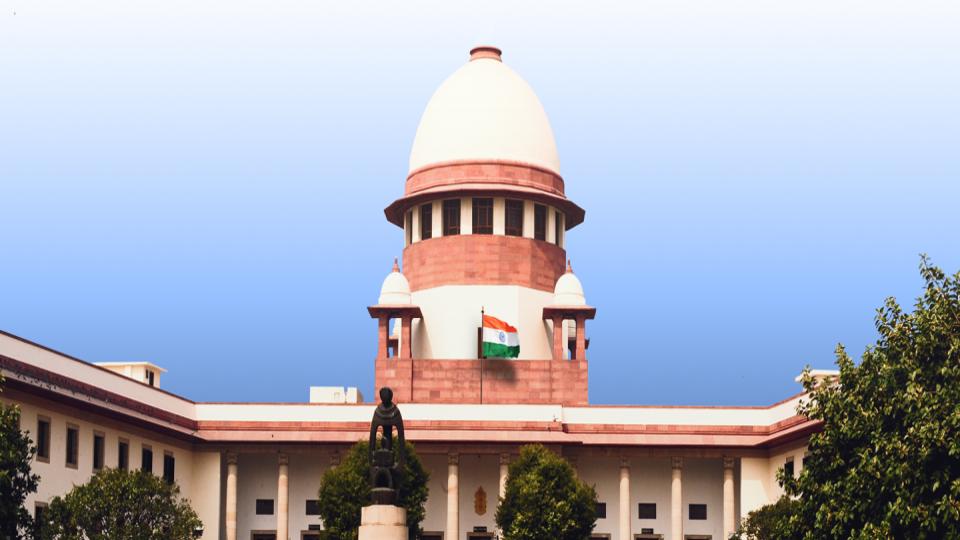
May 1, 2026 : The Supreme Court of India has set aside the conviction of a father-in-law under Section 498A of the Indian Penal Code, holding that prosecution evidence marred by material improvements and “afterthought” testimonies failed to meet the threshold of reliability.
In Narendra Singh v. The State of Madhya Pradesh (Criminal Appeal No. 302 of 2014), a Bench comprising Justice Aravind Kumar and Justice N.V. Anjaria underscored that while Section 498A remains a critical safeguard against cruelty to married women, it cannot be invoked to implicate all family members in the absence of specific and attributable roles.
The Court was dealing with three connected appeals arising from a judgment of the Madhya Pradesh High Court, which had acquitted the accused of murder under Section 302 IPC but upheld their conviction under Section 498A IPC, reducing the sentence to the period already undergone.
Background
The case concerned the death of a woman who suffered 55% burn injuries within nine months of her marriage and later succumbed to them. The prosecution alleged that her husband and in-laws set her ablaze over unmet dowry demands, including a car.
Two dying declarations were recorded. In the first, the deceased accused her husband and in-laws of setting her on fire. However, in the second declaration, she stated that she had set herself ablaze due to domestic disputes.
The Trial Court had convicted all accused under Sections 302 and 498A IPC. On appeal, the High Court set aside the murder conviction but retained the conviction for cruelty.
Key Findings
The Supreme Court found significant inconsistencies between the testimonies of the deceased’s family members before the Court and their earlier statements recorded under Section 161 CrPC. Notably, allegations of dowry demand and harassment were absent in the initial police statements and surfaced only during trial.
The Bench observed that such improvements appeared to be deliberate embellishments:
“It appears to be a legal gimmick rather than an honest contradiction…”
The Court also noted the absence of independent corroboration and held that reliance solely on such contradictory testimonies of interested witnesses would be unsafe.
Dying Declarations: Preference for Untutored Version
A central issue was the evidentiary value of the two conflicting dying declarations. The Court reiterated that while a dying declaration can form the sole basis of conviction, it must be scrutinised in light of surrounding circumstances.
Importantly, the Executive Magistrate who recorded the first declaration admitted that individuals present at the hospital had instructed the deceased on what to say. This cast serious doubt on its credibility.
In contrast, the second declaration—where the deceased attributed her injuries to suicide—was found to be more reliable as it appeared free from external influence.
The Court held that where multiple dying declarations exist, the one that appears voluntary and uninfluenced must be preferred.
On Misuse of Section 498A
The Bench cautioned against the tendency to implicate all family members without concrete evidence:
“It seems that the father-in-law was roped in… as is the case in certain S. 498A matters.”
Reaffirming established principles of criminal jurisprudence, the Court emphasized that suspicion, however strong, cannot substitute proof beyond reasonable doubt.
Conclusion
Finding that the prosecution failed to establish cruelty or dowry demand against the father-in-law, the Court allowed his appeal and set aside his conviction under Section 498A IPC. The connected appeals filed by the State and the deceased’s brother challenging acquittal under Section 302 IPC were dismissed.