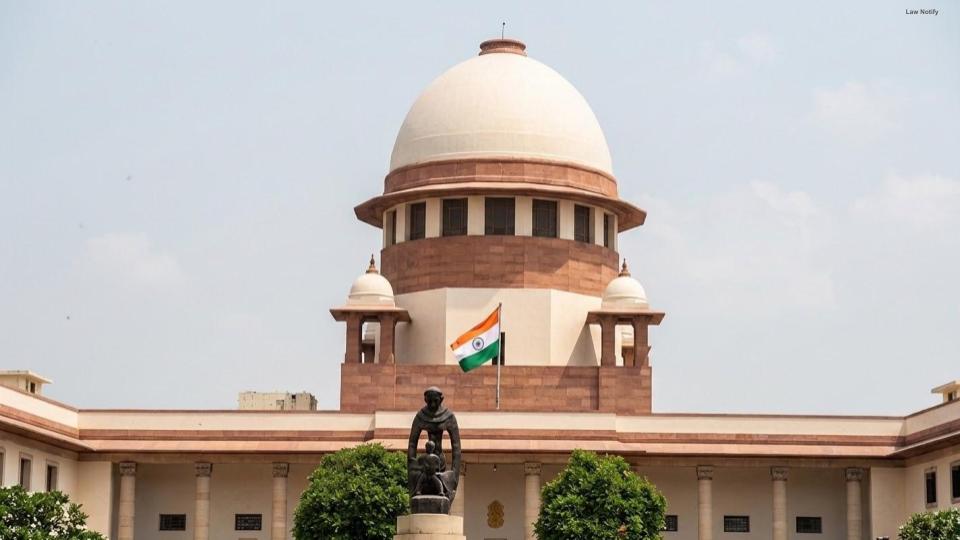
May 9, 2026 : The Supreme Court on Friday refused to issue any direction for the arrest of industrialist Anil Ambani in connection with the ongoing investigation into the alleged bank fraud and diversion of funds involving Reliance Communications and its group entities.
A Bench comprising Chief Justice of India Surya Kant and Justice Joymalya Bagchi observed that criminal proceedings could not be turned into instruments of media sensationalism and must remain within the domain of statutory investigating agencies.
The Court said custodial arrest cannot be judicially directed unless the investigating agency itself considers such action necessary for investigation, custodial interrogation or recovery of evidence. It noted that investigative discretion ordinarily lies with the Directorate of Enforcement (ED) and the Central Bureau of Investigation (CBI).
The matter arose from a petition filed by former Union Secretary EAS Sarma seeking a court-monitored probe into alleged financial irregularities, diversion of public funds and fraudulent transactions involving Reliance Group companies.
According to the petition, Reliance Communications and its subsidiaries, Reliance Infratel and Reliance Telecom, secured loans worth nearly ₹31,580 crore between 2013 and 2017 from a consortium of lenders led by State Bank of India. The allegations include siphoning of funds through related-party transactions, circular routing of money, evergreening of debt and diversion of borrowed funds into unrelated financial instruments and liabilities.
The petitioner had also alleged regulatory inaction despite forensic audit findings indicating serious financial misconduct. In February 2026, the Supreme Court had directed the constitution of a Special Investigation Team (SIT) by the ED to conduct a coordinated investigation into the allegations.
During the hearing, Senior Advocate Prashant Bhushan, appearing for the petitioner, submitted that charge sheets had already been filed naming Anil Ambani and his son Anmol Ambani. He argued that the prosecution material itself disclosed diversion of funds and acquisition of luxury assets using siphoned money, yet no coercive action had been taken against the principal accused.
The petitioner further alleged selective investigation, contending that while other accused persons were being proceeded against, agencies had refrained from arresting Anil Ambani despite describing him as the central figure in the alleged fraud.
Appearing for the Union authorities, Solicitor General Tushar Mehta informed the Court that the investigation was ongoing and assured that the agencies were proceeding strictly in accordance with law.
The Bench referred to earlier Supreme Court rulings in Satender Kumar Antil v. CBI and Pankaj Bansal v. Union of India, reiterating that unnecessary arrests in economic offences involving documentary evidence should be avoided unless there is material showing tampering of evidence, intimidation of witnesses or obstruction of investigation.
The Court observed that custodial interrogation is warranted only in exceptional circumstances and said constitutional courts cannot strengthen personal liberty jurisprudence while simultaneously directing arrests mechanically.
Senior Advocate Kapil Sibal, appearing for Anil Ambani, questioned how copies of the charge sheet reached the petitioner before cognisance was formally taken by the competent court. He argued that the proceedings appeared aimed more at securing Ambani’s arrest than ensuring a fair and legally sustainable investigation.
Senior Advocate Shyam Divan, appearing for group companies including Reliance Infrastructure and Reliance Power, submitted that provisional attachment orders and coercive proceedings could adversely impact public utility operations, financing arrangements, liquidity management and shareholder interests.
The Apex Court further observed that court-monitored investigations may sometimes result in serious collateral consequences and reputational damage even before criminal liability is determined. Referring to the continuing mandamus principles evolved in Vineet Narain v. Union of India, the Bench said judicial monitoring remains an important constitutional tool for accountability, but courts must exercise institutional restraint and avoid excessive interference in investigative functions.
The matter has now been adjourned to July for further hearing.