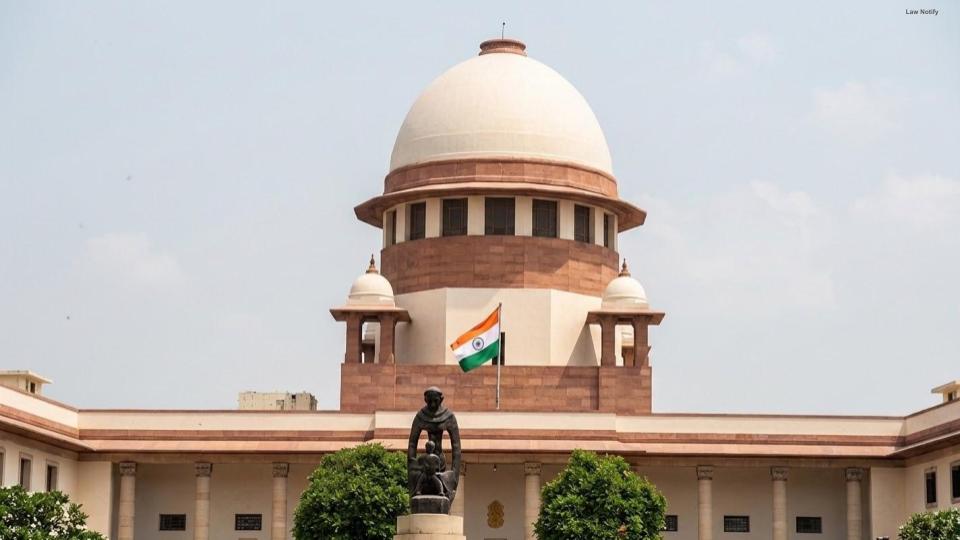
July 19, 2026 : The Supreme Court has urged the Indian Railways to take stronger and more effective measures to address overcrowding in trains, observing that passengers continue to lose their lives after falling from overcrowded coaches. The Court stressed that while railway authorities have framed safety protocols, their implementation remains inadequate, resulting in avoidable tragedies.
A Bench comprising Justice Sanjay Karol and Justice Nongmeikapam Kotiswar Singh made the observations while allowing an appeal filed by the widow of a man who died after falling from a moving train in 2015. The Court awarded compensation of Rs 8 lakh, holding that the absence of the deceased’s train ticket could not, by itself, be a valid reason to deny compensation under the Railways Act.
The Bench observed that deaths caused by overcrowded trains are not isolated incidents but a recurring concern across the country. Although such incidents may appear insignificant in the Railways’ overall statistics, the Court noted that every loss represents an irreplaceable tragedy for the affected family.
Referring to recent railway accidents, the Court cited the June 2025 Mumbai suburban train tragedy in which four commuters lost their lives after falling from overcrowded local trains, as well as the stampede at New Delhi Railway Station during the Maha Kumbh rush. According to the Court, these incidents demonstrate the continuing safety risks arising from excessive crowding.
The Court pointed out that the Indian Railway Commercial Manual already prescribes detailed procedures for managing overcrowding, including evenly distributing passengers, alerting upcoming stations about packed trains, and attaching additional coaches whenever necessary. However, the Bench remarked that while the policy framework exists, its execution on the ground has been inadequate.
Emphasising the need for stronger implementation, the Court suggested that the Railways recruit additional personnel, particularly young people, to improve crowd management and passenger safety. The Bench observed that increasing manpower would not only generate employment opportunities but also help prevent avoidable accidents and save lives.
The Court also reminded passengers of their responsibility to prioritise their own safety. While holding that the Railways cannot avoid its statutory obligations, the Bench observed that commuters should refrain from boarding or travelling in dangerously overcrowded trains, stressing that the preservation of human life must always outweigh convenience.
In a significant observation, the Supreme Court criticised the expression “second class passenger” used in Railway manuals. The Bench stated that classifications should apply to railway coaches rather than to individuals, observing that such terminology is inconsistent with the constitutional principle of equality and insensitive to India’s historical experience of social divisions.
On the merits of the case, the Court found that both the Railway Claims Tribunal and the Madhya Pradesh High Court had erred in rejecting the widow’s compensation claim solely because the deceased’s ticket was not recovered after the accident. The widow had consistently stated that her husband had purchased a valid ticket, which was kept in his travel bag that went missing following the incident.
Reiterating the scope of Section 124A of the Railways Act, the Supreme Court held that compensation for untoward railway incidents is payable on a no-fault basis. The Court ruled that the widow had discharged her initial burden by filing an affidavit affirming that the deceased was travelling with a valid ticket. The subsequent loss of the ticket during the accident, the Bench held, could not deprive him of the status of a bona fide passenger.
Accordingly, the Supreme Court set aside the orders of the Railway Claims Tribunal and the Madhya Pradesh High Court and directed the Railways to pay Rs 8 lakh as compensation within four weeks. The Court further directed that if the amount is not paid within the prescribed period, it shall carry interest at the rate of 8 percent per annum from the date of filing of the claim petition.