News Citation : 2026 LN (HC) 397
July 17, 2026 : The Chhattisgarh High Court has reaffirmed an important principle of criminal law governing road accident prosecutions, holding that merely proving a vehicle was being driven at a high speed is insufficient to establish the offences of rash or negligent driving under the Indian Penal Code (IPC). Dismissing the State Government’s appeal against an acquittal, the Court ruled that the prosecution failed to produce convincing evidence showing that the accused had driven the vehicle in a manner that endangered human life, as required under Sections 279, 337 and 338 of the IPC.
The appeal arose from the judgment of the Judicial Magistrate First Class, Mahasamund, dated 23 November 2021, whereby the accused, Vijay Singh Rajput, had been acquitted of charges relating to rash driving and causing simple and grievous injuries in connection with Crime No. 598 of 2018. The State challenged the acquittal, arguing that the trial court had failed to properly appreciate the testimony of eyewitnesses and other prosecution witnesses.
According to the prosecution, the incident occurred on 6 September 2018 when complainant Nihal Singh was riding his motorcycle with his mother, Rajinder Kaur, as the pillion rider. It was alleged that an Alto car driven by the accused struck the motorcycle from behind, causing Rajinder Kaur to fall and suffer injuries. Following the registration of the FIR on 30 October 2018, the police prepared a spot map, seized the vehicles involved, recorded witness statements under Section 161 of the Code of Criminal Procedure, and filed a charge sheet under Sections 279, 337 and 338 IPC.
Before the High Court, the State contended that eyewitnesses had clearly identified the accused as the driver of the offending vehicle and had stated that he was driving rashly and negligently. It was argued that the testimony of the injured witnesses and supporting prosecution witnesses sufficiently established the commission of the offences and that the trial court had erred in granting the benefit of doubt.
The defence, however, maintained that the prosecution had failed to prove one of the essential ingredients of the offences, namely rashness or negligence. It argued that the occurrence of an accident by itself does not constitute a criminal offence under Sections 279, 337 or 338 IPC unless there is clear evidence demonstrating that the accused drove in a manner so reckless or negligent as to endanger human life.
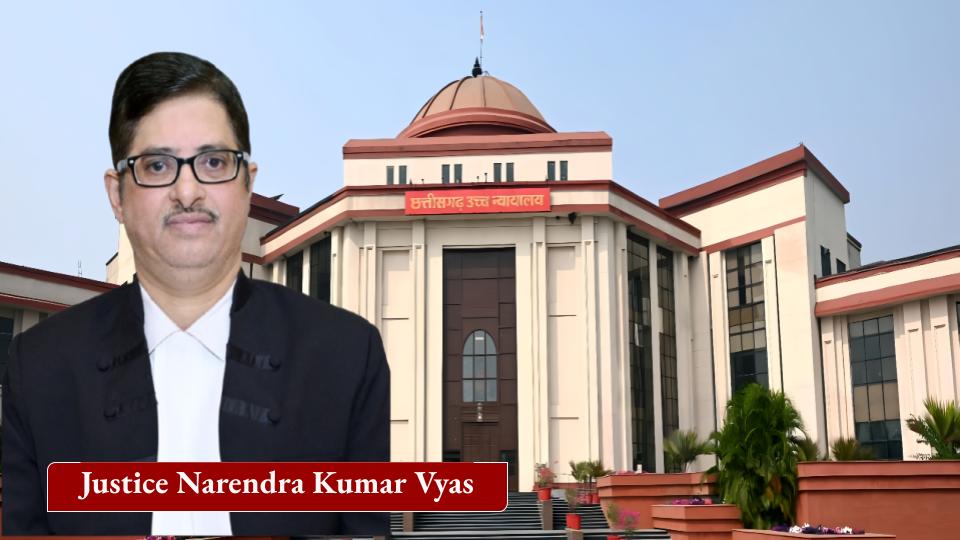
After examining the evidence, Justice Narendra Kumar Vyas observed that although some witnesses referred to the vehicle being driven at a “high speed,” none of them explained how the accused’s manner of driving amounted to criminal rashness or negligence. The Court also noted inconsistencies in the prosecution evidence, including the testimony of an eyewitness who admitted that he reached the spot several minutes after the incident and another witness who did not support the prosecution case. Additionally, the medical evidence indicated that the injuries could have been caused by a fall on a hard surface.
Explaining the legal position, the High Court relied upon the Supreme Court’s decision in Mohd. Aynuddin v. State of Andhra Pradesh [(2000) 7 SCC 72], which defines a rash act as one performed without due care and caution, involving recklessness and indifference to its consequences. The Court reiterated that criminal negligence requires proof of failure to exercise reasonable care expected from a prudent driver.
The Court also referred to the landmark Supreme Court judgment in State of Karnataka v. Satish [(1998) 8 SCC 493], reiterating that “merely because the vehicle was being driven at a ‘high speed’ does not by itself establish negligence or rashness.” It observed that the expression “high speed” is relative and cannot, without supporting evidence regarding the circumstances of the accident, lead to a presumption of criminal liability. The prosecution must independently establish the precise manner in which the vehicle was driven dangerously.
Applying these settled principles, the High Court concluded that the prosecution had failed to establish beyond reasonable doubt that the accused drove the vehicle in a rash or negligent manner. The Court held that “the prosecution is unable to prove that the vehicle, though it had dashed the victim, was being driven in a rash and negligent manner by the accused,” and therefore no interference with the acquittal was warranted.
The Court further emphasised the limited scope of appellate interference in acquittal cases. Referring to the Supreme Court’s recent decision in Constable 907 Surendra Singh & Another v. State of Uttarakhand (2025 INSC 114), it observed that an appellate court may reverse an acquittal only when the trial court’s findings are patently perverse, based on a misreading of material evidence, or where no reasonable view other than conviction is possible. Since the trial court’s appreciation of evidence represented a plausible and reasonable view, the High Court declined to interfere.
Consequently, the High Court dismissed the State’s acquittal appeal and affirmed the trial court’s judgment dated 23 November 2021, thereby maintaining the acquittal of the accused in the case.
The judgment reinforces the settled legal principle that criminal liability for road accidents cannot be inferred solely from the occurrence of an accident or allegations of excessive speed. Courts must be satisfied, on the basis of reliable evidence, that the accused’s conduct amounted to criminal rashness or negligence. The ruling is likely to guide future prosecutions involving motor vehicle accidents by emphasising the prosecution’s burden to prove the essential ingredients of the offences beyond reasonable doubt.
Case Reference: State of Chhattisgarh v. Vijay Singh Rajput, ACQA No. 163 of 2022