News Citation : 2026 LN (HC) 398
July 17, 2026 : The Chhattisgarh High Court has dismissed a writ petition filed by Shri Rawatpura Sarkar Institute of Medical Sciences and Research, refusing to interfere with the State Government’s decision to allow an increase of only 50 MBBS seats instead of the 150 additional seats sought by the institution for the academic session 2026-27. The Court held that the authorities acted within the framework of the National Medical Commission (NMC) Regulations and that the medical college failed to satisfy mandatory requirements relating to faculty strength and seat enhancement norms.
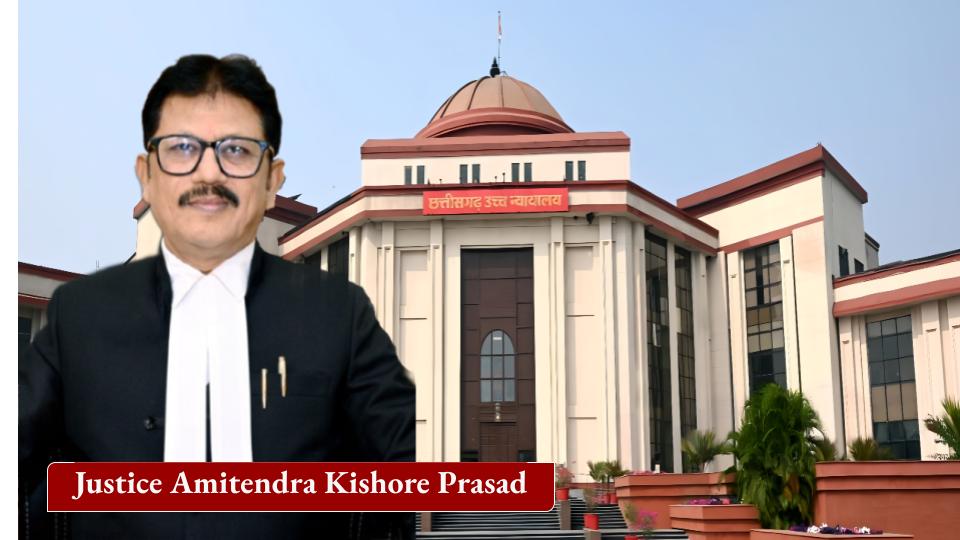
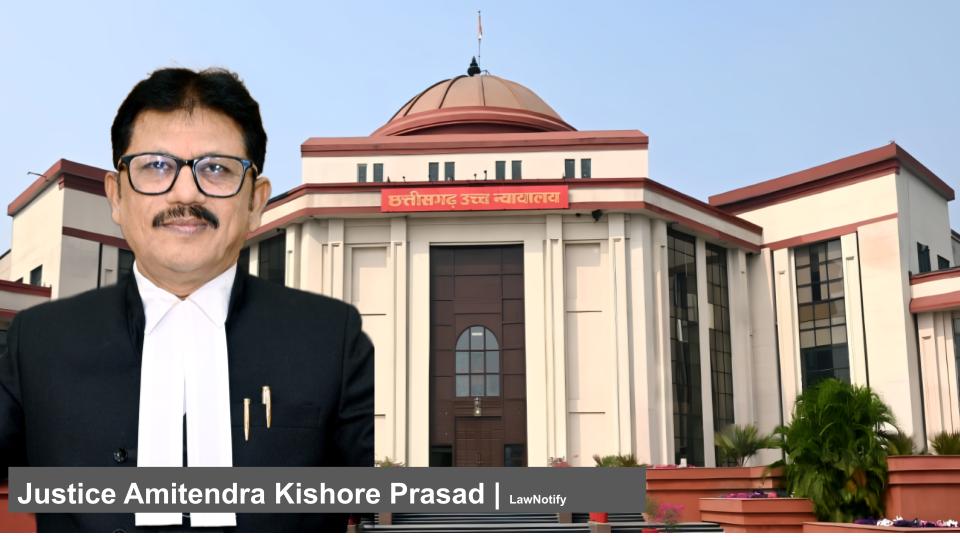
Delivering judgment in WPC No. 1137 of 2026, Justice Amitendra Kishore Prasad ruled on July 17, 2026, that the decision of the Directorate of Medical Education (DME) and Pt. Deendayal Upadhyay Memorial Health Sciences and Ayush University did not suffer from arbitrariness, illegality, or procedural unfairness warranting interference under Article 226 of the Constitution. The Court consequently dismissed the petition challenging the Essentiality Certificate and the Consent of Affiliation issued on February 3, 2026.
The dispute arose after the petitioner medical college, a private unaided institution established under Shri Rawatpura Sarkar Lok Kalyan Trust, sought permission to increase its undergraduate MBBS intake from 100 seats to 250 seats. Following inspections conducted by the Directorate of Medical Education, the State Government concluded that the institution met the standards for only 50 additional seats and accordingly issued an Essentiality Certificate permitting a total intake of 150 seats. Based on that certificate, the Health Sciences University granted a corresponding Consent of Affiliation. Dissatisfied with the decision, the institution approached the High Court alleging that inspection reports had not been supplied, no effective opportunity of hearing had been granted, and the authorities had ignored improvements made after earlier inspections.
The petitioner argued that the impugned action violated Articles 14 and 19(1)(g) of the Constitution, the principles of natural justice, the National Medical Commission Act, 2019, and the Establishment of New Medical Institutions, Starting of New Medical Courses, Increase of Seats for Existing Courses and Assessment and Rating Regulations, 2023. It further contended that the State had previously granted approval for 100 MBBS seats in 2025 and that the institution had since improved its infrastructure, faculty and hospital facilities, making it eligible for the requested enhancement. The college also claimed that the inspection reports were withheld, preventing it from effectively responding to the alleged deficiencies.
The State Government opposed the petition, submitting that inspections conducted by expert committees revealed a significant shortage of teaching faculty, approximately 22 percent below the prescribed requirement under the Minimum Standard Requirements. It maintained that faculty availability is fundamental to maintaining medical education standards and that the institution had failed to satisfy mandatory regulatory requirements even after a re-inspection. The State also pointed out that the petitioner had sought enhancement of 150 seats in a single application, whereas the applicable NMC guidelines permit an institution to apply for enhancement of a maximum of 100 seats at a time.
The University defended its action by stating that under Section 39(3) of the Ayush and Health Sciences University of Chhattisgarh Act, 2008, it is required to issue Consent of Affiliation on the basis of the Essentiality Certificate granted by the State Government and has no independent authority to alter the number of approved seats. The National Medical Commission also argued that the dispute primarily concerned the Essentiality Certificate issued by the State and that enhancement of MBBS seats cannot be claimed as a matter of right.
After examining the statutory framework, the High Court referred extensively to the National Medical Commission Act, 2019, the 2023 Regulations governing medical institutions, and the Medical Assessment and Rating Board (MARB) guidelines issued on December 22, 2025. The Court observed that the regulatory framework requires institutions seeking additional seats to demonstrate full compliance with infrastructure, faculty, hospital facilities and clinical material before permission can be granted. It also noted that the guidelines specifically state that an institution cannot seek enhancement of more than 100 seats in a single application and that “the regulatory framework does not contemplate a ‘work-in-progress’ status at the time of application.”
Rejecting the plea based on natural justice, the Court held that the inspections were conducted within the premises of the institution in the presence of its representatives and that the alleged deficiencies were matters exclusively within the knowledge of the college itself. According to the Court, the institution could not legitimately claim ignorance of shortcomings relating to its own faculty or infrastructure merely because copies of the inspection reports were not supplied. The Bench further noted that the authorities had conducted a re-inspection after the petitioner sought reconsideration, but the crucial deficiency in teaching faculty continued to exist.
Explaining the importance of faculty availability, the Court observed that “adequate teaching faculty constitutes the very foundation for imparting quality medical education” and held that such a deficiency is not a minor irregularity capable of being cured merely by granting additional time. The Court also found that the petitioner never specifically pleaded that it possessed the prescribed faculty strength on the relevant dates, weakening its challenge to the inspection findings.
The High Court further relied upon several Supreme Court decisions, including Medical Council of India v. Vedantaa Institute of Academic Excellence Pvt. Ltd., Subharti Medical College v. Union of India, Medical Council of India v. Kalinga Institute of Medical Sciences, and Royal Medical Trust v. Union of India. These judgments reiterate that enhancement of MBBS seats is not a vested right, compliance with statutory standards is mandatory, and constitutional courts should ordinarily refrain from substituting the opinion of expert regulatory bodies in technical matters concerning medical education.
Concluding that the respondent authorities had properly considered infrastructure, clinical material and, most importantly, the shortage of teaching faculty before restricting the increase to 50 seats, the High Court held that no arbitrariness, perversity or illegality had been established. It therefore dismissed the writ petition and declined to grant any further relief.
The ruling reinforces the strict regulatory regime governing medical education in India and underscores that compliance with National Medical Commission norms is essential before medical colleges can secure permission for additional MBBS seats. The judgment is likely to influence future disputes concerning seat enhancement by reaffirming judicial deference to expert regulatory assessments and emphasizing that statutory standards cannot be diluted on equitable or sympathetic considerations.
Case Reference: Shri Rawatpura Sarkar Institute of Medical Sciences and Research v. State of Chhattisgarh & Others, WPC No. 1137 of 2026.