News Citation : 2026 LN (HC) 400
The Chhattisgarh High Court has ruled that eligible nursing institutions cannot be denied consideration for upgrading their General Nursing and Midwifery (GNM) programmes to B.Sc. (Nursing) courses merely because of technical glitches in the online portal of the Indian Nursing Council (INC). Holding that administrative and digital failures of the regulatory authority cannot prejudice institutions that have otherwise fulfilled all statutory requirements, the Court directed the INC to either reopen its online portal exclusively for the petitioning institutions or accept their applications through physical mode.
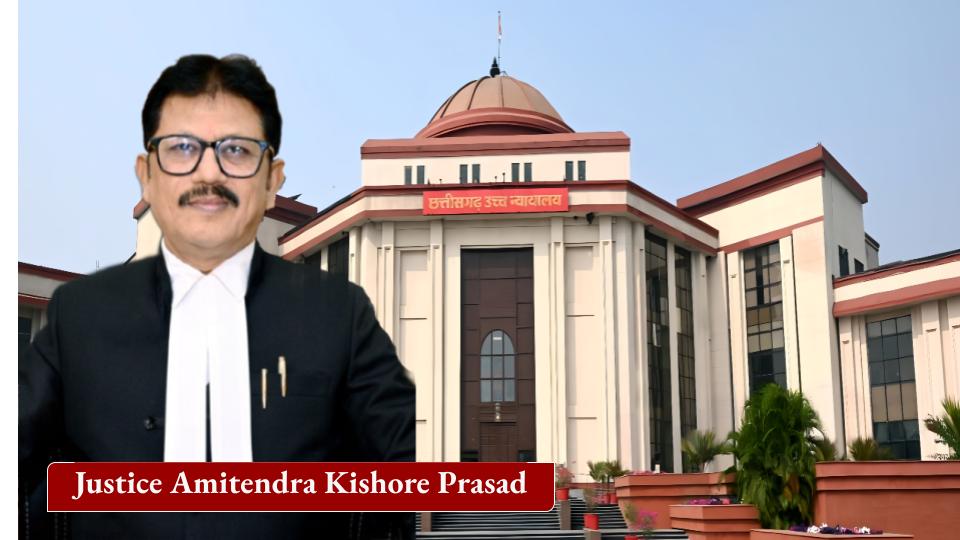
Justice Amitendra Kishore Prasad passed the common judgment, while allowing three connected writ petitions filed by Bilasa Institute of Nursing, Mother Teresa College of Nursing and Shri Rawatpura Sarkar Institute of Nursing, all functioning under the Shri Rawatpura Sarkar Lok Kalyan Trust. The petitions arose from a common grievance that despite fulfilling the eligibility conditions prescribed under the Indian Nursing Council Act, 1947 and the relevant Regulations, the institutions were unable to submit online applications for upgradation because the INC portal failed to display the required GNM upgradation option and their institutional codes.
The petitioners informed the Court that they had obtained permissions from the Chhattisgarh Nurses Registration Council (CGNRC), recognition for conducting B.Sc. (Nursing) courses with approved intake capacity, affiliation from the concerned university, and other statutory approvals. However, when they attempted to apply for INC suitability, the online portal showed only the “seat enhancement” option instead of the “upgradation” module, making submission of applications impossible. Representations highlighting these technical problems were also submitted to the INC, but no corrective action was taken.
The institutions argued that because INC suitability had become mandatory for continuing the admission process for subsequent academic sessions, the portal malfunction threatened their ability to admit students and expand from Schools of Nursing into Colleges of Nursing. They contended that denial of consideration due to technical defects violated Articles 14, 19(1)(g), and 21 of the Constitution by arbitrarily restricting their right to impart nursing education.
The Indian Nursing Council opposed the petitions, contending that institutions seeking upgradation must strictly comply with the Guidelines and Norms for Upgradation of GNM Courses to B.Sc. (Nursing) Courses, 2020, read with Sections 13 and 14 of the Indian Nursing Council Act, 1947. It further argued that some institutions had delayed initiating the upgradation process and required fresh State Government permissions. The State Government and the Chhattisgarh Nurses Registration Council maintained that obtaining INC suitability was mandatory before admissions could proceed for the relevant academic session.
After examining the statutory framework, the High Court referred to the Indian Nursing Council Act, 1947, particularly Sections 13, 14 and 16, along with the Indian Nursing Council (Guidelines/Norms for Upgradation of the General Nursing and Midwifery Course to B.Sc. (Nursing) Course on Voluntary Basis) Regulations, 2020 and the Indian Nursing Council (Minimum Pre-Requisites for Granting Suitability to Nursing Programs) Regulations, 2020. The Court observed that the regulatory scheme permits recognised GNM institutions to seek voluntary upgradation to B.Sc. (Nursing) programmes subject to compliance with prescribed infrastructural, academic and statutory requirements.
The Court found that the central issue was not whether the institutions were eligible, but whether they could be denied consideration because the INC’s own online portal failed to facilitate submission of applications. According to the Court, there was no material to suggest that the petitioning institutions lacked the required infrastructure, permissions or eligibility for consideration. Instead, the record demonstrated that the inability to apply arose solely because of technical defects in the INC’s digital system.
While deciding the matter, the High Court relied upon several judicial precedents, including decisions of the Supreme Court and various High Courts dealing with procedural technicalities and digital portal failures. Referring to these judgments, the Court reiterated the settled principle that procedural rules and technological systems are intended to facilitate justice rather than defeat substantive rights.
The Court observed, “The Petitioner-Institutions cannot be made to suffer for the technical glitches which are solely attributable to the concerned authority.” It further held that depriving otherwise eligible institutions of consideration for upgradation because of digital failures on the part of the regulator was “unreasonable and violative of Article 14 and Article 19(1)(g) of the Constitution of India.”
Allowing all three writ petitions, the High Court directed the institutions to submit their complete upgradation applications within ten days of receiving the certified copy of the judgment. The Court instructed the Indian Nursing Council to facilitate submission of applications within the following ten days by either reopening the online portal exclusively for the petitioners or accepting applications manually. It also directed the INC to examine the applications in accordance with the Indian Nursing Council Act, 1947 and the applicable Regulations, grant an opportunity to cure any deficiencies, and pass a reasoned order within thirty days after expiry of the application period.
The judgment is significant for nursing educational institutions across India because it reinforces the principle that regulatory authorities cannot deny statutory rights solely due to technological failures within their own digital systems. The decision also highlights the increasing judicial scrutiny of online governance mechanisms and establishes that administrative convenience cannot override substantive legal rights where institutions have complied with statutory requirements.
Case Reference: Bilasa Institute of Nursing v. Indian Nursing Council & Ors., WPC No. 1405 of 2026 (along with WPC Nos. 1244 & 1458 of 2026), 2026:CGHC:30858