News Citation : 2026 LN (HC) 390
July 10, 2026 : In a significant judgment affecting nursing admissions in Chhattisgarh, the Chhattisgarh High Court has held that the State Government could not independently prescribe a minimum 10th percentile requirement for admission to the B.Sc. Nursing course after the Indian Nursing Council (INC) had relaxed the qualifying percentile to fill vacant seats. The Court ruled that the State’s decision was beyond its legal authority and directed the authorities to conduct a fresh round of counselling for the remaining vacant seats without insisting on any minimum qualifying percentile.
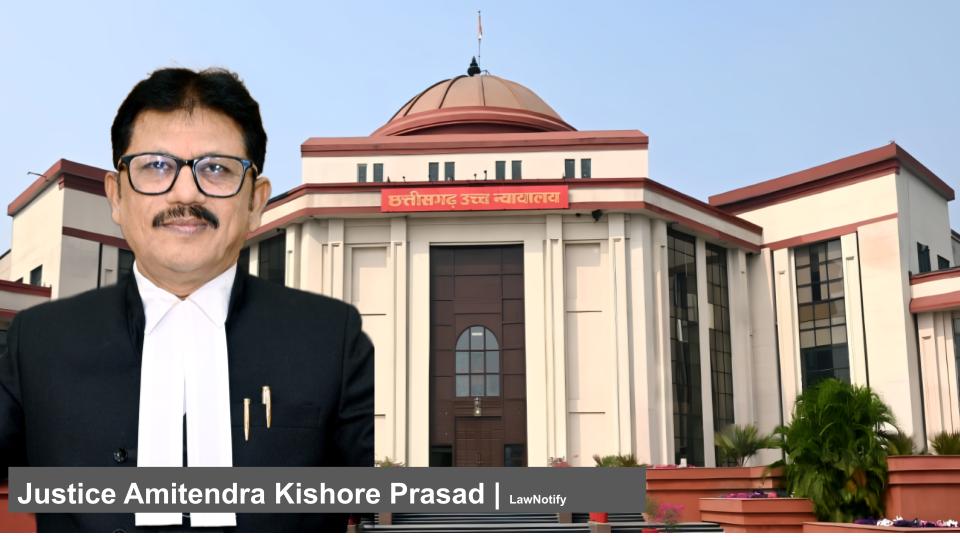
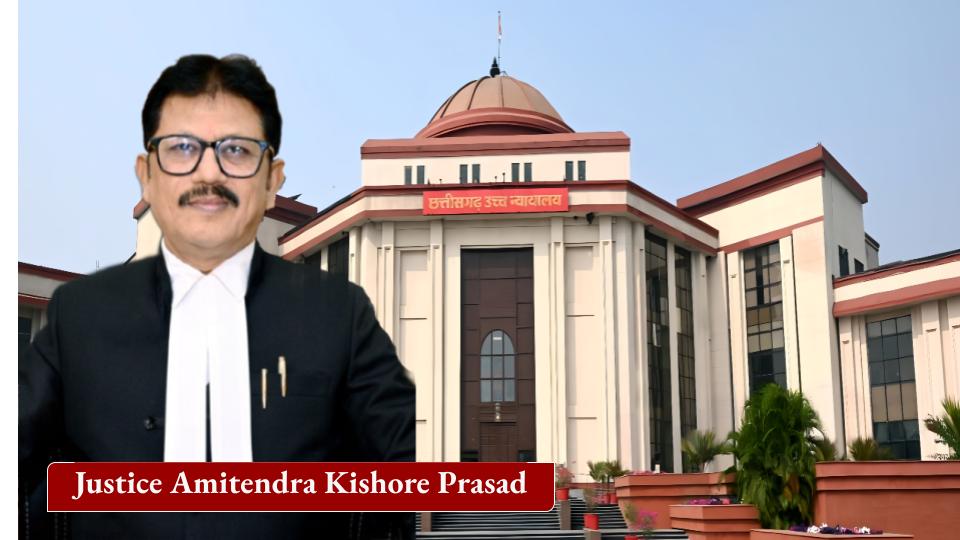
Justice Amitendra Kishore Prasad delivered the judgment on July 10, 2026, while deciding two connected writ petitions filed by the Private Nursing College Association of Chhattisgarh and a group of nursing aspirants challenging the State’s admission process for the 2025-26 academic session. The petitions were filed under Article 226 of the Constitution of India, questioning the legality of the State’s decision to impose a 10th percentile eligibility requirement despite the relaxation granted by the Indian Nursing Council under the Indian Nursing Council Act, 1947.
The dispute arose after the initial counselling process left 4,147 of the total 7,811 sanctioned B.Sc. Nursing seats vacant because many candidates failed to secure the qualifying percentile originally prescribed by the Indian Nursing Council. Recognising the large number of unfilled seats, the State Government requested the Indian Nursing Council to relax the qualifying percentile requirement. Accepting the request, the Council permitted the State to conduct another round of counselling after relaxing the qualifying percentile criteria. However, instead of removing the qualifying benchmark altogether, the State authorities introduced a fresh requirement of securing at least the 10th percentile for participation in the additional counselling process. The petitioners argued that this condition had no basis in the Council’s communication and defeated the very purpose of the relaxation.
The High Court examined Rule 4(4) of the Chhattisgarh Nursing Admission Rules, 2019, along with the provisions of the Indian Nursing Council Act, 1947. It observed that the Rules expressly adopt the standards and eligibility conditions prescribed by the Indian Nursing Council and do not empower the State Government to create additional qualifying conditions. According to the Court, once the statutory regulator relaxed the qualifying percentile, the State’s role was limited to implementing that decision and not modifying or supplementing it.
The Court held that the field relating to educational standards and admission criteria for nursing education is occupied by the Central legislation. Referring to the Supreme Court’s decision in Maa Vaishno Devi Mahila Mahavidyalaya v. State of Uttar Pradesh, the High Court reiterated that State authorities cannot issue executive instructions inconsistent with standards prescribed by a statutory body constituted under a Central law. The Court observed, “The statutory standards prescribed by an authority constituted under a Central legislation cannot be diluted, altered or supplemented by the State authorities through executive instructions.”
The Court further found that prescribing a uniform 10th percentile for all categories also undermined the differential relaxation originally granted by the Indian Nursing Council for Scheduled Castes, Scheduled Tribes, Other Backward Classes and Persons with Disabilities. It noted that such an approach ignored the statutory reservation framework and treated unequal categories alike, contrary to the constitutional principles of equality and affirmative action.
Rejecting the State’s argument that the admission schedule had already expired, the Court relied on the Supreme Court’s decision in Asha v. Pt. B.D. Sharma University of Health Sciences and held that constitutional courts can mould relief in exceptional cases where candidates are not responsible for the delay and have suffered because of arbitrary administrative action. The Court found that the petitioners had approached the Court without delay and that the pendency of the litigation could not be used to deny them relief.
Allowing both writ petitions, the High Court quashed the State’s communication prescribing the 10th percentile criterion and directed the authorities to conduct a fresh counselling process strictly in accordance with the Indian Nursing Council’s communication dated December 29, 2025. The Court ordered that admissions should be granted solely on the basis of inter se merit among candidates who appeared in the Common Entrance Test and satisfied the remaining eligibility requirements under the Chhattisgarh Nursing Admission Rules, 2019 and the Indian Nursing Council Regulations.
The Court directed the authorities to publish a fresh counselling schedule within 15 days of receiving the certified copy of the judgment and complete the counselling process expeditiously. Selected candidates must be given up to 30 days to complete admission formalities, while nursing colleges have been instructed to conduct extra classes, practical sessions and clinical training so that the admitted students can fulfil the mandatory academic and attendance requirements.
At the same time, the High Court clarified that the ruling was confined to the exceptional facts of the present case, particularly the one-time relaxation granted by the Indian Nursing Council due to an unusually high number of vacant seats. The Court expressly stated that the judgment “shall not be treated as a precedent for any subsequent admission process or any other academic session.”
The judgment is expected to have an immediate impact on nursing admissions in Chhattisgarh by reopening the admission process for vacant seats while reaffirming the principle that States cannot override statutory standards prescribed by national regulatory bodies through executive decisions.
Case Reference:Private Nursing College Association of Chhattisgarh v. State of Chhattisgarh & Others and Ku. Muskan Kaushik & Others v. State of Chhattisgarh & Others, W.P.(C) No. 215 of 2026 & W.P.(C) No. 512 of 2026