News Citation : 2026 LN (HC) 391
July 13, 2026 : In a significant ruling on the interpretation of the Indian Stamp Act, 1899, the Chhattisgarh High Court has directed the State Government to refund ₹23.23 crore towards stamp duty and cess to Rajasthan Rajya Vidyut Utpadan Nigam Limited (RRVUNL), holding that the mining lease executed pursuant to the now-invalid coal block allocation became legally void from its inception following the Supreme Court’s landmark coal block cancellation judgment. However, the Court declined to grant refund of registration fees or any interest on the refunded amount.
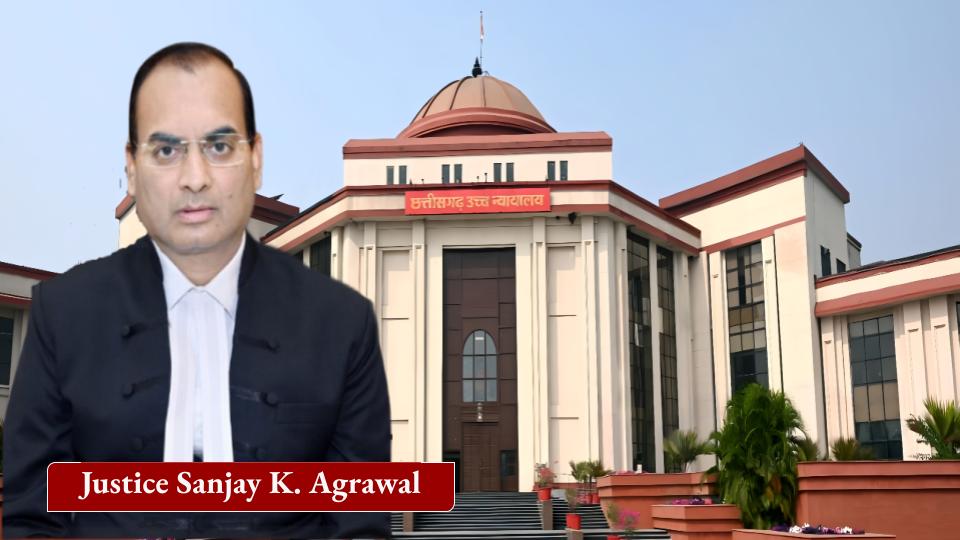
Delivering the judgment in WPC No. 2530 of 2020, Justice Sanjay K. Agrawal allowed the writ petition in part and quashed the Collector of Stamps’ order dated November 25, 2019, to the extent it had refused refund of stamp duty and cess. The Court directed the State authorities to refund ₹23,23,44,000 within four weeks.
The dispute arose from the allocation of the Parsa East and Kanta Basan (PEKB) Coal Blocks in Chhattisgarh to RRVUNL under the Government Dispensation Route. Following the allocation, the State executed a 30-year mining lease in May 2012 after the company paid nearly ₹28 crore towards stamp duty, cess and registration charges. Subsequently, additional stamp duty of ₹6.91 crore was also recovered following an audit objection.
The legal landscape changed dramatically in 2014 when the Supreme Court, in the Manohar Lal Sharma coal block allocation cases, declared the entire coal block allocation process arbitrary and illegal, cancelling all such allocations. Although the Supreme Court allowed the cancellations to take effect from March 31, 2015, to facilitate a smooth transition, RRVUNL argued that the original allocation and the consequential mining lease were void in law from the very beginning.
After the Central Government re-allotted the same coal block to the company under the Coal Mines (Special Provisions) Act, 2015, RRVUNL was compelled to execute a fresh mining lease and again pay substantial stamp duty and registration charges. The company sought refund of the earlier stamp duty under Section 49(d)(1) and Section 49(d)(6) of the Indian Stamp Act, which deal with allowance for spoiled stamps when an instrument is subsequently found to be absolutely void in law or becomes useless because the transaction is completed through another instrument. Its claim, however, was rejected by the Collector of Stamps in 2019, leading to the present writ petition.
Before the High Court, the petitioner argued that the Supreme Court’s declaration of illegality operated retrospectively and rendered the original mining lease void from its inception. It further relied on the doctrine of restitution under Section 65 of the Indian Contract Act, 1872, contending that the State could not unjustly retain the stamp duty collected on a lease that ultimately became legally unenforceable.
The State Government opposed the petition, contending that the mining lease had remained operational for several years and had been acted upon by the company. It argued that Section 49 of the Indian Stamp Act applies only to spoiled stamps and not to instruments that had already been executed and used. The State also raised objections regarding the maintainability of the writ petition, asserting that the company had an alternative remedy under Section 56(4) of the Indian Stamp Act and could also seek compensation under Section 16 of the Coal Mines (Special Provisions) Act, 2015.
Rejecting these preliminary objections, the High Court held that Section 56(4) applies only to disputes regarding the amount of stamp duty chargeable and not to claims seeking refund of stamp duty. It also ruled that the compensation mechanism under the Coal Mines (Special Provisions) Act, 2015 relates to compensation for land and mining infrastructure and had no application to a claim for refund of stamp duty.
Examining Section 49 of the Indian Stamp Act, the Court observed that the legislation is primarily a fiscal statute intended to secure revenue for the State and should not be used to defeat legitimate claims where the legal foundation of the transaction itself has disappeared. The Court held that although the Supreme Court deferred the effective date of cancellation by six months for administrative reasons, that postponement did not alter the legal conclusion that the coal block allocation itself had been declared illegal.
Justice Agrawal observed that the temporary continuation of mining operations did not change the legal character of the original lease. The Court concluded that the mining lease became “absolutely void in law from the beginning” within the meaning of Section 49(d)(1) of the Indian Stamp Act, entitling the company to refund of the stamp duty and cess paid on the instrument.
Referring to the principle of restitution embodied in Section 65 of the Indian Contract Act, the Court also emphasized that where a contract is discovered to be void, any benefit received under it should ordinarily be restored to prevent unjust enrichment. The judgment reinforces the principle that the State cannot retain fiscal benefits arising from a transaction that has subsequently been declared legally invalid.
However, the High Court declined the company’s request for interest on the refund. It noted that the writ petition did not originally seek interest, the Indian Stamp Act contains no statutory provision authorising payment of interest on refund of spoiled stamp duty, and even the Supreme Court had declined to award interest in similar circumstances.
The Court also refused refund of the registration fee, holding that Section 49 of the Indian Stamp Act deals exclusively with spoiled stamp duty and does not authorise refund of registration charges after a document has been registered. Since no provision under the Registration Act, 1908, or any other statute permitted such refund, the Court upheld the Collector’s decision on this limited issue.
Allowing the petition in part, the High Court directed the State of Chhattisgarh to refund ₹15.54 crore towards stamp duty, ₹77.70 lakh towards cess, and ₹6.91 crore towards additional stamp duty, aggregating ₹23.23 crore, within four weeks, while affirming rejection of the claim for registration fee and interest.
The ruling is expected to have wider implications for disputes involving stamp duty paid on government contracts, mining leases and other instruments that subsequently become legally void due to judicial pronouncements. It clarifies the scope of Section 49 of the Indian Stamp Act and reinforces the application of the doctrine of restitution where public authorities retain benefits arising from invalid transactions.
Case Reference: Rajasthan Rajya Vidyut Utpadan Nigam Limited v. State of Chhattisgarh & Others, WPC No. 2530 of 2020, Chhattisgarh High Court, decided on July 13, 2026.