News Citation : 2026 LN (HC) 357 | 2026:CGHC:22566
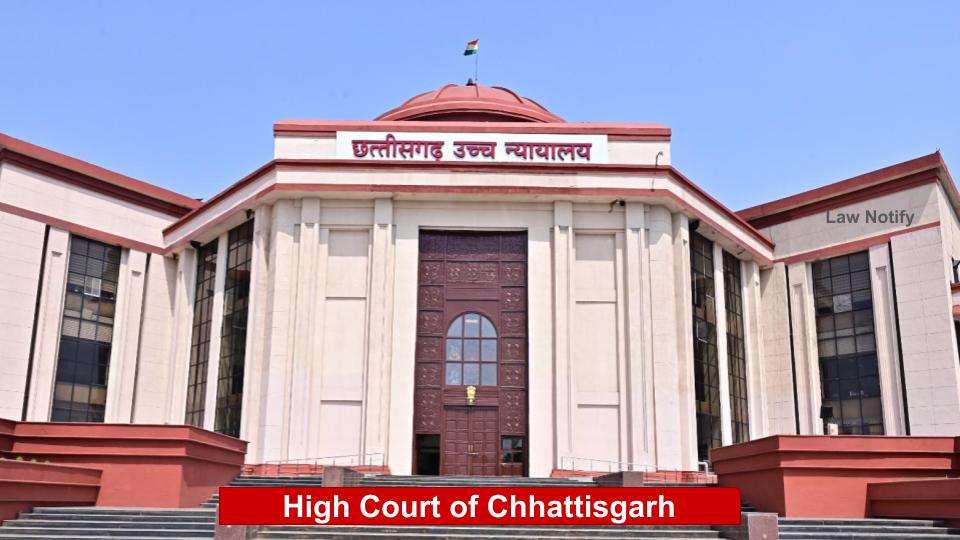
May 13, 2026 : The High Court of Chhattisgarh has refused to appoint an arbitrator in a dispute involving deduction of Building and Other Construction Workers’ (BOCW) welfare cess from payments made to a contractor executing construction work for South Eastern Coalfields Limited (SECL). The Court held that disputes concerning statutory cess liability under special welfare legislation cannot automatically be referred to arbitration merely because the contract contains an arbitration clause.
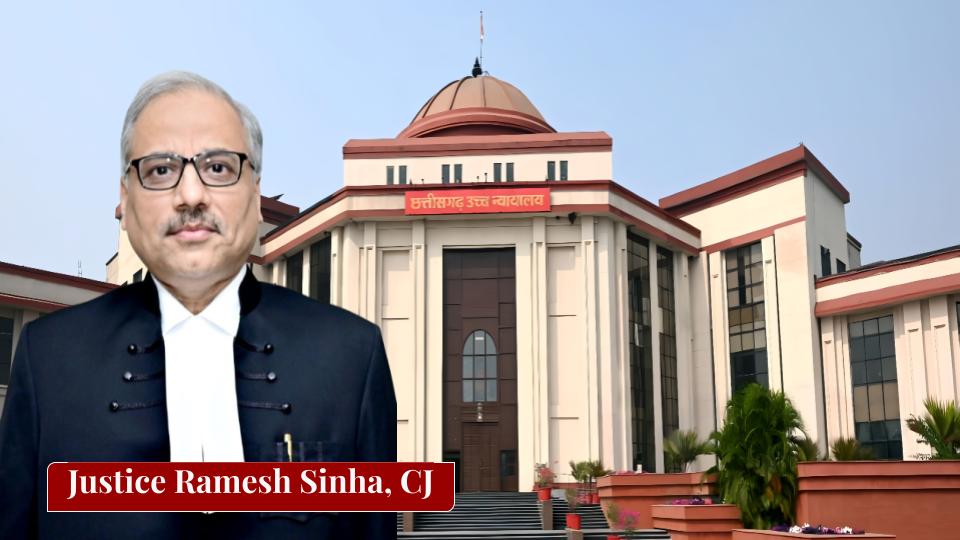
Hon’ble Chief Justice Ramesh Sinha dismissed four arbitration petitions filed by Kolkata-based contractor S.K. Samanta & Co. Pvt. Ltd. under Section 11(6) of the Arbitration and Conciliation Act, 1996. The contractor had sought appointment of a sole arbitrator to adjudicate disputes arising out of deduction of 1% BOCW cess from its running bills in connection with construction projects awarded by SECL.
The dispute arose from contracts awarded by SECL for design, construction, commissioning and maintenance of workshops and related infrastructure at the Gevra Open Cast Project. The tender documents and General Conditions of Contract specifically provided that 1% of the work value would be deducted towards workers’ welfare cess under the Building and Other Construction Workers Welfare Cess Act, 1996 and the corresponding Rules.
The contractor argued before the Court that the BOCW Act was not applicable because the work was being carried out within the precincts of a coal mine and therefore fell within the exclusion carved out under Section 2(1)(d) of the BOCW Act. According to the company, construction work connected with mining operations is governed by the Mines Act, 1952 and consequently no cess could legally be levied or deducted under the BOCW framework.
The petitioner relied heavily on the statutory definition of “building or other construction work” under the BOCW Act, which excludes work governed by the Factories Act or the Mines Act. The company contended that SECL had illegally deducted cess from its invoices despite the statutory exclusion and sought refund of the amount already recovered. The contractor had also written multiple representations to SECL between October 2023 and July 2024 demanding refund of the cess amount.
When no refund was granted, the company invoked the dispute resolution clause contained in the contract and requested constitution of a Dispute Redressal Committee. It subsequently demanded appointment of an arbitrator under Clause 42A of the General Conditions of Contract after SECL allegedly failed to act on the request.
SECL opposed the arbitration petitions by arguing that the cess deductions were statutory in nature and not merely contractual deductions. The coal company told the Court that it was only acting as a collecting agency under directions issued by the State Government and the Chhattisgarh Building and Other Construction Workers Welfare Board. According to SECL, the cess amount had already been deposited with the State authorities and therefore the company itself was not the beneficiary of the deducted funds.
The State Government also defended the cess recovery by contending that the construction work in question was not part of ongoing mining operations but related to project construction activities, making the BOCW Act applicable. The State relied upon the Supreme Court judgment in Lanco Anpara Power Ltd. v. State of Uttar Pradesh to argue that cess under the BOCW legislation is payable on construction activities even when undertaken within industrial or infrastructure projects.
The contractor, however, argued that the dispute was essentially contractual because it concerned the legality and interpretation of Clauses 31 and 32 of the tender conditions. It maintained that questions regarding applicability of the BOCW Act could also be examined by an arbitral tribunal under Section 16 of the Arbitration and Conciliation Act, which empowers arbitrators to rule on their own jurisdiction. The company cited several Supreme Court judgments emphasizing minimal judicial interference at the referral stage under Section 11.
After considering rival submissions, the High Court held that the controversy substantially related to statutory liability rather than pure contractual interpretation. The Court observed that the deduction of cess was made pursuant to statutory provisions, government notifications and contractual clauses consciously accepted by the contractor at the time of execution of the agreement.
The Court specifically noted that the contractor had entered into the agreement fully aware that 1% cess would be deducted from its bills. It held that the issue raised by the petitioner necessarily involved interpretation of the scope and applicability of the BOCW Act and the BOCW Cess Act, which are special legislations containing their own statutory mechanism for levy, collection and adjudication of cess disputes.
In a key observation, the Court said, “Merely because an arbitration clause exists in the agreement would not ipso facto render every dispute arbitrable, particularly when the controversy substantially relates to determination of statutory liability.”
The High Court further held that disputes governed by special statutes and requiring adjudication by statutory authorities are ordinarily non-arbitrable. Since the grievance related to wrongful deduction and applicability of welfare cess under a statutory framework, the proper remedy lay before the competent statutory forum and not before an arbitral tribunal.
Rejecting the request for appointment of a sole arbitrator, the Court concluded that the scope of the dispute “travels beyond the ambit of contractual interpretation” and involves adjudication under special welfare enactments. Consequently, all four arbitration petitions were dismissed.
The ruling is significant for contractors, infrastructure companies and public sector undertakings engaged in construction projects across mining, industrial and infrastructure sectors. The judgment reinforces the principle that disputes involving statutory cess liabilities and welfare legislation may not be capable of resolution through private arbitration even where commercial contracts contain broad arbitration clauses. It also underscores the growing judicial distinction between contractual disputes and disputes involving sovereign or statutory functions of the State.
Case Reference : S.K. Samanta And Co. (P) Ltd. v. South Eastern Coalfields Limited & Ors., ARBR No. 47/2024, ARBR No. 48/2024, ARBR No. 4/2025 & ARBR No. 6/2025; Counsels appearance: Mr. Abhijeet Chatterjee, Senior Advocate assisted by Mr. Aman Pandey and Mr. Vinamra Shrivastava for the applicant, Mr. Vaibhav Shukla for SECL, and Mr. S.S. Baghel, Government Advocate for the State.