May 15, 2026 : The Patna High Court has expressed serious concern over the alarming shortage of librarians across universities in Bihar, observing that the absence of trained library professionals has virtually paralysed academic libraries and is adversely affecting students’ education and research culture. Hearing a civil writ petition concerning vacant librarian posts in state universities, the court directed vice-chancellors and divisional commissioners to complete the recruitment process within a strict timeline.
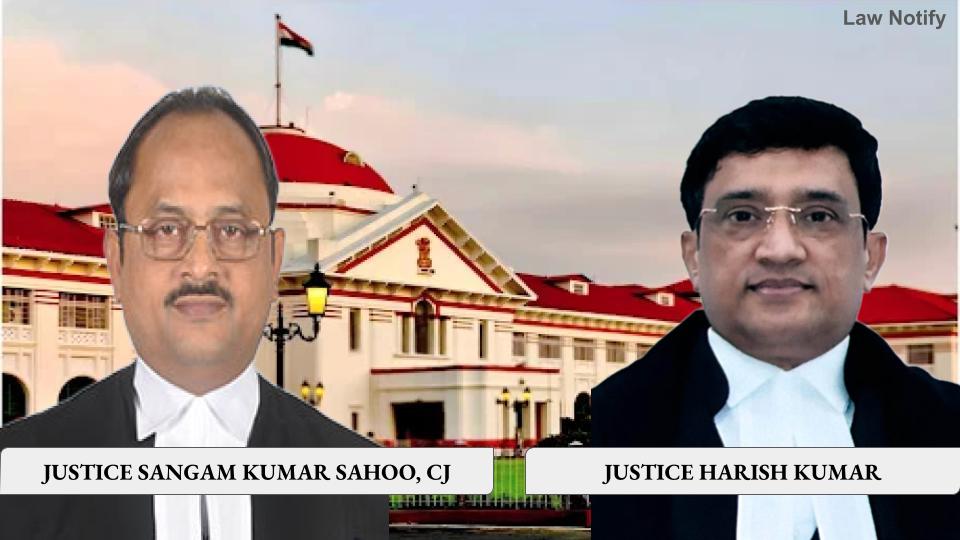
The division bench comprising Chief Justice Sangam Kumar Sahoo and Justice Harish Kumar passed the order on May 15, 2026, in Dr. Ranganathan Rajya Pustakalaya Samiti & Anr. vs State of Bihar & Ors., CWJC No. 2586 of 2021. The court described libraries as the “vibrant, central piece of every campus” and stressed the indispensable role librarians play in higher education. Quoting author Neil Gaiman, the bench remarked, “Google can bring you back 1,00,000 answers, a librarian can bring you back the right one.”
During the hearing, vice-chancellors and officials from several universities across Bihar appeared virtually and informed the court about the extent of vacancies in librarian and assistant librarian posts. The court was told that in many universities, nearly all sanctioned posts remain vacant. Universities including Munger University, Patliputra University, Lalit Narayan Mithila University, Tilka Manjhi Bhagalpur University, Jai Prakash University, Veer Kunwar Singh University, Magadh University, Purnea University and others reported severe shortages in library staff.
According to submissions recorded by the court, Munger University has all 17 librarian posts vacant, while Patliputra University reported that all 21 sanctioned librarian posts remain unfilled. Lalit Narayan Mithila University informed the bench that 37 out of 38 librarian posts are vacant. Jai Prakash University stated that 57 out of 58 sanctioned posts for librarians, deputy librarians and library assistants are lying vacant. Similar vacancy positions were disclosed by several other universities.
The court noted that in some institutions, roster clearance procedures were pending before divisional commissioners, while in others, requisitions for recruitment had already been forwarded to the Director of Higher Education. However, despite repeated steps, appointments had not been made. The bench observed that the prolonged failure to fill these vacancies had brought the proper functioning of university libraries to “a temporary halt,” thereby jeopardising students’ academic growth, research opportunities and future career prospects.
Highlighting the constitutional and educational importance of libraries, the High Court made strong observations on the role of librarians in higher education institutions. The bench said, “The librarian is the custodian of the intellectual capital of a University. Their role is a hybrid of an academic researcher and an administrative manager.” It further observed that a vacant librarian post “is not merely a delay, it is a suspension of the University’s primary duty to provide accessible knowledge.”
The court also drew attention to the distinction between “search and research,” observing that librarians are trained information specialists who help students assess the authority, credibility and peer-review status of academic sources. In one of the strongest observations in the order, the bench stated that the absence of librarians amounts to “a functional breakdown in the administration of justice and the academic health of an institution.”
Explaining the practical consequences of vacant library posts, the court said that without librarians, preservation of books deteriorates, journal subscriptions are not managed properly, reference services become unavailable and systematic academic resource management collapses. The bench held that the vacancy of librarians is “not an administrative choice but a failure of the State’s duty to provide the necessary infrastructure for education and justice.”
To address the issue, the High Court issued a series of mandatory directions. It ordered all universities where roster clearance has not yet been completed to immediately initiate the process and submit vacancy details to the concerned divisional commissioners within two weeks. The divisional commissioners were directed to complete roster clearances within a further period of two weeks. Thereafter, universities must send requisitions for recruitment to the Director of Higher Education within another two weeks. The court emphasised that all authorities are expected to strictly adhere to the timeline fixed by the bench.
The litigation raises broader concerns regarding the condition of higher education infrastructure in Bihar and the prolonged administrative delays in university appointments. The court’s intervention is expected to significantly impact public universities across the state by accelerating recruitment processes and strengthening library systems that are crucial for accreditation, research standards and academic quality.
The matter has now been listed for further hearing on July 6, 2026. The High Court also placed on record its appreciation for the assistance provided by the vice-chancellors and university officials who participated in the proceedings virtually.
Case Reference: Dr. Ranganathan Rajya Pustakalaya Samiti & Anr. vs The State of Bihar & Ors., CWJC No. 2586 of 2021, before the Patna High Court; Petitioners represented by Mr. Navendu Kumar, Advocate and Mr. Vivek Prasad, Amicus Curiae; State represented by Mr. Shashi Shekhar Tiwary, AC to AAG-15; Patna University and BNMU by Md. Nadim Seraj, Advocate; TMBU by Mr. Ashhar Mustafa, Advocate; VKSU by Mr. Rajesh Prasad Choudhary, Advocate; MU, LNMU and BRABU by Mr. Siddhartha Prasad, Advocate; Patliputra University, AU and NOU by Dr. Anand Kumar, Advocate; Munger University by Mr. Sanjay Kumart Ghosarvey, Advocate; Purnia University by Dr. Maurya Vijay Chandra and Ms. Preety Ranjan, Advocates; KSDSU, Darbhanga by Mr. Vindya Keshri Kumar, Senior Advocate assisted by Mr. Binay Kumar Singh, Advocate; and Jai Prakash University by Mr. Bajarangi Lal, Advocate.