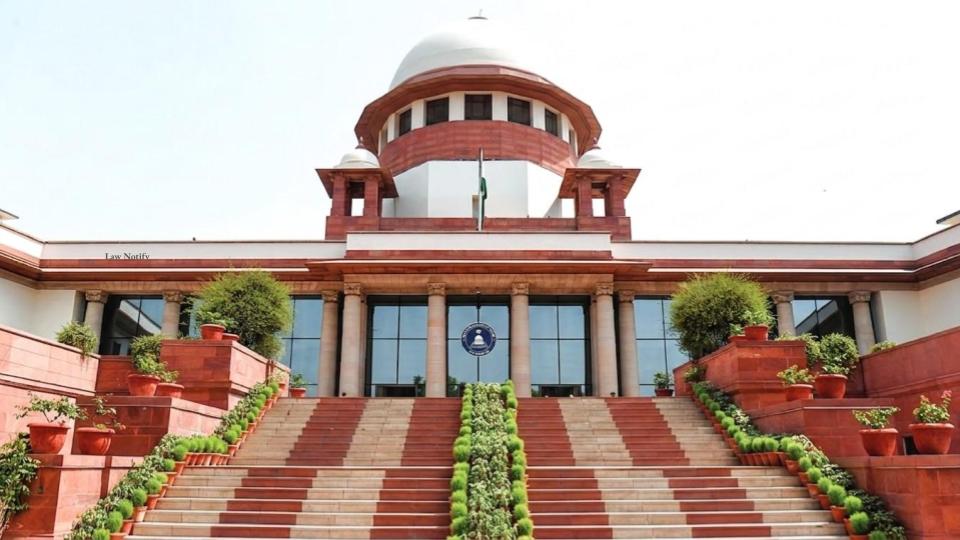
July 13, 2026 : The Supreme Court on Monday dismissed a batch of writ petitions filed by teachers and non-teaching employees of recognised Madrasas in West Bengal, refusing to grant them regularisation, continuation in service, or grant-in-aid benefits. A Bench comprising Justice Dipankar Datta and Justice Augustine George Masih held that none of the petitioners had established a valid legal claim for relief.
The Court had earlier examined the cases of 13 petitioners selected from a group of more than 350 individuals to determine whether any appointment deserved judicial intervention. After finding that none of these cases justified relief, the Bench ruled that the remaining petitions also lacked merit and dismissed the entire batch.
The dispute involved over 40 writ petitions filed under Article 32 of the Constitution by around 361 persons claiming to have been appointed as teachers and non-teaching staff in recognised Madrasas across West Bengal.
The controversy arose after the enactment of the West Bengal Madrasah Service Commission Act, 2008, which created a statutory commission to recommend appointments in recognised Madrasas. Although the Calcutta High Court struck down the law in 2014, and the decision was upheld in 2015, the Supreme Court stayed those judgments in 2016 and later upheld the constitutional validity of the Act in the 2020 judgment in Sk. Md. Rafique v. Managing Committee, Contai Rahamania High Madrasah.
The present dispute concerned appointments made between the Calcutta High Court’s 2015 decision and the Supreme Court’s 2020 verdict. In February 2023, the apex court constituted a committee to examine the legality of these appointments. The committee concluded that the appointments were invalid, leading the affected employees to challenge its findings before the Supreme Court.
During the proceedings, the Court had granted interim protection to the petitioners’ services in August 2024 and later directed the West Bengal government in May 2025 to continue paying salaries to those who were actually performing teaching duties, subject to the final outcome of the case.
Rejecting all claims, the Supreme Court held that the committee had rightly disallowed the appointments and ruled that the petitioners were not entitled to regularisation, continuation in service, or grant-in-aid benefits. Accordingly, all the writ petitions were dismissed.