News Citation : 2026 LN (HC) 399
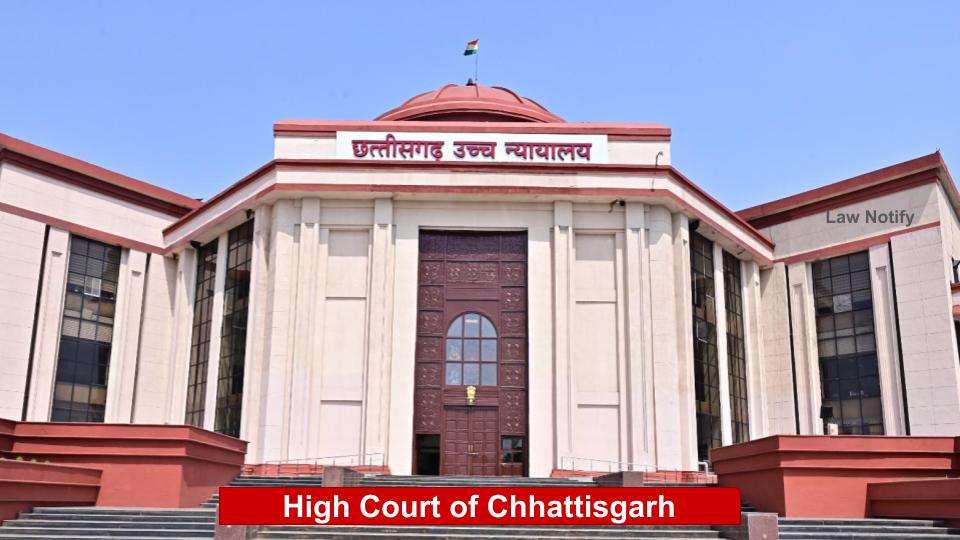
July 17, 2026 : The Chhattisgarh High Court has dismissed an appeal challenging an arbitral award arising from a vehicle hire-purchase dispute. The Court held that once an arbitral award has survived scrutiny under Section 34 of the Arbitration and Conciliation Act, 1996, the appellate jurisdiction under Section 37 is even narrower and cannot be exercised to reappreciate evidence or substitute the arbitrator’s findings with another possible view.
The appeal was filed by Madhusudan Agrawal against an order of the District Judge, Raipur, which had rejected his application under Section 34 of the Arbitration and Conciliation Act, 1996 seeking to set aside an arbitral award passed in favour of the finance company, Galaxy Exfeen Ltd., presently known as Sunita Finlies Ltd. The dispute originated from a hire-purchase agreement executed in August 1996 for financing the purchase of a Maruti Van. Under the agreement, the appellant was required to repay the financed amount through 23 instalments, while the agreement also contained an arbitration clause authorising the Managing Director of the finance company to appoint a sole arbitrator in the event of disputes.
The appellant alleged that although he had paid the margin money, the vehicle was never delivered and accused the finance company and the guarantor of acting fraudulently. He claimed that despite the alleged non-delivery of the vehicle, the finance company recovered the first instalment and later initiated arbitration proceedings. The appellant had also issued a legal notice and lodged a police complaint before the arbitration commenced. The finance company, however, maintained that it had disbursed the finance, the appellant defaulted in repayment, and sought recovery of the outstanding amount through arbitration.
Initially, an ex parte arbitral award was passed but was later set aside by the District Court, which remanded the matter for fresh proceedings. After remand, the appellant challenged the appointment of the arbitrator, objected to the procedure being followed, and contested the claim on merits. Despite these objections, the arbitrator ultimately passed a fresh award in favour of the finance company on 14 March 2001, which was subsequently upheld by the District Judge under Section 34 of the Arbitration and Conciliation Act.
Before the High Court, the appellant argued that the arbitration proceedings were invalid because the agreement referred to the repealed Arbitration Act, 1940, that the arbitrator was an employee of the finance company and therefore lacked independence, that his consent had not been obtained before the arbitrator’s appointment, and that he had been denied a fair opportunity to present his defence. It was also contended that the District Judge failed to exercise the powers available under Section 34 by refusing to interfere with the award.
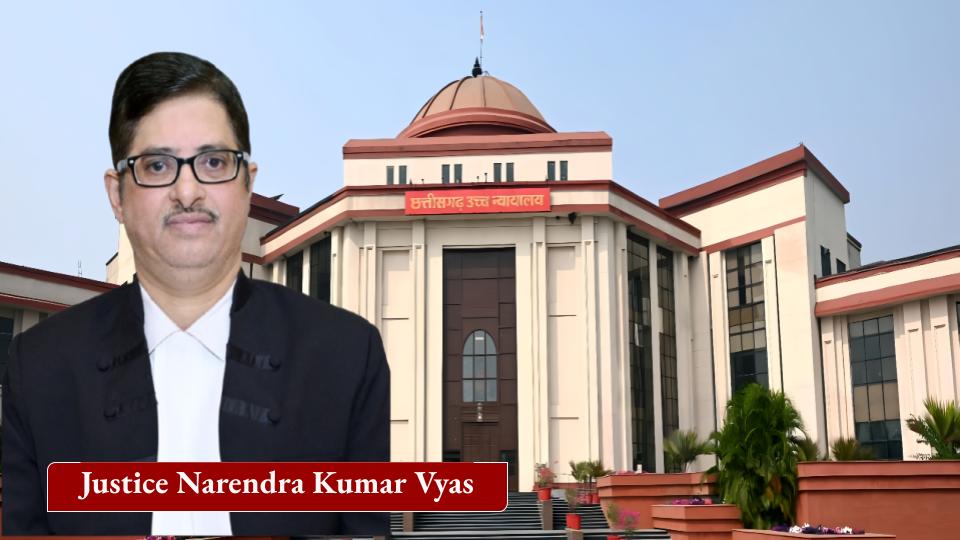
Rejecting these submissions, Justice Narendra Kumar Vyas held that although the agreement mentioned the Arbitration Act, 1940, it also expressly provided that arbitration would be governed by any statutory amendment. Since the agreement was executed after the Arbitration and Conciliation Act, 1996 had already come into force, the arbitral proceedings were rightly conducted under the 1996 Act. The Court observed that “the arbitration proceedings have been initiated under the Act, 1996” and that the appellant’s objection on this issue was “misconceived.”
The Court also rejected the challenge to the appointment of the sole arbitrator, Suresh Jain, who was an employee of the finance company. Referring to the unamended provisions of Section 12 of the Arbitration and Conciliation Act, 1996, the Court clarified that before the 2015 amendments, there was no absolute prohibition against appointing an employee as an arbitrator. The Court held that such an appointment could be questioned only if circumstances created “justifiable doubts” regarding the arbitrator’s independence or impartiality. Since no material was produced to establish bias or personal interest, and the issue had already attained finality in earlier proceedings, the appointment could not be reopened. The Court relied on the Supreme Court’s decision in Aravali Power Company Pvt. Ltd. v. Era Infra Engineering Ltd. to support this conclusion.
On the allegation that the appellant was denied an opportunity of hearing, the High Court examined the arbitral record and found that multiple hearings were held after remand, adjournments were granted at the appellant’s request, objections were considered, witnesses were examined and cross-examined, and written submissions were filed. The Court concluded that “the learned Arbitrator has given opportunity of hearing in every aspect of the matter,” making the allegation of denial of natural justice unsustainable.
Explaining the legal framework governing judicial review of arbitral awards, the High Court reiterated that Sections 34 and 37 of the Arbitration and Conciliation Act provide only limited grounds for interference. Relying on recent Supreme Court decisions, including Punjab State Civil Supplies Corporation Ltd. v. Sanman Rice Mill (2024) and Jan De Nul Dredging India Pvt. Ltd. v. Tuticorin Port Trust (2026), the Court emphasised that appellate courts cannot reassess evidence or interfere merely because another interpretation of facts is possible. The judgment observed that “the appellate jurisdiction has a much narrower scope of intervention particularly when the arbitration award has been upheld under Section 34 of the Act.”
The Court ultimately found no patent illegality, violation of public policy, or breach of the fundamental principles of Indian law in the arbitral award. Holding that none of the statutory grounds under Section 34 were established and that the appellate power under Section 37 could not be expanded into a regular appeal on facts, the High Court dismissed the appeal and vacated the interim order granted earlier.
The ruling reinforces the pro-arbitration approach consistently adopted by Indian courts and underscores that judicial intervention in arbitral awards remains an exception rather than the rule. The decision serves as an important reminder for commercial parties that courts will ordinarily respect contractual dispute-resolution mechanisms and will interfere with arbitral awards only in cases involving patent illegality, violation of public policy, or other limited statutory grounds expressly recognised under the Arbitration and Conciliation Act, 1996.
Case Reference: Madhusudan Agrawal v. Galaxy Exfeen Ltd. (now Sunita Finlies Ltd.) & Another, MA No. 1490 of 2005