News Citation : 2026 LN (HC) 408
July 27, 2026 : In a significant ruling on service jurisprudence, the Chhattisgarh High Court has held that a promotion granted in violation of statutory service rules does not create any enforceable or vested right in favour of an employee. Dismissing a writ petition filed by two employees of the Water Resources Department, the Court ruled that an employer is legally empowered to withdraw an illegal promotion after following the basic principles of natural justice. The judgment reinforces the principle that administrative authorities have the power to rectify promotions made contrary to law, even after employees have served on the promotional post for several years.
The case arose after petitioners Hirman Das Mahant and Vidyabhushan Shukla challenged an order dated 25 June 2026 issued by the Chief Engineer, Minimata (Hasdeo) Bango Project, Bilaspur. By that order, the department cancelled their promotions from the post of Jeep Driver to Mechanic Grade-II, which had originally been granted on 12 April 2023, and reverted them to their substantive posts. The petitioners approached the High Court under Article 226 of the Constitution of India, contending that the cancellation was arbitrary, unreasonable and contrary to the principles of natural justice.
The employees argued that they had earned promotion after undergoing the prescribed selection process and had continuously worked as Mechanic Grade-II for nearly three years. Their names had also been included in the provisional seniority list. According to them, there was no allegation of fraud, concealment or misrepresentation on their part. They contended that if any procedural lapse had occurred, it was attributable to the Departmental Promotion Committee (DPC) or the department itself, and employees should not be penalised for administrative mistakes. They further submitted that once the promotion had been implemented and acted upon, it could not be withdrawn after such a long period.
Opposing the petition, the State Government maintained that the promotions had been granted in complete violation of the statutory rules governing work-charged employees. During departmental scrutiny, it was found that the DPC had ignored mandatory eligibility conditions and the prescribed promotion procedure. The State informed the Court that before cancelling the promotions, show-cause notices had been served on both employees, their detailed replies were examined and only thereafter a reasoned order was passed by the competent authority. According to the State, the case involved correction of an illegal administrative action and not disciplinary punishment. Reliance was placed on the Supreme Court judgment in Union of India & Another v. Narendra Singh, (2008) 2 SCC 750, which holds that promotions granted contrary to statutory rules do not confer any enforceable right upon employees. The State also relied upon Fundamental Rule 31-A, which permits regulation of pay when an appointment or promotion is subsequently found to be erroneous.
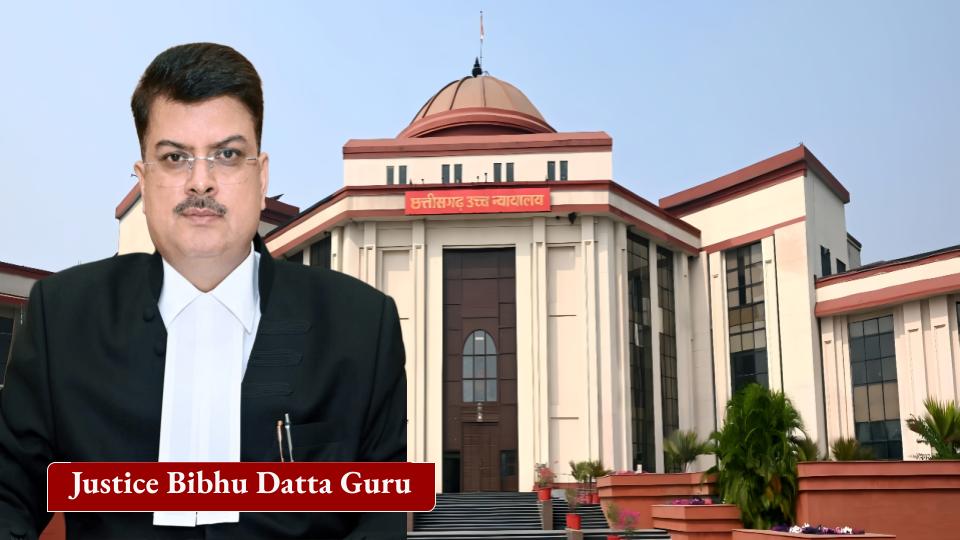
After hearing both sides, Justice Bibhu Datta Guru observed that the proceedings were not disciplinary in nature because there was no allegation of misconduct against the petitioners. Instead, the departmental exercise was confined to examining whether the DPC had complied with the applicable statutory rules while recommending the promotions. The Court clarified that issuing show-cause notices before cancelling the promotions was merely a measure to satisfy the principles of natural justice and did not convert the matter into disciplinary proceedings.
Explaining the legal position, the Court held that an administrative review aimed at correcting an erroneous promotion cannot be equated with punishment. The judgment observed, “Once the very foundation of promotion is found to be contrary to statutory provisions, continuation of such promotion cannot be claimed as a matter of right.” The Court further reiterated the settled principle that “there can be no estoppel against a statute,” meaning an employee cannot claim legal protection merely because an illegal promotion remained effective for some time.
The High Court also noted that the requirement of audi alteram partem, one of the fundamental principles of natural justice requiring an opportunity of hearing before an adverse decision, had been substantially complied with. Since show-cause notices were issued, representations were received and considered, and a reasoned order was passed thereafter, the Court found no procedural illegality. It further observed that Fundamental Rule 31-A itself recognises the authority of the employer to regulate pay where a promotion is later found to have been granted erroneously, thereby negating any claim of a permanent right arising from such promotion.
The Court emphasised that judicial review under Article 226 of the Constitution is limited. Unless the findings of the competent authority are shown to be arbitrary, mala fide, perverse or without jurisdiction, the High Court will not re-evaluate the correctness of departmental promotion proceedings. Since the petitioners failed to establish that the departmental conclusion regarding violation of promotion rules was unsupported by the record, the Court declined to interfere.
Finding no arbitrariness, mala fides or jurisdictional error in the departmental action, the High Court dismissed the writ petition. The ruling has significant implications for public employment and service law, reaffirming that promotions granted contrary to statutory rules can be withdrawn even after implementation, provided the affected employees receive an opportunity to present their case. The judgment also underscores that administrative authorities retain the power to correct illegal promotions in order to maintain the integrity of statutory recruitment and promotion processes.
Case Reference: Hirman Das Mahant & Another v. State of Chhattisgarh & Others, WPS No. 5352 of 2026,