News Citation : 2026 LN (HC) 423
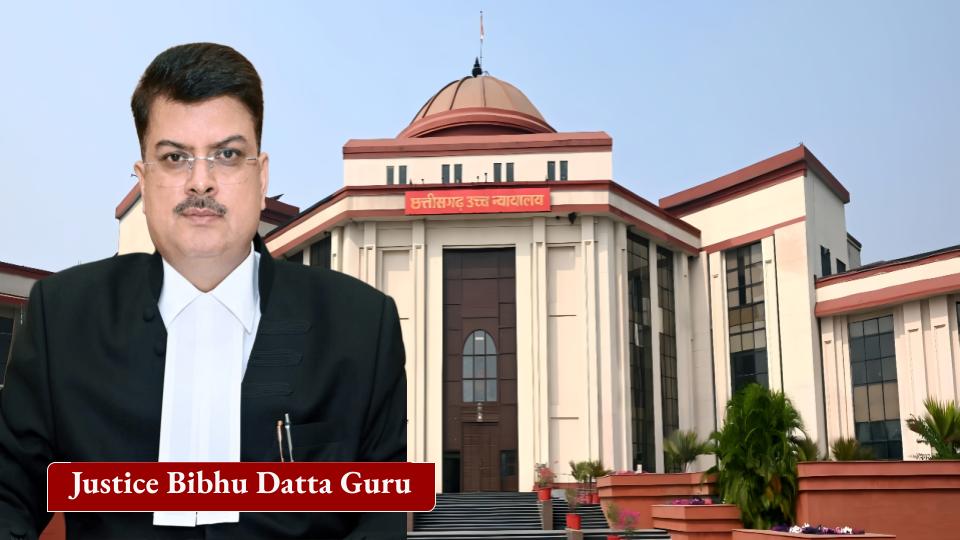
August 18, 2026: The Chhattisgarh High Court has held that an employee cannot claim a legal right to be transferred or posted at a particular place merely because it is his preferred location or his earlier place of service. Justice Bibhu Datta Guru, while dismissing a writ petition filed by an Assistant Grade-III employee of a municipal corporation, observed that the decision regarding the posting of a surplus employee is essentially an administrative matter and courts should not substitute their own choice for that of the competent authority.
The ruling was delivered on August 18, 2026, in WPS No. 6125 of 2026, Ankit Yadu v. State of Chhattisgarh & Others, reported as 2026:CGHC:36789. The petitioner had challenged the order dated July 31, 2026, by which he was transferred from Municipal Corporation Bhilai-Charoda to Municipal Corporation Rajnandgaon. He had sought quashing of the transfer order and requested that he be posted back to Municipal Corporation Raipur, which was his parent establishment.
According to the petition, Ankit Yadu was initially appointed as Assistant Grade-III in Municipal Corporation Raipur. He was subsequently transferred to Municipal Corporation Risali on September 30, 2021, where he was stated to be in excess of the sanctioned strength. He was later transferred from Risali to Municipal Corporation Bhilai-Charoda by an order dated September 18, 2025, where he was again found to be surplus.
The employee had thereafter approached the authorities seeking repatriation to Municipal Corporation Raipur. As his representation was not acted upon, he filed WPS No. 349 of 2026 before the High Court. The petition was disposed of on January 20, 2026, with liberty to submit a fresh comprehensive representation and a direction to the competent authority to consider and decide it in accordance with law.
When the representation was not decided within the stipulated period, the petitioner initiated Contempt Petition No. 841 of 2026. During the pendency of those proceedings, he was granted a personal hearing on July 28, 2026. He requested repatriation to Raipur and also contended that, considering his repeated surplus status at different municipal corporations, the authorities should have considered accommodating him on deputation after obtaining his consent.
Instead, the authorities issued the impugned transfer order dated July 31, 2026, shifting him from Charoda to Rajnandgaon. The petitioner argued before the High Court that the repeated transfers from Raipur to Risali, Risali to Charoda and then Charoda to Rajnandgaon demonstrated non-application of mind. He also argued that the authorities had not properly considered his request for repatriation or deputation.
The State and other respondents opposed the petition. Their position was that the petitioner had been found surplus at Charoda and, considering his request for transfer, he was accommodated at another municipal corporation, namely Rajnandgaon.
Justice Bibhu Datta Guru, after considering the submissions and the material on record, found no legal ground to interfere with the transfer order. The Court noted that the petitioner had admittedly been found surplus at Charoda and had himself sought transfer to another municipal corporation. The fact that he had earlier served in Raipur did not create an enforceable right to be posted there again.
The Court specifically rejected the argument that the petitioner could challenge the transfer merely because deputation might have been another possible arrangement. It held that the question of where a surplus employee should be accommodated falls essentially within the domain of the administration. The Court observed, “The decision regarding the place where a surplus employee is to be accommodated is essentially an administrative matter.”
The High Court further clarified that frequent transfers, by themselves, do not make a transfer order illegal. Similarly, an employee’s preference for a particular place does not impose a corresponding obligation on the employer to accept that request. The Court observed that judicial review cannot be used to replace the competent authority’s administrative decision with a different posting choice simply because another arrangement might appear more suitable from the employee’s perspective.
Referring to the Supreme Court’s decision in Namrata Verma v. State of Uttar Pradesh & Others, 2021 SCC OnLine SC 3337, the High Court reiterated the settled principle that an employee cannot insist on being transferred to, or retained at, a particular place. Transfer decisions are ordinarily governed by administrative requirements, subject to the decision being legally sustainable.
The judgment therefore draws an important distinction between an employee’s personal preference and a legally enforceable right. While an employee may submit a representation seeking a particular posting, such a request does not automatically restrict the employer’s administrative discretion. Judicial interference becomes relevant only when the employee is able to establish a legally sustainable ground for challenging the transfer order.
In the present case, the High Court concluded that the petitioner’s successive transfers and his request for posting at Raipur were insufficient to establish such a ground. The Court found that the petitioner had not demonstrated any circumstance that would render the July 31, 2026 transfer order legally unsustainable.
Consequently, the High Court dismissed WPS No. 6125 of 2026. The ruling is significant for government and local-body employees because it reiterates that posting and transfer are primarily matters of administrative discretion. An employee’s preferred place of posting, previous service at a particular establishment or the fact of having undergone multiple transfers does not, standing alone, create a legal entitlement to a particular posting.
The decision also underscores the limited scope of judicial intervention in routine service matters. Unless a transfer order is shown to suffer from a legally recognized defect, the Court will generally respect the administrative authority’s assessment of staffing requirements, particularly where the employee is surplus at the existing establishment.
Case Reference: Ankit Yadu v. State of Chhattisgarh & Others, WPS No. 6125 of 2026