News Citation : 2026 LN (HC) 422
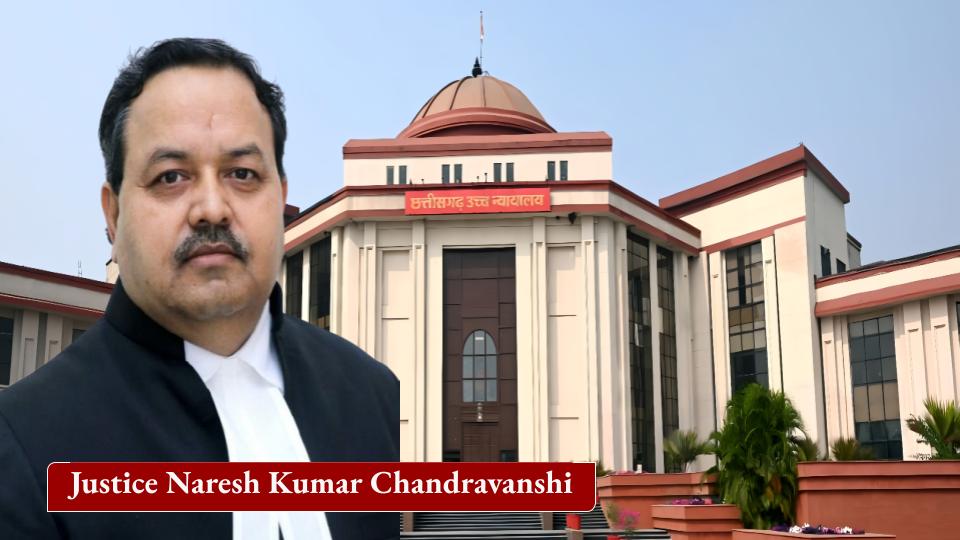
August 18, 2026 : The Chhattisgarh High Court at Bilaspur has upheld a decree of divorce granted on the ground of mental cruelty, holding that persistent and unjustified pressure by a spouse to compel the other to live separately from his parents can, depending on the facts of the case, constitute cruelty. Justice Naresh Kumar Chandravanshi, while dismissing the wife’s appeal in FA(MAT) No. 411 of 2024, Gurpreet Kaur v. Datinder Singh Bhatia, clarified that a mere desire for a separate matrimonial home is not by itself cruelty, but the Court must examine the circumstances, persistence and overall impact of such conduct.
The judgment was pronounced on August 18, 2026, against the judgment and decree dated November 11, 2024, passed by the District Judge, Dongargarh, District Rajnandgaon, in HMA Case No. 6A/2020. The Family Court had dissolved the marriage between the parties under Section 13(1) of the Hindu Marriage Act, 1955, on the ground of cruelty. The marriage had taken place on March 8, 2007.
According to the husband’s case before the Family Court, the parties initially lived peacefully for about one to one-and-a-half years, after which disputes began to arise. He alleged that his wife repeatedly insisted that he should establish a separate household away from his parents, despite the fact that his father was suffering from serious cardiac problems and had undergone three heart surgeries. He further alleged that she disrespected his parents and repeatedly left the matrimonial home with their younger son without informing the family.
The couple had two sons. Their elder son, Aryansh, died during childhood after suffering from a rare disease. The husband alleged that despite attempts by family members and community elders to resolve the disputes, the wife’s conduct did not improve. A family meeting was held on September 6, 2018, following which an apology letter was executed. The husband relied upon the document as evidence that the wife had acknowledged her conduct and assured the family that she would behave properly in future.
The dispute nevertheless continued. The husband stated that the wife again left for her parental home at Pathalgaon in October 2019 and did not return despite efforts to bring her back. He further alleged that on January 22, 2020, during a marriage function in Rajnandgaon, members of the wife’s family misbehaved with and abused his family and threatened them. A police complaint was lodged regarding the incident.
The wife disputed the allegations and presented a substantially different account of the matrimonial dispute. She alleged that the husband acted under the influence of his mother and that she had been subjected to harassment and cruelty in the matrimonial home. She further alleged that the husband’s family demanded Rs. 50 lakh from her parents for establishing a petrol pump and that, when the demand was not fulfilled, she was assaulted and left outside her brother’s house during the night. She also alleged that after the death of their elder son, she was not given emotional support and was instead mistreated by the husband and his family.
Before the High Court, the wife’s counsel argued that the Family Court had failed to properly appreciate her pleadings and evidence and had placed excessive reliance on the apology letter. It was also argued that following the death of her son, the wife had suffered severe emotional distress and that she was still willing to resume matrimonial life with the husband. The husband, however, defended the Family Court’s decision and submitted that the decree had been passed after proper appreciation of the oral and documentary evidence.
The High Court examined the evidence of both sides in detail. It noted that the wife’s brother and maternal uncle, who had participated in reconciliation efforts, admitted the execution of the apology letter. The maternal uncle also stated that he had signed the document after reading it and that neither the husband nor his family members were present when it was prepared. This evidence weakened the wife’s contention that her signatures had been obtained on blank papers and that the apology letter had subsequently been fabricated.
The Court also found material corroboration for the husband’s allegation that the wife repeatedly insisted on separate residence. Evidence from the husband’s witnesses indicated that she had left for her parental home with the younger son without informing the matrimonial family and had even enrolled the child in a school at Pathalgaon. The Court observed that this evidence remained substantially unrebutted during cross-examination.
At the same time, the High Court made an important qualification regarding the demand for separate residence. It categorically observed that “The insistence of a spouse for a separate matrimonial home, by itself, cannot invariably be characterised as cruelty.” According to the Court, a spouse may legitimately seek separate accommodation where there is a reasonable and justifiable basis, particularly where the matrimonial environment is oppressive or unsafe. The legal question is therefore not simply whether a wife asked her husband to live separately, but whether the persistent demand, in the circumstances of the particular case, was unreasonable and amounted to an attempt to compel the husband to sever or substantially alter his relationship with his parents.
The High Court relied upon the Supreme Court’s decision in Narendra v. K. Meena, (2016) 9 SCC 455, which recognised that persistent efforts to compel a spouse to separate from his family, without sufficient justification, may amount to mental cruelty. However, the High Court emphasised that the issue must always be decided on the facts of the individual case.
In the present matter, the Court considered the condition of the husband’s father particularly significant. His three heart surgeries were an admitted fact. Against this background, the husband’s refusal to abandon or distance himself from his ailing father was found to be neither unreasonable nor unnatural. The Court held that marriage does not extinguish the moral and legal responsibilities a person may have towards aged or infirm parents.
The Court explained that “A matrimonial relationship does not confer upon either spouse an unfettered right to compel the other to renounce or abandon pre-existing familial responsibilities.” It further noted that marriage creates a new family but does not, merely by virtue of the marriage, eliminate a person’s responsibilities towards dependent or infirm parents.
On the broader question of mental cruelty, the High Court stressed that matrimonial conduct cannot ordinarily be assessed by isolating a single incident. The relationship has to be examined as a whole, considering the nature and continuity of the conduct and its effect on the spouse alleging cruelty. The Court observed that ordinary wear and tear of married life and isolated quarrels would not ordinarily amount to cruelty. However, persistent conduct that makes continuation of matrimonial life reasonably difficult can cross that threshold.
After examining the evidence cumulatively, the High Court concluded that the husband had successfully established mental cruelty. It found that the Family Court’s conclusions were based on proper appreciation of the pleadings and evidence and did not suffer from perversity or illegality warranting appellate interference.
Consequently, Justice Naresh Kumar Chandravanshi dismissed the wife’s appeal and affirmed the divorce decree dated November 11, 2024, passed by the District Judge, Dongargarh. The marriage between Gurpreet Kaur and Datinder Singh Bhatia therefore remains dissolved.
The ruling is significant because it draws a careful distinction between a legitimate request for independent matrimonial accommodation and persistent conduct that, in the circumstances of a particular marriage, may amount to mental cruelty. The judgment does not establish that a wife’s demand to live separately from her in-laws is inherently cruel. Instead, it reinforces the settled principle that matrimonial cruelty must be determined from the totality of circumstances, the justification for the conduct and its effect on the continuation of the marital relationship.
The principal statutory provision involved in the case is Section 13(1) of the Hindu Marriage Act, 1955, under which the husband sought dissolution of marriage on the ground of cruelty. The appeal before the High Court was filed under Section 28 of the Hindu Marriage Act, 1955. The decision therefore concerns matrimonial law and mental cruelty under the Hindu Marriage Act rather than criminal liability, and the judgment does not record any finding of criminal guilt against either spouse.
Case Reference: Gurpreet Kaur v. Datinder Singh Bhatia, FA(MAT) No. 411 of 2024.