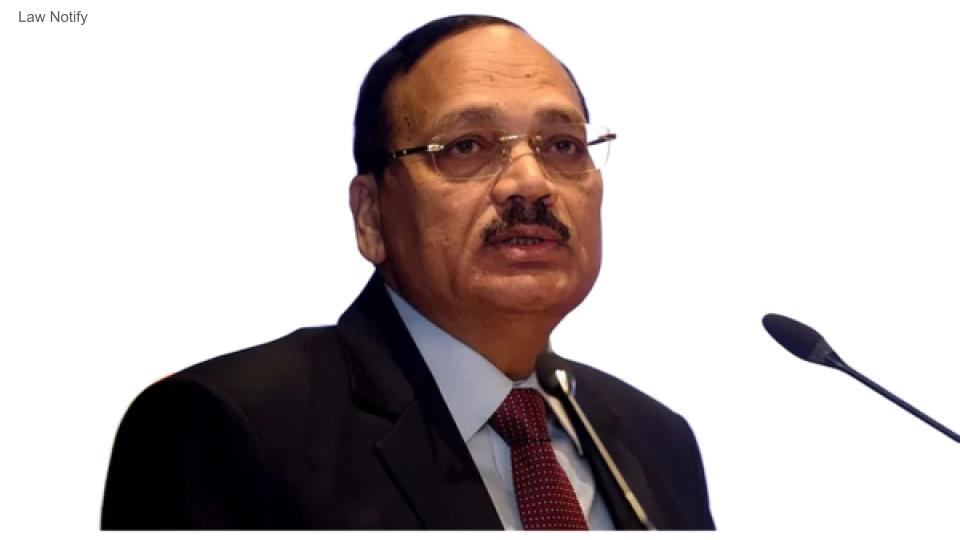
August 7, 2026 : Chief Justice of India Justice Surya Kant on Friday said that mediation represents the future of justice delivery and asserted that India has the legislative, institutional and technological framework necessary to emerge as a global leader in Alternative Dispute Resolution (ADR).
Delivering the inaugural address at the International ADR Conference 2026, organised by the Maadhyam International Council for Conflict Resolution in New Delhi, the Chief Justice called upon judges, lawyers, policymakers and mediation professionals to work collectively to strengthen India’s ADR ecosystem and position the country as a preferred global destination for dispute resolution.
Speaking on the conference theme, “ADR Pathways to Legal Harmony,” Justice Surya Kant observed that mediation has evolved far beyond being merely an alternative to litigation. He said it is now becoming an integral part of the justice delivery system, reflecting a significant shift in the way justice is understood and administered.
Sharing an experience from his early years at the Bar, the Chief Justice recalled a commercial dispute involving two business partners who had initially approached the court for adjudication. Instead of pursuing prolonged litigation, the parties resolved their differences through dialogue and negotiated a mutually acceptable settlement outside the courtroom. He said the experience demonstrated that mediation not only resolves disputes but also preserves relationships by allowing parties to craft practical solutions that judicial orders often cannot achieve.
Highlighting the strengths of mediation, Justice Surya Kant said that its effectiveness lies in party autonomy rather than judicial determination. Referring to empirical studies, he noted that mediated settlements enjoy significantly higher rates of voluntary compliance than decisions delivered through conventional adjudication, making mediation a more sustainable and durable method of dispute resolution.
The Chief Justice also drew a distinction between litigation and consensual dispute resolution mechanisms. While courts and arbitral tribunals primarily determine legal rights and liabilities, mediation enables parties to identify practical, mutually beneficial solutions capable of preserving long-term personal and commercial relationships.
Emphasising the importance of legislative reforms, Justice Surya Kant described the Mediation Act, 2023 as a landmark statute that, for the first time, provides a comprehensive legal framework governing mediation in India. He noted that the law strengthens the principle of party autonomy by allowing disputing parties to choose both the mediator and the mediation procedure. It also grants mediated settlement agreements legal enforceability comparable to a decree of a civil court.
The Chief Justice further observed that the enactment of the Mediation Act, the establishment of court-annexed mediation centres across the country, capacity-building initiatives undertaken by judicial academies and the steady evolution of mediation jurisprudence collectively demonstrate the judiciary’s long-term commitment to institutionalising consensual dispute resolution within India’s justice system.
Referring to technological developments, Justice Surya Kant highlighted the growing role of Online Dispute Resolution (ODR) platforms and hybrid mechanisms such as Med-Arb-Med. He said technological innovations have significantly improved the accessibility, efficiency and enforceability of mediation, particularly in cross-border commercial disputes.
Concluding his address, the Chief Justice expressed confidence that with sustained legislative reforms, institutional support and coordinated efforts from all stakeholders, India is well positioned to become one of the world’s leading centres for Alternative Dispute Resolution and mediation.