August 16, 2026 : Bar Council of India (BCI) Chairperson and Senior Advocate Manan Kumar Mishra has expressed regret and tendered an apology to law students amid the controversy surrounding the convocation of the 2026 graduating batch of the National Academy of Legal Studies and Research (NALSAR), Hyderabad. In an Independence Day communication addressed to the legal fraternity, Mishra acknowledged that the developments of the past few days had caused “concern and anguish” among a section of students.
Mishra said that whenever students feel aggrieved, their concerns deserve to be heard with patience, sensitivity and respect. He expressed “sincere regret” if any part of the controversy, including his words or correspondence, had hurt the sentiments of students.
The BCI Chairperson clarified that an expression of regret should not be viewed through the prism of institutional prestige or personal ego. Rather, he said, it should be understood as an acknowledgement that the concerns, dignity and sentiments of students deserve due regard.
The apology assumes significance against the backdrop of the dispute involving NALSAR’s 2026 graduating batch and the participation of Chief Justice of India Surya Kant in the university’s convocation. The controversy escalated after students raised objections regarding the invitation extended to the CJI as the chief guest.
The matter became more contentious after the BCI directed State Bar Councils not to enrol members of the NALSAR 2026 graduating batch as advocates until further orders. The decision triggered a wider legal and institutional debate over the extent of the BCI’s regulatory powers and whether professional consequences could follow from students expressing dissent.
The BCI subsequently withdrew the direction and closed the proceedings concerning the graduating students, observing that the students had no role in any disturbance.
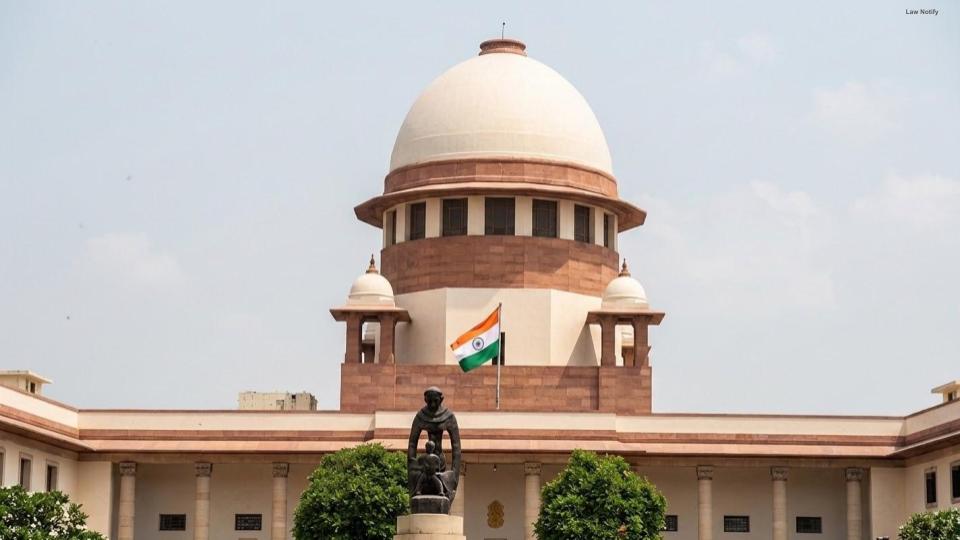
The controversy later reached the Supreme Court, where a Bench headed by CJI Surya Kant questioned the BCI’s intervention. The Court emphasised the entitlement of students to express their views and peacefully protest, while also questioning the rationale behind the regulatory action taken in connection with the dispute.
Against this backdrop, Mishra’s latest communication adopts a conciliatory approach and places emphasis on constitutionalism, institutional comity, dialogue and democratic dissent.
Mishra described students of National Law Universities and other premier legal education institutions as among the country’s most informed and discerning young citizens. He noted that their legal education exposes them to constitutional values, the rule of law, fairness and the principle of audi alteram partem, under which all sides must be heard before an informed conclusion is reached.
He further stated that law students are capable of exercising independent judgment and “do not require anyone to decide for them”. According to him, students should not be subjected to pressure or influence from any quarter.
The BCI Chairperson also highlighted the institutional importance of National Law Universities in India’s legal education system. Students graduating from these institutions go on to become advocates, senior advocates, academics, legal scholars and members of the judiciary. Their experiences and the manner in which institutional disagreements are handled therefore carry significance beyond an individual controversy.
Mishra stressed that “peaceful disagreement, questioning and protest” are integral to a constitutional democracy. Students, he said, must remain free to articulate their views. At the same time, he observed that legal and intellectual traditions require individuals to reconsider their position objectively when additional facts or clarifications become available.
According to the BCI Chairperson, there is no contradiction between raising a genuine grievance and subsequently reassessing the issue after receiving further clarification. Such an approach, he suggested, reflects the intellectual discipline expected from members of the legal profession.
On the question of participation in the convocation, Mishra acknowledged the importance of the ceremony for graduating students and their families. He described the convocation as the culmination of years of academic effort and an important transition into professional life.
He made it clear that the decision to attend or abstain from the ceremony should rest entirely with the students. No student, he said, should be compelled either to participate in the convocation or to stay away. The decision should instead be taken autonomously after considering all aspects of the controversy and exercising independent judgment.
Mishra also underlined the enduring relationship between the Judiciary, the Bar, universities and law students. According to him, this institutional relationship is larger than any temporary disagreement and should ultimately be strengthened through dialogue, clarification and mutual respect.
The communication carries a broader constitutional message concerning institutional autonomy and the intellectual independence of law students. Mishra said the BCI considers students to be the future of the legal profession and that their dignity, independent thinking and legitimate concerns must be respected.
At the same time, he stressed that dialogue, mutual respect and commitment to constitutional values remain essential elements of the professional culture that law students will inherit as future members of the Bar, Bench and legal academia.
Calling for reconciliation, Mishra urged that the NALSAR controversy should not be given a “political or extraneous colour” through outside influence. He expressed confidence that students possess the maturity and discernment necessary to examine the facts, consider subsequent clarifications and arrive at their own conclusions.
The latest communication therefore marks a significant shift towards institutional dialogue rather than confrontation. It also reiterates that students should be free to make decisions concerning their participation in the convocation without coercion or external pressure.
The controversy has raised important questions concerning the regulatory authority of the BCI, the professional enrolment of law graduates, the autonomy of legal education institutions and the constitutional protection available to peaceful dissent and freedom of expression.
Mishra concluded by emphasising the importance of independent thought, reason, fairness and the ability to listen to divergent viewpoints. These qualities, he said, would remain among the greatest strengths of students who may eventually occupy positions of responsibility across the Bar, Bench and legal academia.
The communication was issued by Manan Kumar Mishra in his capacity as Senior Advocate, Supreme Court of India, and Chairperson of the Bar Council of India, along with Independence Day greetings to law students, teachers, members of the Bar and citizens.