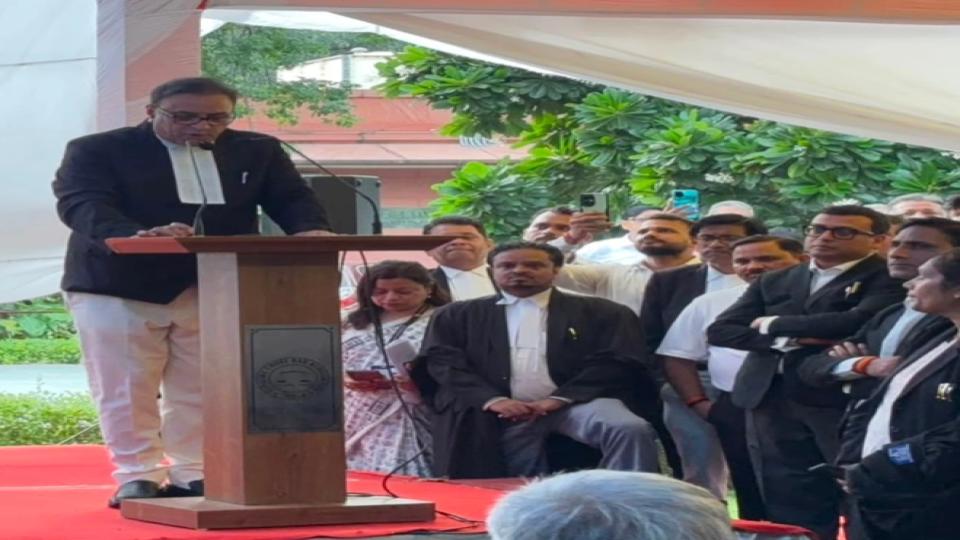
New Delhi: Senior Advocate Pradeep Rai, a prominent candidate for President of the Supreme Court Bar Association (SCBA) in the 2026 elections, has placed professional opportunities, welfare security and institutional reforms at the centre of his campaign. Addressing the candidates’ public debate, Rai outlined a series of proposals aimed at addressing long-standing concerns of advocates practising before the Supreme Court.
Rai said improving professional opportunities for SCBA members would be among his principal priorities. He emphasised the need for an institutional framework that enables advocates to expand their practice and access meaningful opportunities before the Supreme Court.
Beginning his address, Rai referred to concerns that, according to him, have remained unresolved for years. He said advocates have repeatedly raised issues relating to canteen facilities, chambers, parking, Wi-Fi, library facilities, technology and common working spaces. He stressed that providing such basic facilities should be treated as a responsibility rather than an achievement.
Pradeep Rai Opposes Sequencing System
A key part of Rai’s campaign is his proposal to abolish the sequencing system. He has argued for removing the mechanism, maintaining that opportunities for appearance should be structured in a manner that provides a more equitable and merit-sensitive professional environment for advocates.
The issue of access to work and opportunities to appear before the Supreme Court has been a recurring concern within the Bar. Rai’s opposition to sequencing forms part of his broader proposal to create a professional ecosystem in which advocates have greater and fairer access to opportunities.
₹50 Lakh Medical Insurance for SCBA Members
Rai has also proposed medical insurance coverage of up to ₹50 lakh for SCBA members. The proposal seeks to create a substantially stronger healthcare safety net for advocates and their families.
If implemented, the scheme could significantly expand the welfare support available to members of the Supreme Court Bar. Rai’s proposal places healthcare security within the broader institutional responsibilities of the Bar association rather than treating it merely as an optional welfare benefit.
Housing Society for Advocates
Housing is another major component of Rai’s campaign agenda. He has proposed establishing a large housing society for SCBA members to help address the difficulties advocates face in securing affordable and stable accommodation in Delhi and the National Capital Region.
With housing costs remaining a significant concern in the NCR, the proposal seeks to extend the SCBA’s welfare role beyond facilities within the Supreme Court complex and towards the broader economic security of its members.
Merit-Based Scholarships for Children
Rai has further proposed a merit-based scholarship programme for the children of SCBA members. The scheme is intended to provide financial assistance to deserving students while recognising academic achievement.
The proposal would give the SCBA’s welfare agenda an inter-generational dimension by extending institutional support to the educational aspirations of advocates’ families.
Overall, Rai’s campaign proposals focus on three broad areas: improving professional opportunities, strengthening medical and economic security, and expanding long-term welfare support for advocates and their families.
The emphasis on professional opportunities is particularly relevant amid continuing discussions within the Bar about access to work and appearances before the Supreme Court. Rai’s opposition to sequencing is therefore positioned as part of a larger call for a fairer and more merit-oriented professional environment.
Other Candidates Present Their Proposals
Other candidates participating in the public debate also presented proposals concerning the functioning and facilities of the SCBA. Suggestions included shifting the SCBA museum to optimise available space, improving facilities for advocates, creating a designated smoking area and strengthening the role of the Supreme Court Registry in protecting the dignity and professional convenience of lawyers.
The other candidates in the SCBA presidential race include Mahalakshmi Pavani, Md Izhar Alam, Adish Aggarwala, Gaurav Bhatia, Anupam Lal Das, Sukumar Pattjoshi, Siddharth Mridul and KS Chauhan.
The 2026 SCBA election is expected to focus significantly on professional access, welfare measures, infrastructure and institutional reforms as candidates seek support from members of the Supreme Court Bar.