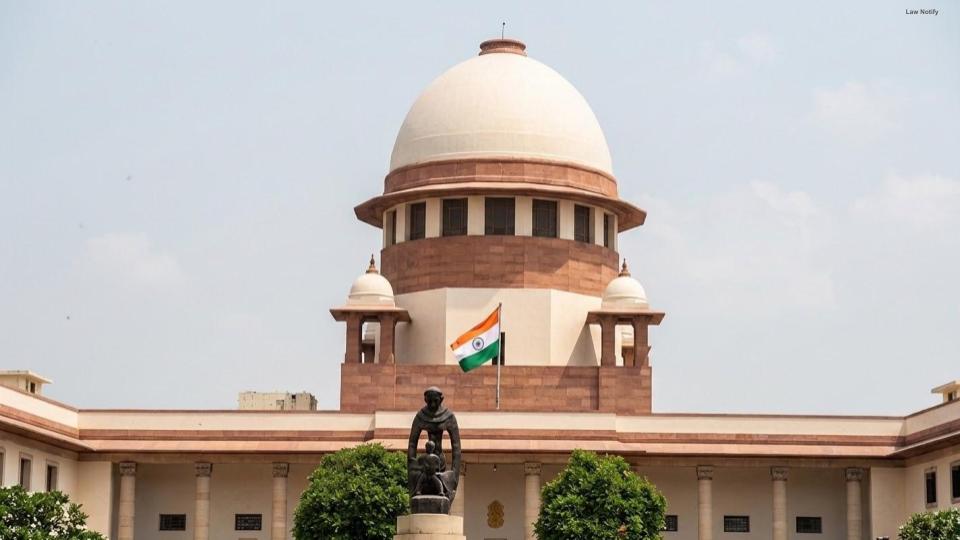
August 17, 2026 : Court declines to transfer probe to CBI for now, maintains judicial oversight over investigation into alleged misappropriation and financial irregularities
The Supreme Court on Monday directed the Special Investigation Team (SIT) probing allegations of misappropriation, diversion of funds and financial irregularities concerning donations collected for the construction of the Ayodhya Ram Mandir to consider specific suggestions submitted by the petitioners and other bona fide, public-spirited citizens.
A Bench comprising Chief Justice of India Surya Kant, Justice Joymalya Bagchi and Justice V. Mohana passed the direction while hearing petitions seeking an independent investigation into the alleged irregularities. The petitioners have also sought a probe by the Central Bureau of Investigation (CBI), questioning the adequacy and impartiality of the existing investigation.
The Supreme Court has, for the present, declined to transfer the investigation from the SIT to the CBI. Instead, the Court has retained judicial oversight over the probe and has put in place a mechanism through which specific investigative concerns can be brought to the attention of the investigating agency.
The Bench permitted the petitioners and other persons acting bona fide and in the public interest to submit specific aspects of the allegations or investigation which, in their assessment, require further examination. Such suggestions are to be submitted to the office of Solicitor General Tushar Mehta, which will thereafter forward them to the SIT for appropriate consideration.
During the hearing, counsel for one of the petitioners sought access to relevant investigative material. It was argued that access to such material was necessary to enable the petitioners to assist the Court in assessing whether the investigation was comprehensive and effective.
The Solicitor General opposed the request, submitting that disclosure of material collected during an ongoing investigation could compromise the investigative process. The Bench ultimately adopted a middle course by allowing specific investigative concerns to be communicated to the SIT without directing wholesale disclosure of the material collected during the probe.
The Court indicated that the SIT would consider such inputs in accordance with law. At the same time, the investigating agency would remain free to determine the course and scope of the investigation on the basis of the evidence and material available to it.
Chief Justice Surya Kant also indicated that the Supreme Court would intervene if the investigation was found to be deficient or lacking in any material respect. However, if the SIT demonstrates that the investigation has been conducted fairly, comprehensively and in accordance with law, there would be no reason for unnecessary judicial interference.
The Court has also maintained a mechanism for direct judicial monitoring of the investigation by requiring the SIT to submit periodic status reports. The report is initially to be placed before the Supreme Court in a sealed cover. The Court will subsequently determine the extent to which its contents may be disclosed to the parties.
The arrangement seeks to balance two competing considerations. While allegations concerning donations collected for the construction of the Ram Mandir involve a matter of significant public interest and require accountability, confidentiality must also be maintained to protect the integrity of an ongoing criminal investigation.
The petitions before the Supreme Court arise from allegations of alleged misappropriation, diversion of funds and other financial irregularities relating to donations collected for the temple project. The petitioners have questioned whether the existing investigation is sufficiently independent, impartial and comprehensive.
The Court’s latest order, however, does not make any finding on the truth or otherwise of these allegations. It also does not establish criminal liability against any individual, organisation or institution associated with the temple project.
The immediate effect of the order is procedural. It creates a channel through which legitimate and specific investigative concerns can be brought before the SIT while ensuring that confidential investigative material is not automatically disclosed.
The proceedings also underline the distinction between judicial supervision and investigative control. While the Supreme Court can ensure that an investigation is conducted fairly, effectively and in accordance with law, the actual collection, verification and assessment of evidence remain within the statutory domain of the investigating agency.
The forthcoming SIT status report is therefore likely to be significant. Based on the material placed before it, the Supreme Court may determine whether the investigation has adequately addressed the allegations or whether additional investigative steps or further directions are required.
For now, the Court has opted for calibrated judicial oversight rather than transferring the investigation to the CBI. At the same time, it has ensured that bona fide concerns raised in the public interest remain capable of reaching the investigating agency for consideration in accordance with law.