The Chief Justice of the High Court of Telangana, Justice Aparesh Kumar Singh, has stressed the need for effective, timely and specialised mechanisms to resolve disputes arising in rapidly evolving sectors such as telecommunications, broadcasting, airport tariffs and cyber technologies.
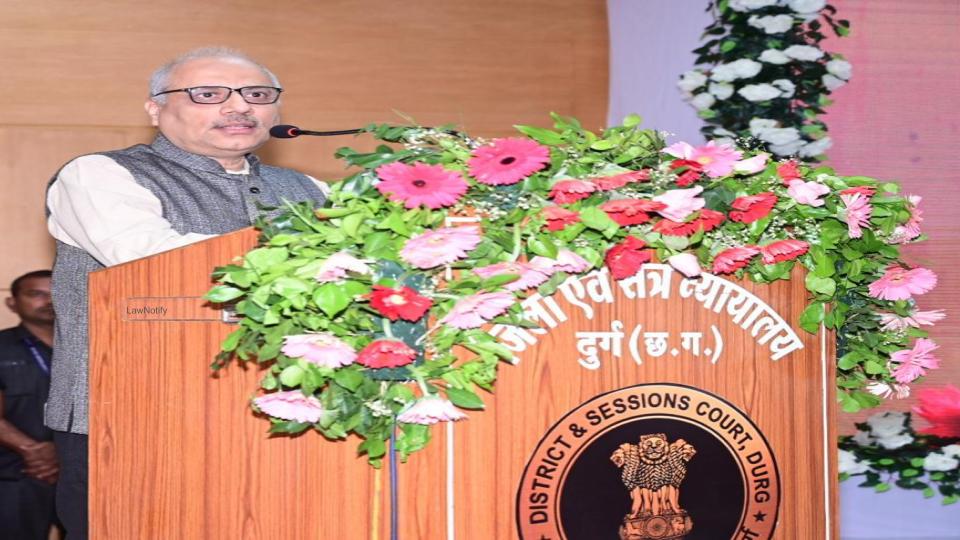
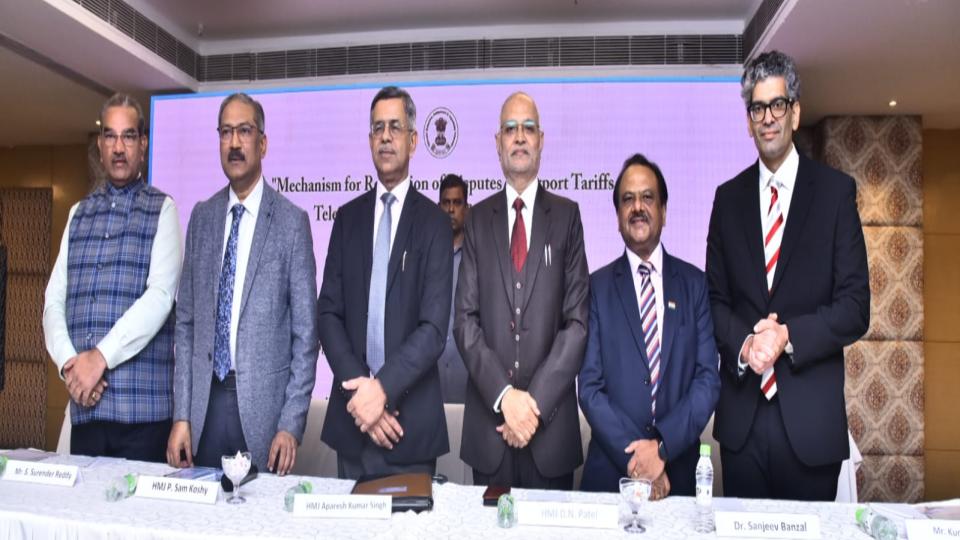
Addressing a seminar on “Mechanisms for Resolution of Disputes in Airport Tariffs, Telecom, Broadcasting and Cyber Sectors” in Hyderabad, Justice Aparesh Kumar Singh highlighted the growing importance of specialised adjudicatory institutions in dealing with technically complex regulatory disputes.
Justice Aparesh Kumar Singh traced the development of specialised dispute resolution in the telecommunications sector and observed that liberalisation, along with the entry of private players, created the need for appropriate regulatory and adjudicatory mechanisms. The establishment of the Telecom Regulatory Authority of India (TRAI) in 1997 and the Telecom Disputes Settlement and Appellate Tribunal (TDSAT) in 2000 were important milestones in this process.
He noted that TDSAT’s jurisdiction subsequently expanded beyond telecommunications to include areas such as broadcasting, cable services and airport tariff disputes. According to him, specialised tribunals provide an important forum for resolving technically complex regulatory matters by combining judicial processes with sector-specific expertise.
Referring to the constitutional framework governing tribunals, Justice Aparesh Kumar Singh emphasised that specialised adjudication must remain firmly rooted in the rule of law. Referring to the principles laid down by the Supreme Court in L. Chandra Kumar v. Union of India, he pointed out that judicial review by the High Courts and the Supreme Court is part of the basic structure of the Constitution. Tribunals, therefore, complement the judicial system but remain subject to constitutional judicial scrutiny.
Justice Aparesh Kumar Singh stressed that adjudicatory institutions must maintain an appropriate balance between regulatory autonomy, specialised expertise and judicial accountability. He cautioned that adjudication should not be allowed to replace the regulatory function, while regulatory decisions should also not be placed beyond effective judicial scrutiny.
He also underlined the importance of timely disposal of disputes. Prolonged litigation, he observed, can weaken regulatory objectives, create uncertainty for businesses and adversely affect consumers. Efficient dispute resolution is therefore particularly important in sectors where technological developments and market conditions change rapidly.
On airport economic regulation, Justice Aparesh Kumar Singh observed that airports operate as complex economic ecosystems involving several stakeholders and interconnected services. The regulatory framework under the Airports Economic Regulatory Authority of India Act provides for tariff determination and appellate adjudication, with TDSAT playing an important role in resolving disputes concerning airport tariffs.
Discussing telecommunications and broadcasting, he highlighted regulatory issues involving licensing, spectrum allocation, interconnection, quality of service, access to signals and pricing. Effective regulation in these areas, he said, must protect consumer interests while ensuring fair competition and maintaining a stable environment for businesses.
The Chief Justice also drew attention to emerging challenges in cyber technology and artificial intelligence. Rapid technological development has increased the complexity of cyber disputes, digital fraud and questions concerning accountability and regulatory oversight. While artificial intelligence and other technologies can assist adjudicatory processes, they cannot replace judicial reasoning, accountability and human oversight, he emphasised.
Justice Aparesh Kumar Singh further highlighted the importance of mediation and consensual settlement in specialised disputes. He noted that the procedural framework of TDSAT provides scope for mediation and voluntary settlement, enabling parties to seek efficient and mutually acceptable resolutions without prolonged litigation.
He also supported efforts to make specialised adjudication more accessible across the country, including through the wider availability of tribunal benches. Appreciating the outreach initiatives of TDSAT Chairperson Justice D. N. Patel, he observed that seminars and stakeholder interactions provide valuable opportunities for sharing knowledge and strengthening awareness about specialised dispute-resolution mechanisms.
In his opening remarks, Justice D. N. Patel, Chairperson of TDSAT, highlighted the Tribunal’s role in providing specialised and time-bound dispute resolution in the telecom, broadcasting, airport tariff and cyber sectors. He explained that TDSAT’s jurisdiction has evolved alongside technological and regulatory developments, including its appellate jurisdiction in cyber matters and its role in airport tariff disputes.
Justice D. N. Patel stressed the need for greater awareness among policymakers, regulators, industry representatives, legal professionals and other stakeholders about the dispute-resolution mechanisms available under the law.
Explaining the mechanism for resolving cyber disputes, Justice D. N. Patel referred to the Information Technology Act and said that civil remedies are initially adjudicated by the designated adjudicating officer, with claims for compensation up to ₹5 crore falling within the officer’s jurisdiction. TDSAT functions as the appellate forum against orders passed by the adjudicating officer. Claims exceeding ₹5 crore fall outside the jurisdiction of the designated adjudicating officer and are dealt with by the competent civil court.
He emphasised the need to improve awareness among police officials, adjudicating officers and IT authorities regarding these legal provisions so that affected parties can identify and access the appropriate legal remedy efficiently.
Sri S. Surender Reddy, President of the Telangana High Court Bar Association; Sri A. Sudershan Reddy, Advocate General of Telangana; and Justice P. Sam Koshy, Judge of the High Court of Telangana, were also present at the seminar.
The seminar brought together members of the judiciary, legal profession, regulatory bodies and other stakeholders to discuss the challenges involved in resolving disputes in sectors undergoing rapid technological and regulatory transformation. The discussions highlighted the need for specialised expertise, faster adjudication, effective judicial oversight and greater public awareness to strengthen India’s dispute-resolution framework for emerging industries.