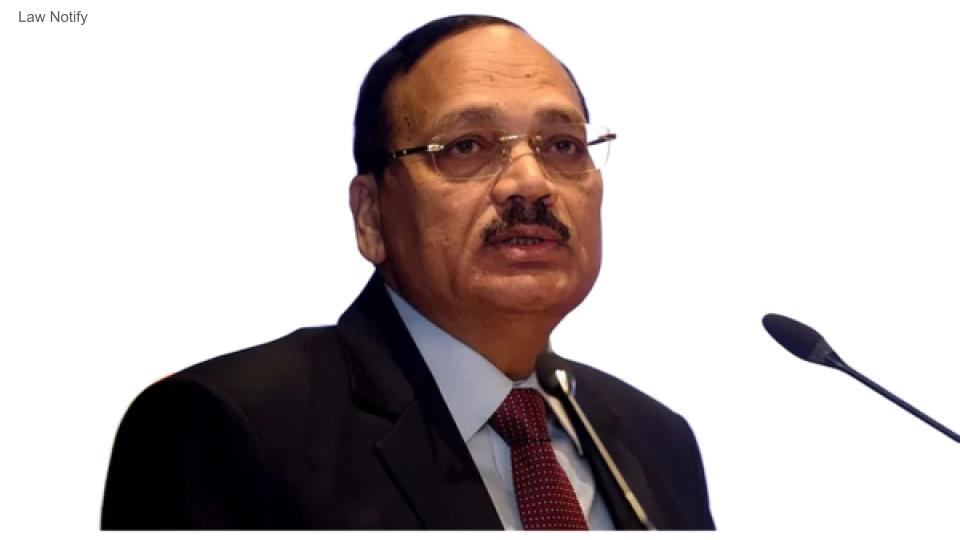
Chief Justice of India Justice Surya Kant has called for a structured judicial partnership between India and Germany, focusing on the responsible use of technology, cross-border mediation and stronger institutional cooperation. He made the remarks during his visit to the Federal Court of Justice in Karlsruhe, Germany, as part of his four-day official tour of Germany and the United Kingdom.
Addressing a bilateral meeting with Presiding Judge Dr Ulrich Herrmann, the Chief Justice described the engagement as a practical and forward-looking dialogue. He identified three key areas for cooperation: the use of artificial intelligence in justice administration, strengthening cross-border mediation and developing institutional ties through a proposed Memorandum of Understanding.
Justice Surya Kant also highlighted the differences between the Indian and German judicial systems. While India follows a common-law system with an integrated judicial hierarchy, Germany operates under a civil-law framework with separate federal jurisdiction. Despite these structural differences, he noted that both countries face similar challenges, including heavy appellate workloads, maintaining consistency in judicial decisions and ensuring timely disposal of cases.
On the growing use of artificial intelligence in the justice system, the CJI drew a clear distinction between technology-assisted administration and judicial decision-making. He said that AI could assist judges but could not replace the human and constitutional responsibility involved in adjudication.
“Artificial intelligence may augment judicial reasoning, but it cannot substitute the judicial conscience,” he said.
The Chief Justice referred to India’s emerging framework for responsible AI use in the judiciary, under which administrative functions such as scheduling, transcription and translation can benefit from technology. However, AI would not be permitted to independently assess matters such as witness credibility, flight risk, recidivism or eligibility for bail.
Justice Surya Kant also outlined India’s digital justice initiatives under the eCourts Mission Mode Project Phase-III, which has an outlay of Rs 7,210 crore. He referred to judicial technology platforms including SUPACE, SUVAS, which supports translation into 16 languages, and SuSahay, which assists citizens with court-related queries.
“Technology is an instrument that helps Courts fulfil their constitutional responsibility; it is not an end in itself,” the CJI said.
Drawing comparisons with Germany’s electronic case-file system, E-Justice Council and proposed Federal Justice Cloud, he said both countries shared the principle that judicial decisions must ultimately remain with judges and legally authorised judicial officers, regardless of the extent of technological transformation.
The discussions also placed significant emphasis on mediation. Justice Surya Kant said promoting mediation as an alternative mode of dispute resolution had been among his priorities since taking charge as Chief Justice of India.
Describing mediation as a psychological process, he pointed out that voluntary compliance with mediated settlements can reach as high as 90 per cent. He highlighted India’s Mediation Act, 2023, along with Lok Adalats, Digital Lok Adalats and the Supreme Court’s Samadhan Samaroh, as initiatives aimed at improving access to alternative dispute resolution.
The CJI proposed greater cooperation between India and Germany in the field of cross-border commercial mediation, including collaboration under Germany’s Mediationsgesetz 2012 and relevant European Union directives.
During the meeting, the concept note submitted by the Hanseatic Higher Regional Court of Hamburg for reciprocal judicial study visits and workshops was also welcomed. Justice Surya Kant proposed establishing institutional points of contact and expanding cooperation at the registry level in areas such as e-filing, anonymisation and cybersecurity.
He also suggested joint programmes involving India’s National Judicial Academy and corresponding German judicial institutions to facilitate the exchange of knowledge and best practices.
Concluding his remarks, Justice Surya Kant stressed that technological advancement and administrative reforms should strengthen, rather than replace, the core responsibilities of the judiciary.
“Technology and administrative reform can support this responsibility, but neither can replace careful adjudication, human judgment and fidelity to law,” he said.