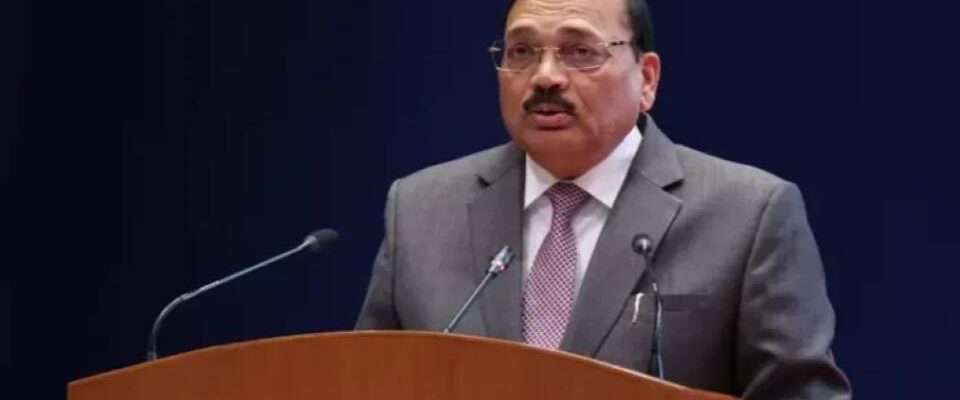
Chief Justice of India Surya Kant has said that the Supreme Court Collegium is actively considering the appointment of Chief Justices to High Courts where vacancies remain. He also stressed that allegations against sitting judges must be dealt with through established institutional mechanisms and cannot be adjudicated in the court of public opinion.
The CJI said that he, along with the other members of the Collegium, is already seized of the issue concerning the appointment of Chief Justices in the High Courts where the posts are vacant.
Addressing concerns raised in communications written by Justice Sandeep Mehta, Justice Surya Kant said the letters had been duly taken note of and that the issues raised in them were being considered at the appropriate institutional level. However, he made it clear that the mere existence of allegations against a sitting constitutional functionary cannot be treated as proof of their truth.
The Chief Justice emphasised that complaints or allegations concerning a judge must be examined strictly within the established framework governing judicial accountability. Such allegations, he said, cannot be subjected to a public trial or decided through competing narratives in the media.
Justice Surya Kant further underscored the importance of natural justice in any process involving allegations against a sitting judge. The judge concerned must be given a fair and meaningful opportunity to present his version and place his response on record before any conclusion is reached or consequential action is considered.
The CJI’s position was that the existence of an allegation, by itself, cannot be elevated into a finding of guilt. He cautioned against presuming culpability merely because accusations have been made against a judicial officer.
According to the Chief Justice, the matter remains under examination at the appropriate institutional level. The decision-making process will consider the material submitted by Justice Sandeep Mehta as well as the response furnished by Justice Sharma. The competing material will therefore have to be assessed through the prescribed institutional process before any further conclusion or action is reached.