News Citation : 2026 LN (HC) 438
September 7, 2026 : The Chhattisgarh High Court has set aside an interim order of the Commissioner, Bilaspur Division, which had stayed the implementation of an order removing a Sarpanch from office after the removal had already been acted upon and another person had been appointed as temporary Sarpanch.
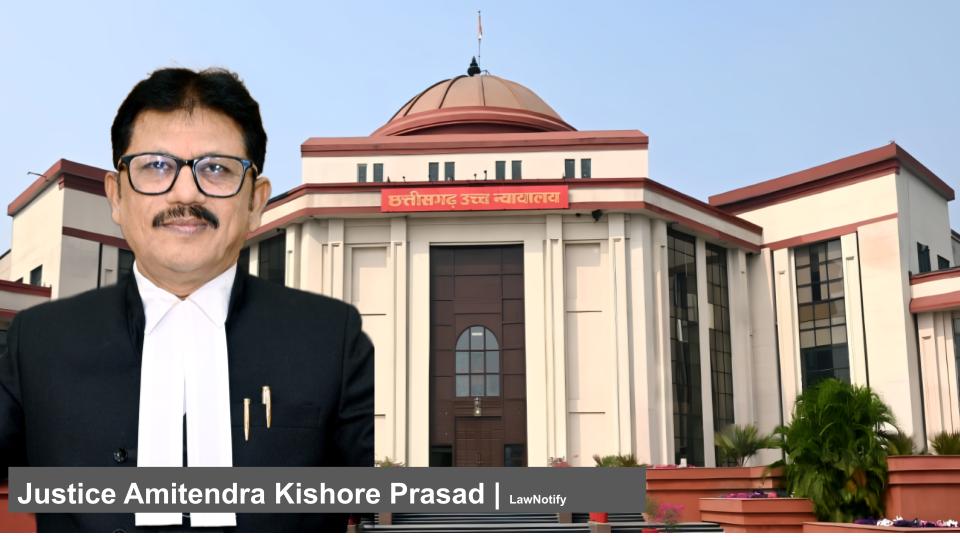
Justice Amitendra Kishore Prasad, while deciding WPC No. 4179 of 2026, Bhagwat Prasad Ratre v. State of Chhattisgarh & Others, held that an interim order should not ordinarily be used to undo a completed statutory action, particularly where the removed office-holder had already been replaced and the successor had assumed charge.
The dispute arose from proceedings against Dinanath Jatwar, who was removed from the office of Sarpanch of Gram Panchayat Madhaibhatha in Bilaigarh, District Sarangarh-Bilaigarh, under Section 40(1) of the Chhattisgarh Panchayat Raj Adhiniyam, 1993. He was also debarred from contesting Panchayat elections for six years under Section 40(2) of the Act.
The proceedings followed complaints alleging irregular withdrawal and misappropriation of Panchayat funds and the preparation and use of a purportedly false Panchayat resolution. An enquiry committee constituted by the Chief Executive Officer, Janpad Panchayat Bilaigarh examined Panchayat records, bank documents, witness statements and other material. The committee subsequently recommended initiation of proceedings under Section 40 of the Act.
A further enquiry was conducted by the Collector, Sarangarh-Bilaigarh. During the proceedings, the then Panchayat Secretary reportedly stated that a bank proposal dated June 5, 2025, had been prepared by another person and that his signatures had been obtained under pressure. The Collector, after considering the material, found a prima facie case and referred the matter to the Sub-Divisional Officer (Revenue), who is the prescribed authority under the Panchayat Raj Adhiniyam.
After providing an opportunity of hearing to Dinanath Jatwar and considering the enquiry material and his defence, the prescribed authority passed an order removing him from the post of Sarpanch and debarring him from contesting Panchayat elections for six years.
The allegations included the withdrawal of Rs 2.97 lakh on the basis of a proposal allegedly different from the resolution passed by the Gram Panchayat. The record also referred to an alleged withdrawal of Rs 63,000 without a valid Panchayat resolution. The High Court, however, made it clear that it was not deciding whether these allegations were ultimately proved.
Following the removal order, proceedings were initiated under Section 38 of the Chhattisgarh Panchayat Raj Adhiniyam, 1993, for making a temporary arrangement for the office of Sarpanch. Bhagwat Prasad Ratre, the petitioner and an elected Panch, was appointed temporary Sarpanch on June 22, 2026, and subsequently assumed charge.
Dinanath Jatwar challenged the removal and sought interim protection before the Collector. The Collector rejected his application for stay on June 25, 2026. He thereafter approached the Commissioner, Bilaspur Division, in revision. On July 6, 2026, the Commissioner stayed the operation and implementation of the removal order for 30 days.
Bhagwat Prasad Ratre challenged that interim order before the High Court, arguing that the Commissioner had effectively restored a person to an office from which he had already been removed. According to the petitioner, the removal order had already been implemented, the vacancy had been dealt with under Section 38, and the petitioner had assumed charge as temporary Sarpanch.
The State opposed the writ petition, arguing that the Commissioner’s order was interlocutory in nature and had been passed within the revisional jurisdiction available under the Chhattisgarh Panchayat (Appeal and Revision) Rules, 1995. It was contended that implementation of an order does not by itself prevent a competent appellate or revisional authority from granting interim protection.
The State further argued that the petitioner’s appointment under Section 38 was only temporary and consequential to the vacancy. It did not create an independent or permanent right to remain in office. According to the State, interim protection was necessary to prevent further complications, including the possibility of an intervening electoral process that could make restoration difficult if Jatwar ultimately succeeded in the substantive proceedings.
The High Court, however, found the Commissioner’s interim order legally unsustainable in the circumstances of the case.
The Court drew a distinction between an interim order that merely preserves the existing position and one that effectively reverses an action that has already been completed. Since the removal had already been implemented and the petitioner had been appointed and had assumed charge as temporary Sarpanch, the stay order did more than preserve the subject matter of the revision.
The Court observed, “Its practical consequence would be to revive the position which had ceased to exist.”
The High Court also noted that the Commissioner had not recorded any specific prima facie finding showing that the original removal order was without jurisdiction, perverse or contrary to the principles of natural justice. The record instead indicated that an enquiry had been conducted and that the concerned office-holder had been given an opportunity of hearing before the prescribed authority passed the removal order.
Relying on the Supreme Court’s decision in Public Services Tribunal Bar Association v. State of U.P., (2003) 4 SCC 104, the High Court reiterated the principle that interim relief should not ordinarily have the effect of allowing a person to continue in an office when the underlying order has already removed him.
The Court also referred to State of Uttar Pradesh v. Prem Chopra, (2024) 12 SCC 426, which explained the legal distinction between staying the operation of an order and quashing the order itself. A stay does not erase an order from existence, but its practical consequences must nevertheless be examined in the factual circumstances of each case.
Applying these principles, the High Court held that the Commissioner should have exercised greater caution before granting interim relief because the removal had already been acted upon and a temporary Sarpanch had assumed charge.
The Court particularly considered the balance of convenience, observing that allowing the interim order to continue could create uncertainty about who was legally entitled to discharge the functions of Sarpanch and could disrupt the functioning of the Gram Panchayat.
The Court stated, “The public administration of the Panchayat cannot be permitted to remain subject to conflicting claims created by an interim order which effectively reverses an action already completed.”
Importantly, the High Court clarified that it was not examining the ultimate merits of the allegations against Dinanath Jatwar. The Court did not decide whether the alleged financial irregularities, withdrawals or disputed Panchayat resolutions were ultimately established. Its examination was limited to whether the Commissioner was justified in granting interim protection after the removal order had already been implemented.
The High Court accordingly quashed and set aside the Commissioner’s interim order dated July 6, 2026 and upheld the Collector’s earlier decision declining interim relief.
The Court further directed the Commissioner, Bilaspur Division, to transmit the records of the proceedings to the concerned Collector. The Collector, Sarangarh-Bilaigarh, has been directed to decide the substantive proceedings on their merits after providing due opportunity of hearing to all concerned parties.
Considering that the dispute concerns the right to hold an elected statutory office and consequential civil rights, the High Court directed the Collector to make every endeavour to decide the matter preferably within four months from receipt of the records.
The judgment therefore does not finally determine whether Dinanath Jatwar was correctly removed under Section 40 of the Chhattisgarh Panchayat Raj Adhiniyam. That question remains open before the competent authority. What the High Court has decided is that the interim relief granted by the Commissioner could not be permitted to operate in a manner that effectively restored the removed Sarpanch after the removal had already been implemented.
The ruling is significant for Panchayat administration because it emphasises that appellate or revisional authorities must carefully consider the existing factual position before granting interim relief. Where a statutory removal order has already been implemented and consequential steps have been completed, an interim stay that effectively reverses those steps may require stronger justification than an order merely preserving the status quo.
Case Reference: Bhagwat Prasad Ratre v. State of Chhattisgarh & Others, WPC No. 4179 of 2026, 2026:CGHC:39117.