News Citation : 2026 LN (HC) 411
August 3, 2026 : In a significant judgment on electoral integrity and caste certificate disputes, the Chhattisgarh High Court has upheld the removal of Bhilai Municipal Corporation Councillor Mohammad Salman from an OBC-reserved ward after finding that the social status certificate relied upon by him had never been issued by the competent authority. The Court also declared the subsequent election of Chandan Yadav from Ward No. 35, Sharda Para, Bhilai, to be valid and in accordance with law, bringing an end to a prolonged legal battle over the reserved municipal seat.
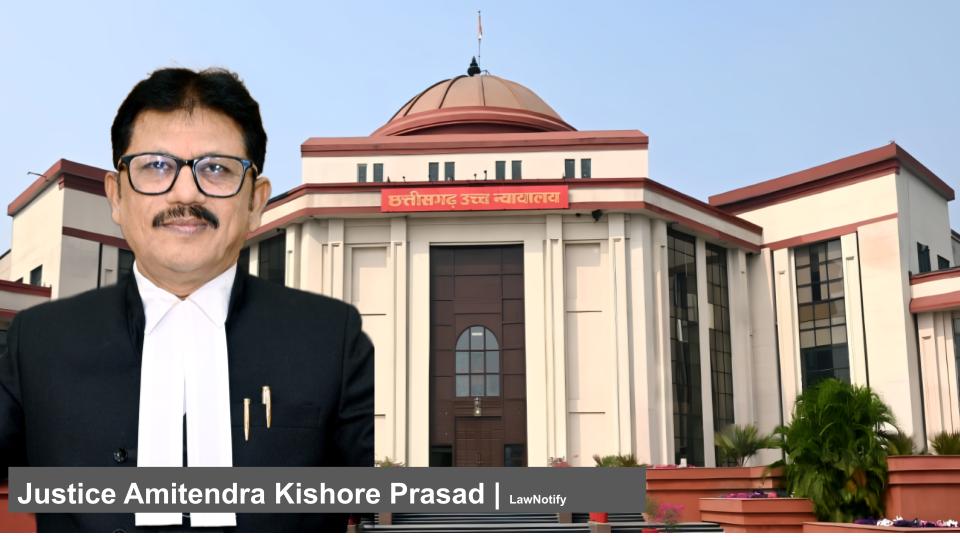
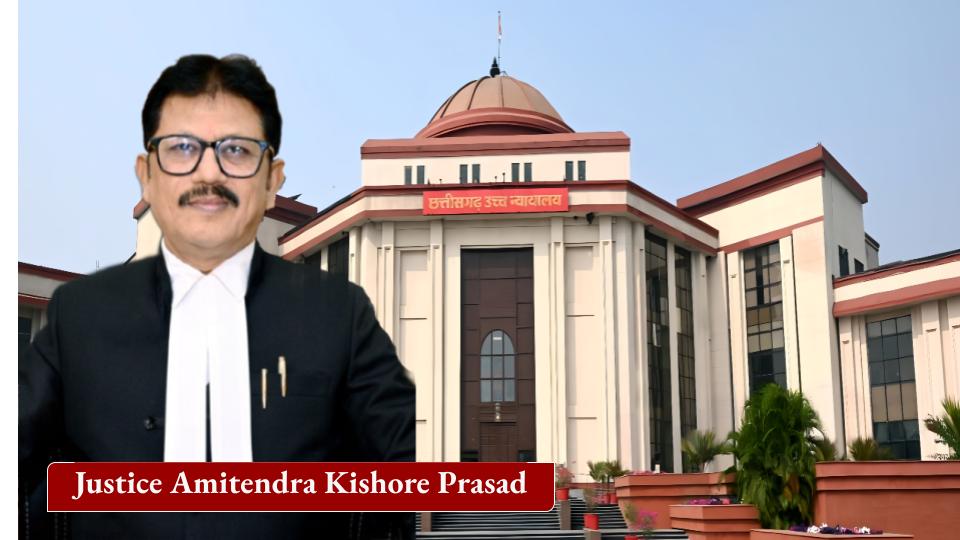
Justice Amitendra Kishore Prasad delivered the judgment on August 3, 2026, while deciding two connected writ petitions, WPC No. 5555 of 2024 filed by Mohammad Salman and WPC No. 1808 of 2025 filed by Chandan Yadav. Since both petitions arose from the same municipal election dispute, the Court heard and decided them through a common judgment.
The dispute originated from the 2021 election for Ward No. 35 of Bhilai Municipal Corporation, a seat reserved for candidates belonging to the Other Backward Class (OBC) category. Mohammad Salman contested the election claiming to belong to the Kunjda community, an OBC caste, and was declared elected. Subsequently, rival candidate Chandan Yadav challenged Salman’s eligibility, alleging that the caste certificate used for contesting the reserved seat had been fraudulently procured and was never issued by the competent revenue authority. Proceedings were initiated under Section 19(1)(a-1) of the Chhattisgarh Municipal Corporation Act, 1956, leading to Salman’s removal by the Divisional Commissioner on May 6, 2024. His statutory appeal was dismissed on September 4, 2024.
Before the High Court, Salman argued that only the competent Caste Scrutiny Committee constituted under the Chhattisgarh Scheduled Castes, Scheduled Tribes and Other Backward Classes (Regulation of Social Status Certification) Act, 2013 could examine the validity of his caste certificate. He contended that the Divisional Commissioner lacked jurisdiction to decide issues relating to caste status and that his removal without a declaration from the scrutiny committee was contrary to law. He also relied on Article 243-ZG of the Constitution to argue that disputes relating to municipal elections should ordinarily be decided through election petitions.
The State Government, the Election Commission and Chandan Yadav opposed these submissions, contending that the case did not involve cancellation of a genuine caste certificate but a document that the issuing authority itself stated had never been issued. They argued that once the competent authority denied issuing the certificate, the Commissioner was empowered to determine the resulting statutory disqualification under the Municipal Corporation Act and remove the councillor from office.
After examining the statutory framework, the High Court drew a clear distinction between verification of an existing caste certificate and a case where the alleged certificate itself was found to be non-existent. The Court held that where the issuing authority categorically states that the certificate was never issued and the document is found to be forged, there is no requirement to refer the matter to the Caste Scrutiny Committee under the 2013 Act. Instead, the competent authority under the Chhattisgarh Municipal Corporation Act, 1956 is entitled to examine whether the councillor incurred a statutory disqualification for contesting a reserved seat on the strength of such a document.
The Court observed that “once the foundational document, i.e. the caste certificate, is found to be forged, the statutory consequences prescribed under the Act are bound to follow.” It further held that the Divisional Commissioner was competent to determine the statutory disqualification under Section 19(1)(a-1), while Section 23(3) empowered the competent authority to remove such a councillor from office.
During the pendency of Salman’s challenge, the vacancy was notified to the Chhattisgarh State Election Commission, which conducted a fresh election under Article 243-ZA of the Constitution and the Chhattisgarh Municipal Corporation Act. Chandan Yadav contested the by-election, was declared elected on January 31, 2025, and his election was notified in the Gazette on February 24, 2025. However, his oath ceremony was withheld because Salman had obtained interim protection from the High Court. Yadav subsequently approached the Court seeking recognition of his election and permission to assume office.
While considering the second petition, the High Court held that the by-election had been conducted strictly in accordance with the statutory provisions after the office had fallen vacant. It ruled that the subsequent election was legally valid and that there was no infirmity in the election process warranting interference. The Court observed that the challenge raised by Salman could not invalidate an election that had already been conducted under the constitutional framework governing municipal elections.
Dismissing Mohammad Salman’s writ petition, the Court found no illegality in the orders passed by the Divisional Commissioner and the appellate authority removing him from office. Simultaneously, it allowed Chandan Yadav’s writ petition and held that his election as Councillor for Ward No. 35, Sharda Para, Bhilai, was valid and lawful. There was no order as to costs.
The ruling is significant because it clarifies the distinction between disputes involving verification of a valid caste certificate and cases involving an allegedly forged certificate that was never issued by the competent authority. It also reinforces the statutory powers available under the Chhattisgarh Municipal Corporation Act, 1956 to remove elected representatives who secure reserved seats through invalid or fabricated social status documents. The judgment is expected to serve as an important precedent in future disputes involving reserved local body elections, electoral disqualifications, and fraudulent caste certificates.
Case Reference: Mohammad Salman v. State of Chhattisgarh & Others (WPC No. 5555 of 2024) connected with Chandan Yadav v. State of Chhattisgarh & Others (WPC No. 1808 of 2025).