News Citation : 2026 LN (HC) 346 | 2026:CGHC:23212
May 15, 2026 : The High Court of Chhattisgarh has ruled that horizontal reservation for physically disabled candidates cannot be applied in a manner that disturbs the fixed quota of Other Backward Classes (OBCs), holding that the State authorities committed a legal error by appointing more than the prescribed percentage of physically handicapped candidates against OBC-reserved posts during teacher recruitment in Chhattisgarh.
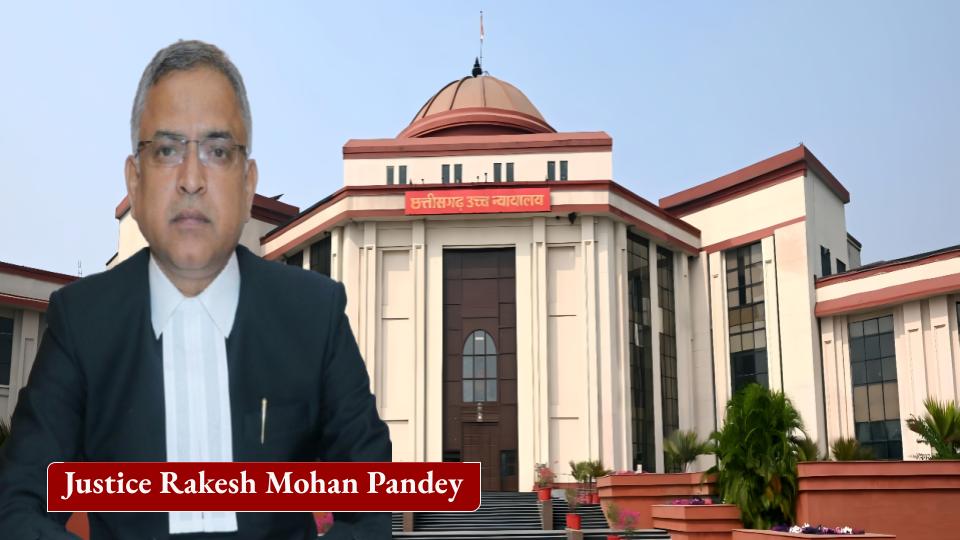
Delivering judgment in a batch of writ petitions led by Umesh Kumar Shrivas v. State of Chhattisgarh, Justice Rakesh Mohan Pandey directed the State Government and education authorities to reconsider the petitioners’ claims for appointment and complete the exercise within 90 days.
The dispute arose from a recruitment advertisement issued on March 9, 2019 by the Directorate of Public Instructions for appointment to various posts of Lecturer, Teacher and Assistant Teacher in ‘E’ and ‘T’ cadres. The petitioners, all belonging to the OBC category, participated in the selection process for posts including Lecturer (Biology), Teacher (Maths) and Assistant Teacher (Science). They contended that although reservation for physically handicapped candidates was fixed at 7%, the authorities appointed a much higher number of disabled candidates within the OBC quota itself, thereby reducing opportunities available to OBC candidates.
The petitioners argued that the selection committee treated physically disabled candidates as occupying OBC seats solely because they belonged to the OBC category and secured higher merit positions. According to them, this method violated the principle governing horizontal reservation laid down by the Supreme Court in the landmark judgment of Indra Sawhney Judgment.
During the hearing, counsel for the petitioners submitted that out of 200 advertised posts for Lecturer (Biology) in the E-cadre, 28 posts were earmarked for OBC candidates under vertical reservation and 14 posts were reserved for physically handicapped candidates under horizontal reservation. However, six physically handicapped candidates were adjusted directly within the OBC category based on merit, which allegedly resulted in reservation beyond the prescribed 7% ceiling within the OBC quota. Similar methods were allegedly followed in appointments to other teaching posts as well.
The State Government defended the recruitment process by relying on a circular dated August 29, 2018, arguing that physically handicapped candidates who secured positions in the merit list were entitled to appointment irrespective of category.
After examining the recruitment records and applicable reservation policy, the High Court observed that the State’s own circular dated September 27, 2014 clearly provided that reservation for physically handicapped persons must be implemented horizontally and compartment-wise. The Court noted that a subsequent circular issued in 2018 also reiterated that such reservation would remain horizontal in nature.
Explaining the distinction between vertical and horizontal reservation, the Court relied heavily on the Supreme Court’s rulings in Indra Sawhney Judgment and Rajesh Kumar Daria v. Rajasthan Public Service Commission. The Court reproduced the Supreme Court’s observation that physically handicapped reservation “cuts across” social categories and selected candidates must be adjusted within their respective categories without disturbing the overall reservation percentages.
The High Court held that the authorities failed to correctly apply the principle of horizontal reservation and thereby denied equal opportunity to candidates from different reserved categories. The judgment stated that “the procedure adopted by the respondent authorities appears to be erroneous as such practice does not provide equal opportunity to the aspirants of all categories.”
The Court further observed that the recruitment authorities “committed error of law while offering appointment to more than 7% physically disabled candidates against the posts reserved for OBC category by virtue of their respective merits alone.”
Under Indian reservation jurisprudence, vertical reservations are granted to communities such as Scheduled Castes, Scheduled Tribes and OBCs under Article 16(4) of the Constitution, while reservations for categories like women and persons with disabilities operate horizontally under Articles 14, 15 and 16(1). Horizontal reservations are intended to intersect with all social categories proportionately and cannot consume the quota meant for a specific reserved category. The ruling reinforces this constitutional distinction and may influence recruitment processes across government departments in Chhattisgarh and other states.
The Court also noted that interim orders passed earlier had directed the authorities to keep corresponding posts vacant during the pendency of the petitions. In light of the findings, the Court disposed of the batch of petitions with directions to reconsider the petitioners’ cases for appointment in accordance with the law laid down by the Supreme Court and the observations made in the judgment. The State authorities have been asked to complete the entire exercise within 90 days from receipt of the order.
The ruling is likely to have a significant impact on future public recruitment processes involving reservation policy, especially in cases where horizontal reservation for persons with disabilities overlaps with vertical reservation categories. Legal experts believe the judgment reiterates that reservation policies must be implemented carefully to preserve constitutional balance and equal opportunity principles.
Case Reference : WPS No. 5409 of 2021 (Umesh Kumar Shrivas vs State of Chhattisgarh and Another), WPS No. 5418 of 2021 (Umesh Kumar Shrivas vs State of Chhattisgarh and Others), WPS No. 5853 of 2021 (Pramod Kumar Sahu and Another vs State of Chhattisgarh and Others), WPS No. 504 of 2022 (Buddha Dev vs State of Chhattisgarh and Others), WPS No. 503 of 2022 (Umesh Kumar vs State of Chhattisgarh and Others), WPS No. 4019 of 2022 (Neha Sahu vs State of Chhattisgarh and Others) and WPS No. 2451 of 2022 (Mukesh Kumar Netam vs State of Chhattisgarh and Others); Counsel for Petitioners: Mr. C. Jayant K. Rao, Advocate; Counsel for Respondents: Mr. Keshav Prasad Gupta, Government Advocate.