News Citation : 2026 LN (HC) 440
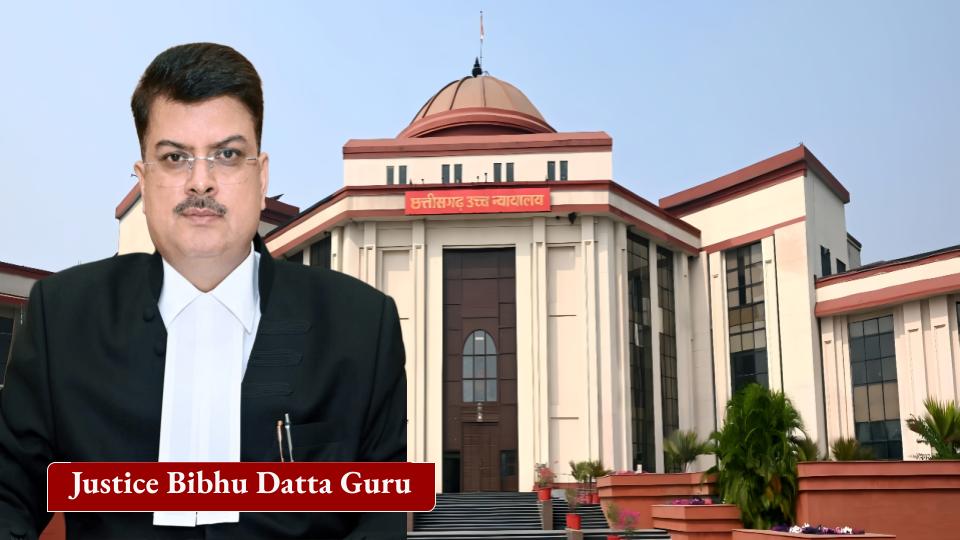
September 7, 2026: The Chhattisgarh High Court has dismissed a writ petition filed by 39 Junior Engineers of the Chhattisgarh State Power Generation Company Limited (CSPGCL), challenging the reduction of the promotional quota for the post of Assistant Engineer from 70% to 40%. Justice Bibhu Datta Guru held that employees do not have a vested or indefeasible right to promotion under a particular quota and that fixation of promotional avenues is primarily a matter of administrative policy.
The petitioners, who are working as Junior Engineers in various units of CSPGCL, had challenged the orders dated May 5, 2025 and July 22, 2026, by which the recruitment ratio for Assistant Engineer (Generation) posts was revised. They also challenged the consequential recruitment advertisement dated August 7, 2026, proposing direct recruitment to 60 posts of Assistant Engineer (Generation).
According to the petitioners, they were appointed as Junior Engineers in 2018 and had subsequently been regularised and confirmed. In 2021, the Board of Directors had increased the promotional quota for Assistant Engineer posts from 40% to 70%, while keeping 10% for departmental recruitment and 20% for direct recruitment. The petitioners argued that, after completing the requisite service and being included in the gradation list dated February 21, 2024, they had become eligible for consideration for promotion.
The petitioners further pointed out that 23 Junior Engineers were promoted as Assistant Engineers on April 20, 2026, and contended that the authorities could not subsequently reduce their promotional prospects by restoring the earlier 40% quota. They argued that the decision was arbitrary and adversely affected qualified and experienced Junior Engineers who were awaiting promotion.
The respondents opposed the petition and maintained that the revised quota did not eliminate promotional opportunities. Under the new arrangement, 40% of posts are to be filled through promotion, 10% through departmental recruitment and 50% through open direct recruitment. The authorities explained that the change was necessitated by the requirement for graduate engineers for upcoming projects, including new power plants and pump-storage projects.
The company also placed before the Court a departmental note and the resolution passed at the 117th meeting of the Board of Directors on April 8, 2025. The material placed on record showed that, against 470 sanctioned Assistant Engineer posts, 499 Assistant Engineers were already working. The authorities stated that direct recruitment vacancies were required to ensure availability of graduate engineers for future projects and that the recruitment and subsequent training process could take around two years.
The Court accepted the respondents’ explanation and found no material establishing that the revised quota was arbitrary, mala fide or contrary to any statutory provision. The Court noted that the petitioners remained eligible for consideration for promotion under the revised rules, with 40% of posts continuing to be earmarked for promotion.
A significant part of the judgment concerns the distinction between a right to be considered for promotion and a right to promotion under a particular quota. The Court observed, “mere eligibility for consideration does not confer any vested or indefeasible right to promotion”, and held that an employee cannot insist that a particular percentage of vacancies must always be filled through promotion.
The Court also relied on the Supreme Court’s decision in Dwarka Prasad v. Union of India, observing that fixation of quotas and different promotional channels for feeder cadres is essentially within the employer’s policy-making domain. It further referred to Dilip Kumar Garg v. State of Uttar Pradesh, underlining that administrative authorities are generally better placed to determine the appropriate criteria and avenues for promotion and that courts should not readily substitute their own view for such administrative decisions.
The High Court also relied upon the settled principle that a reduction in promotional opportunities does not, by itself, violate Articles 14 or 16 of the Constitution. As stated in the judgment, “a public servant has only a right to be considered for promotion in accordance with the extant rules.” Judicial intervention may nevertheless be warranted where a policy decision is shown to be arbitrary, mala fide, unconstitutional or contrary to statutory rules. The Court found no such defect in the present case.
The Court further held that the promotion of 23 Junior Engineers in April 2026 did not create a vested right in favour of the petitioners to demand continuation of the earlier 70% quota. It also observed that eligible petitioners could participate in the direct recruitment process if they fulfilled the applicable criteria.
Ultimately, Justice Bibhu Datta Guru concluded that there was no illegality, arbitrariness or perversity in the orders dated May 5, 2025 and July 22, 2026. The consequential recruitment advertisement dated August 7, 2026 was also not liable to be stayed merely because it could reduce the petitioners’ chances of promotion. The writ petition was accordingly dismissed as devoid of merit.
Legal Significance
The judgment reinforces an important service-law principle: employees ordinarily have a right to fair consideration for promotion, but not a vested right to promotion according to an earlier quota or recruitment ratio. Employers can modify promotional and direct-recruitment quotas as part of administrative policy, provided the change does not violate statutory rules or constitutional guarantees and is not shown to be arbitrary or mala fide.
The decision is particularly relevant to public-sector organisations where recruitment structures are periodically altered to meet changing manpower requirements. It also makes clear that an employee’s eligibility under an earlier policy does not, by itself, freeze that policy for future vacancies.
Case Reference : Case: Ashish Banjare & 38 Others v. State of Chhattisgarh & Others | WPS No. 6238 of 2026 | High Court of Chhattisgarh at Bilaspur | Neutral Citation: 2026:CGHC:39214 | For Petitioners: Mr. Manoj Paranjpe, Senior Advocate with Mr. Anshul Tiwari, Advocate | For State: Ms. Sakshi Bajpai, Panel Lawyer | For Respondents No. 2 & 4: Mr. Prafull N. Bharat, Senior Advocate with Mr. Varun Sharma and Mr. K.K. Tandon, Advocates | For Respondents No. 3 & 5: Mr. K.R. Nair, Advocate.