News Citation : 2026 LN (HC) 442
September 9, 2026 : The Chhattisgarh High Court has held that non-disclosure of old criminal cases in a character verification form cannot, by itself, automatically justify termination from government service. The Court said that the competent authority must objectively examine the entire factual background, including the age of the employee when the cases were registered, the nature of the allegations, the outcome of the criminal proceedings, the time that has elapsed, and the employee’s subsequent conduct and service record.
The ruling came in a writ petition filed by Hira Prasad Yadav, who had challenged the order dated February 17, 2025, by which the Higher Education Department of the Chhattisgarh Government terminated his services on the ground that he had not disclosed his criminal antecedents in the verification form. Yadav had been selected for appointment as an Assistant Professor in Commerce pursuant to Advertisement No. 11/2014. His appointment order was issued on October 5, 2018, and he joined at Government Rajmohini Devi Girls P.G. College, Ambikapur, on October 10, 2018.
The criminal cases relied upon by the authorities dated back to 1994. According to the petitioner, he was around 17 years old and studying in Class XI at the time. One case arose from Crime No. 969/1994 under Sections 399 and 402 of the Indian Penal Code and ended in his acquittal in Sessions Trial No. 62/1995 on December 11, 1997. The other case, Crime No. 443/1994, involved Sections 324, 147 and 323 read with Section 34 IPC, and resulted in his acquittal on November 13, 1995. No subsequent criminal case was brought on record against him.
Yadav admitted that he had not mentioned the cases in Column No. 12 of the verification form. His case was that the omission was inadvertent and was not intended to conceal his criminal history. He subsequently submitted an affidavit dated January 15, 2021, disclosing the criminal cases as well as the acquittal orders. A show-cause notice was issued to him on September 7, 2021, following which he submitted his reply. He argued that the authorities had failed to properly consider his age at the time of the incidents, the acquittals, the considerable passage of time, his subsequent educational qualifications and his conduct during more than six years of government service.
The State opposed the petition, contending that the petitioner had failed to disclose the criminal cases not only in the verification form but also in an affidavit furnished in 2018. According to the State, the later disclosure could not retrospectively make the earlier declaration truthful. It was also argued that acquittal from the criminal cases did not remove the obligation to disclose the fact that the cases had been registered when such information was specifically sought by the authorities.
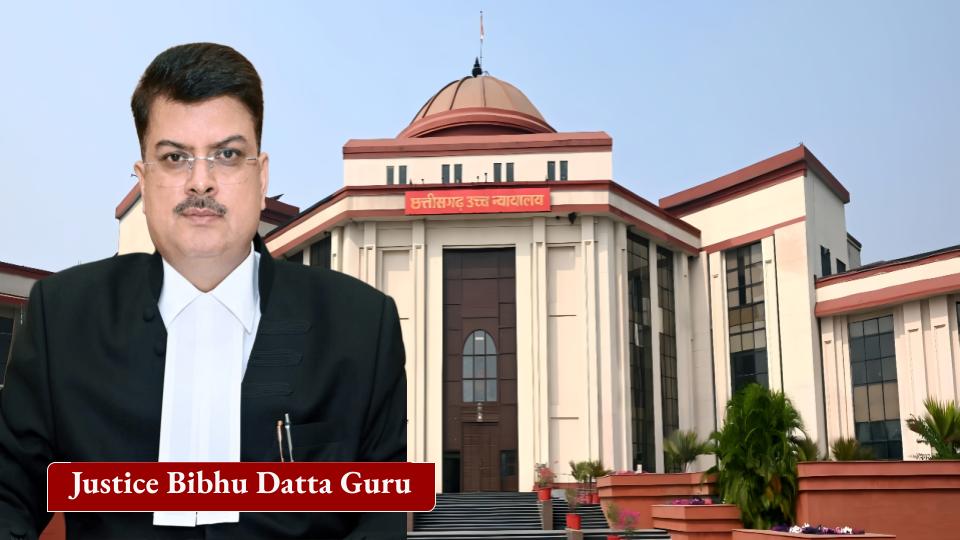
Justice Bibhu Datta Guru considered the rival submissions and focused on the distinction between the existence of a non-disclosure and its actual impact on the employee’s suitability for government service. The Court observed that the authorities unquestionably have the power to verify the character and antecedents of a government employee. However, the crucial question was whether the power had been exercised after properly considering all relevant circumstances before imposing the extreme penalty of termination.
The High Court relied extensively on the principles laid down by the Supreme Court in Avtar Singh v. Union of India and reiterated in Ravindra Kumar v. State of U.P., (2024) 5 SCC 264. The Supreme Court has held that character verification is an important part of determining suitability, but the final decision must be based on objective criteria and consideration of all relevant circumstances. The employer cannot treat every omission as equally serious. The Supreme Court has specifically observed that “Suppression of ‘material’ information presupposes that what is suppressed that ‘matters’ not every technical or trivial matter.”
The legal position also requires the employer to consider the nature of the post and the nature of the duties involved. The Supreme Court’s principles recognize that the consequences of suppression may differ depending on the seriousness of the offence, whether there was a conviction or acquittal, the circumstances surrounding the case and the employee’s overall suitability. In cases involving concluded criminal proceedings, particularly where acquittal occurred before the candidate entered service, the employer may consider the relevant circumstances rather than mechanically imposing termination.
The High Court also referred to decisions including Commissioner of Police v. Sandeep Kumar, Ram Kumar v. State of U.P., Pawan Kumar v. Union of India and Mohammed Imran v. State of Maharashtra. These decisions reinforce the principle that suppression of criminal antecedents does not invariably result in automatic termination. The Supreme Court has repeatedly emphasized that the employee cannot claim an unconditional right to appointment or continuation, but at the same time the employer must not exercise its power arbitrarily.
In the present case, the High Court found several circumstances particularly relevant. The criminal cases were registered in 1994, when the petitioner was about 17 years old. Both cases ended in acquittal before he entered government service in 2018. More than two decades had passed between the criminal proceedings and his appointment. During this period, the petitioner pursued higher education, obtained M.Com., M.Phil. and Ph.D. degrees in Commerce, and was eventually selected through the regular recruitment process for the post of Assistant Professor.
The Court further noted that the petitioner had continued in government service for more than six years before the termination order was passed. While length of service cannot, by itself, erase an established act of suppression, it remains a relevant circumstance when determining whether the old criminal antecedents continue to have any bearing on the employee’s suitability for continuing in service.
Importantly, the Court did not hold that the subsequent affidavit completely cured the earlier non-disclosure. It expressly rejected such an argument. However, it held that the later disclosure and the explanation offered by the petitioner were relevant factors that the competent authority was required to consider along with his age at the time of the cases, the acquittals, the long passage of time and his subsequent service record.
The Court found that the termination order did not demonstrate such cumulative consideration. According to the High Court, the order recorded the non-disclosure and proceeded to conclude that the petitioner was unfit for government service, but did not meaningfully consider the fact that the cases were decades old, that the petitioner had been acquitted long before his appointment, that he was a minor or around 17 years old at the relevant time, or that he had subsequently obtained higher qualifications and served the government for more than six years.
The Court also rejected the proposition that merely describing the offences as involving “moral turpitude” could settle the question of suitability. It held that the actual facts surrounding the cases and the employee’s subsequent conduct must be examined. The Court emphasized that “the power of the employer to verify the antecedents of an incumbent and to take appropriate action in a case of suppression” is not in dispute, but the manner in which that power is exercised remains subject to objective and reasonable consideration.
The ruling has significance for government employment and character verification proceedings. It does not give employees a licence to conceal criminal antecedents. The judgment makes clear that candidates and employees remain under an obligation to provide truthful information when the verification form specifically requires disclosure. However, where an omission is established, the consequence must be determined on the facts of the individual case rather than through an automatic formula. The authority must assess whether the non-disclosure and the underlying antecedents actually make the employee unsuitable for the post.
The Court also noted that it was unnecessary to examine the broader argument concerning Article 311 of the Constitution because the termination order could be interfered with on the independent ground that it lacked an objective and cumulative assessment of the circumstances relevant to the petitioner’s suitability.
The High Court accordingly allowed the writ petition and quashed the Higher Education Department’s order dated February 17, 2025. The respondents were directed to reinstate Hira Prasad Yadav in service forthwith. He was granted continuity of service for the purpose of seniority. However, the Court denied arrears of salary for the period during which he had not actually worked pursuant to the termination order. The petition was allowed without any order as to costs.
The judgment therefore draws an important line between a candidate’s duty to disclose criminal antecedents and the government’s duty to assess the consequences of such non-disclosure fairly. An old criminal case, particularly one ending in acquittal before entry into government service, cannot be treated in isolation. The competent authority must examine the complete factual circumstances and exercise its power reasonably rather than mechanically.
Case Reference: Hira Prasad Yadav v. State of Chhattisgarh & Others, WPS No. 1470 of 2025, Advocates: Senior Advocate Manoj Paranjpe, assisted by Apoorva Ghore, appeared for the petitioner. Akanksha Verma, Panel Lawyer, appeared for the State, while Dr. Sudeep Agrawal appeared for the Chhattisgarh Public Service Commission.