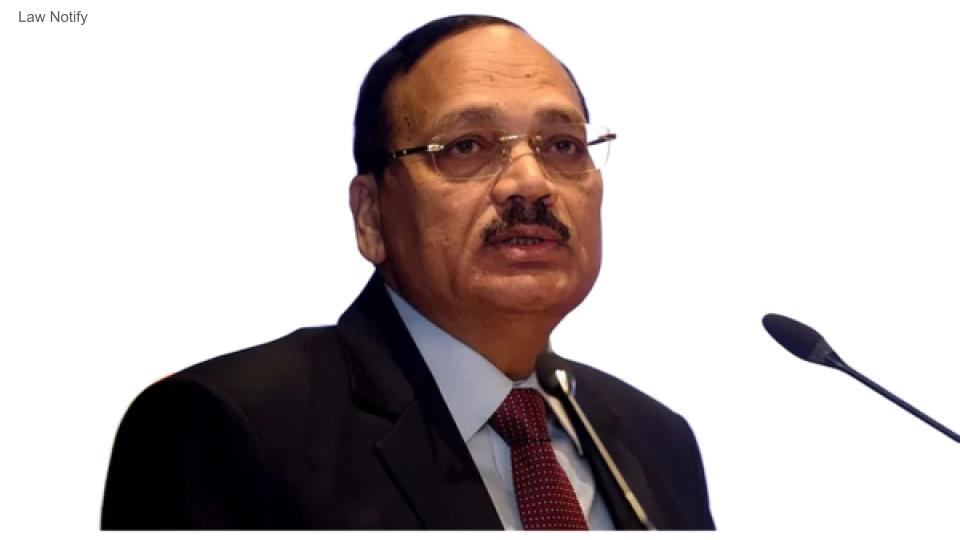
Delhi : Chief Justice of India Justice Suryakant has called for greater professional accountability, institutional transparency and improved efficiency in arbitration, saying these measures are essential if India is to establish itself as a leading international arbitral seat.
Addressing the concluding session of India ADR Week 2026, organised by the Mumbai Centre for International Arbitration (MCIA) at The Imperial in New Delhi, the CJI said certainty and efficiency had emerged as common themes across discussions on construction disputes, cross-border arbitration, energy disputes and professional ethics.
Justice Suryakant observed that parties opting for arbitration do not expect a guaranteed victory. Instead, they seek reasonable certainty about the duration of proceedings, the identity of the decision-maker and the standards governing the decision-maker’s conduct.
On the regulation of arbitrators, the CJI said the arbitration community should not wait solely for statutory intervention. He proposed a shared, cross-institutional disclosure register containing information on arbitrators’ conflicts of interest, sitting loads, average time taken to issue awards and areas of subject-matter expertise. According to him, greater transparency would enable parties and counsel to make informed appointments based on an arbitrator’s demonstrated track record rather than closed professional networks.
Justice Suryakant stressed that while legislation can establish minimum requirements, the arbitration profession must play a greater role in raising standards through self-regulation. “Statute can only set the floor; the self-regulation I have just proposed will decide how high the ceiling should be,” he said.
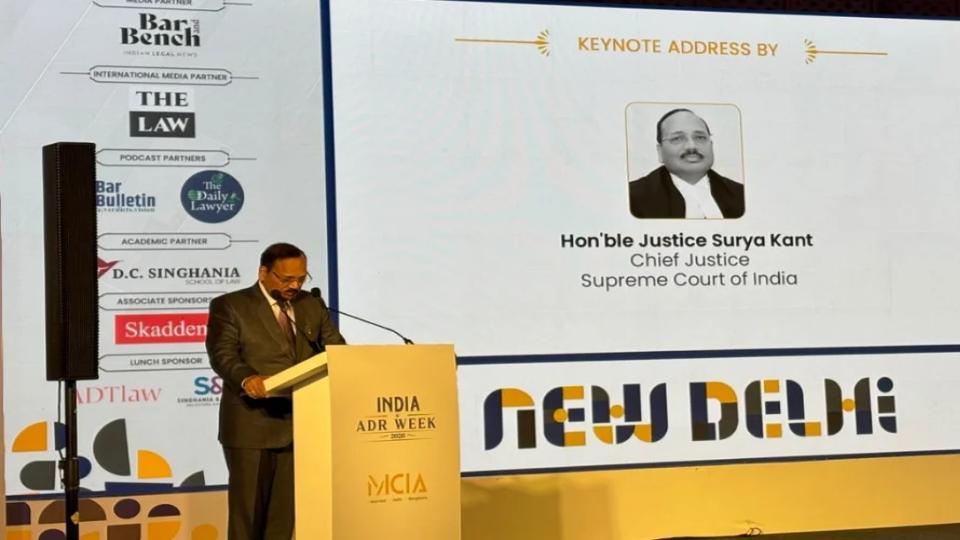
Speaking about India’s ambition to become a preferred international arbitral seat, the CJI said a strong legal framework alone would not be enough. “A seat is not chosen on paper alone. It is chosen on experience,” he said, emphasising the importance of efficient interim relief, credible arbitral institutions and proceedings that meet international expectations.
The CJI also highlighted the growing importance of disputes involving the energy and technology sectors. Rapid regulatory and technological developments, he noted, are creating increasingly complex disputes involving contracts, intellectual property, data and regulatory issues. He called for arbitral panels with genuine sector-specific expertise and urged institutions to develop specialised panels while providing transparent information about arbitrators’ experience.
Concluding on an optimistic note, Justice Suryakant said India already possesses many of the ingredients needed to emerge as a serious international arbitral seat, including a substantial volume of disputes, legal talent and increasingly strong arbitral institutions. He said these strengths must be supported by “confidence and discipline”, faster timelines, deeper sectoral expertise, greater transparency and institutions prepared to measure their performance against global standards.
The CJI urged the arbitration community to move beyond discussions and focus on measurable implementation. “Let us meet again next year not merely with more ideas, but with results to show for them,” he said.