News Citation : 2026 LN (HC) 444
September 11, 2026 : The Chhattisgarh High Court at Bilaspur has held that the statutory restriction on release of a seized vehicle under Section 6 of the Chhattisgarh Agricultural Cattle Preservation Act, 2004 applies to a vehicle actually used for transporting agricultural cattle, and cannot automatically be extended to another vehicle merely because it allegedly escorted the cattle-carrying vehicle. The Court consequently directed release of a seized Creta car after finding that the cattle were being transported in a different vehicle.
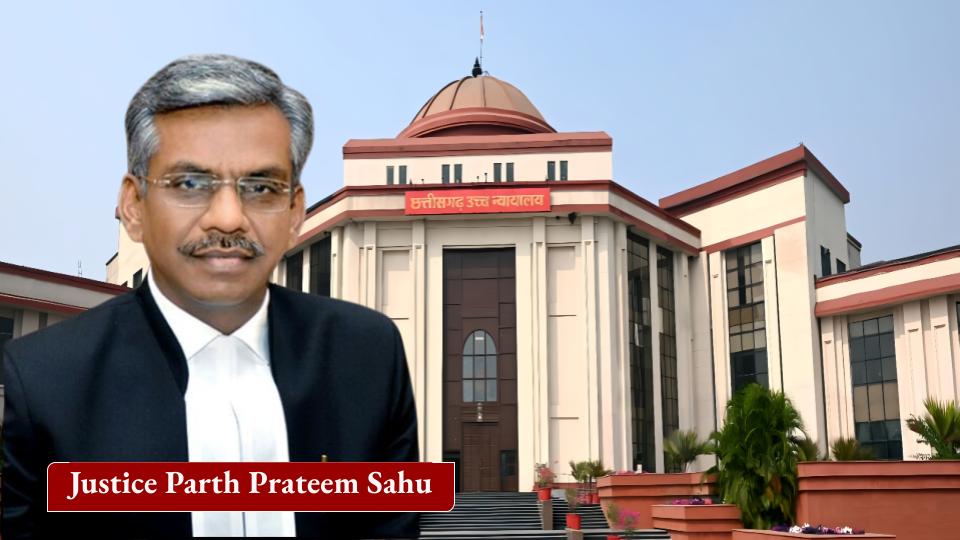
The order was passed by Justice Parth Prateem Sahu on September 11, 2026, in Criminal Miscellaneous Petition (CRMP) No. 1663 of 2026, filed by Suryajeet Patel against the State of Chhattisgarh. The petitioner had challenged the May 23, 2026 order of the Sessions Judge, Balrampur-Ramanujganj, which had rejected his revision against the refusal to release the Creta car bearing registration number CG-04-LD-3949 on supurdnama, or interim custody.
According to the petitioner’s case, police had intercepted a separate vehicle transporting seven agricultural cattle and registered a criminal case. The Creta car was intercepted at a different location and its driver was also made an accused. The vehicle was subsequently seized. The petitioner argued that the Creta was not being used for transporting cattle and therefore Section 6 of the 2004 Act could not be invoked to prevent its release.
The State opposed the petition and submitted that the Creta was being used to escort the vehicle in which the agricultural cattle were allegedly being transported. On this basis, the prosecution supported the lower court’s decision to deny interim custody of the car.
High Court Examines Scope of Section 6
The High Court closely examined Section 6 of the Chhattisgarh Agricultural Cattle Preservation Act, 2004. The provision prohibits the sale or transportation of agricultural cattle for slaughter in violation of the Act or with knowledge that the cattle are likely to be slaughtered. Sub-section (2) permits seizure of the vehicle or conveyance used for transporting such cattle, while sub-section (3) restricts court-ordered release of the seized vehicle on bond or surety for six months from seizure or until final judgment, whichever is earlier. The vehicle may also be liable for confiscation at the conclusion of the trial.
Justice Sahu observed that the language of Section 6 specifically connects the seizure provision with the vehicle in which the scheduled agricultural cattle are being transported. In the present case, however, the cattle were found in another vehicle and not in the Creta car for which interim custody had been sought.
The Court stressed that penal provisions must be interpreted strictly. Referring to the Supreme Court’s decision in W.H. King v. Republic of India and Another, reported in AIR 1952 SC 156, the High Court noted that when a statute creates an offence and imposes punishment, its words must be strictly construed and courts should focus on the language actually enacted by the legislature.
The Court also relied on State of West Bengal and Others v. Swapan Kumar Guha and Others, (1982) 1 SCC 561, where the Supreme Court explained that a person cannot be brought within a penal provision unless the alleged conduct falls within the plain and reasonable meaning of the statutory language. The High Court applied this principle while determining whether Section 6 could cover the Creta merely because it allegedly accompanied the cattle-carrying vehicle.
Reliance on Gujarat High Court Ruling
The High Court also considered the Gujarat High Court’s 2024 decision in Ravidasbhai Segjibhai Vasava v. State of Gujarat, 2024 SCC OnLine Guj 14545, which dealt with a similar provision under the Bombay Animal Preservation Act, 1954. The Gujarat High Court had held that the restriction on release of a seized vehicle applied where the animals were being transported for slaughter, and that the prosecution was required to place prima facie material connecting the transportation with the purpose of slaughter.
The Chhattisgarh High Court found this reasoning relevant to the present dispute. The central issue was not simply whether cattle transportation had taken place, but whether the statutory conditions for seizure and continued detention of the particular vehicle had been established under Section 6.
Supreme Court Guidelines on Release of Seized Vehicles
While considering the petition, the High Court also relied upon the Supreme Court’s landmark ruling in Sunderbhai Ambalal Desai v. State of Gujarat, (2002) 10 SCC 283. The Supreme Court had emphasized that courts should exercise their powers concerning seized property expeditiously and judiciously and should avoid allowing vehicles and other articles to remain unused for prolonged periods.
The High Court reproduced the Supreme Court’s observation that there is little benefit in keeping seized vehicles at police stations for long periods because they can deteriorate due to exposure and lack of use. Appropriate conditions, including bonds, guarantees and security for production of the vehicle when required, can instead be imposed while granting interim custody.
The Court also referred to Multani Hanifbhai Kalubhai v. State of Gujarat and Another, reported in 2013 (3) SCC 240, in which the Supreme Court similarly cautioned against keeping seized vehicles in open conditions at police stations for extended periods because they are vulnerable to natural deterioration.
High Court Orders Release of Creta
After examining the statutory provision and the judicial precedents, Justice Parth Prateem Sahu concluded that the lower court had erred in rejecting the application by relying upon Section 6 of the 2004 Act. The Court held that the provision, in the circumstances of the case, could not justify continued detention of the Creta when the agricultural cattle were allegedly being transported in another vehicle.
The Court further noted that the offence had been registered on February 24, 2026, and six months had already elapsed by the time of its order. Taking into account the Supreme Court’s principles concerning the prompt release of seized vehicles, the High Court directed the trial court to provide interim custody of the Creta car to the petitioner subject to reasonable conditions.
The High Court directed that the vehicle be released within 10 days from receipt of the order, provided the petitioner complied with the conditions imposed by the trial court. The petition was accordingly allowed to that extent.
The ruling is significant because it reinforces the principle that penal and confiscatory provisions cannot be expanded beyond their statutory language. At the same time, the order does not determine the guilt or innocence of the petitioner or conclude the underlying criminal proceedings. Its immediate effect is limited to the interim custody of the seized vehicle.
Case Reference: Suryajeet Patel v. State of Chhattisgarh, CRMP No. 1663 of 2026, Advocate: Mr. Rahul Mishra, for the petitioner; Mr. Pranjal Shukla, Panel Lawyer, for the State.