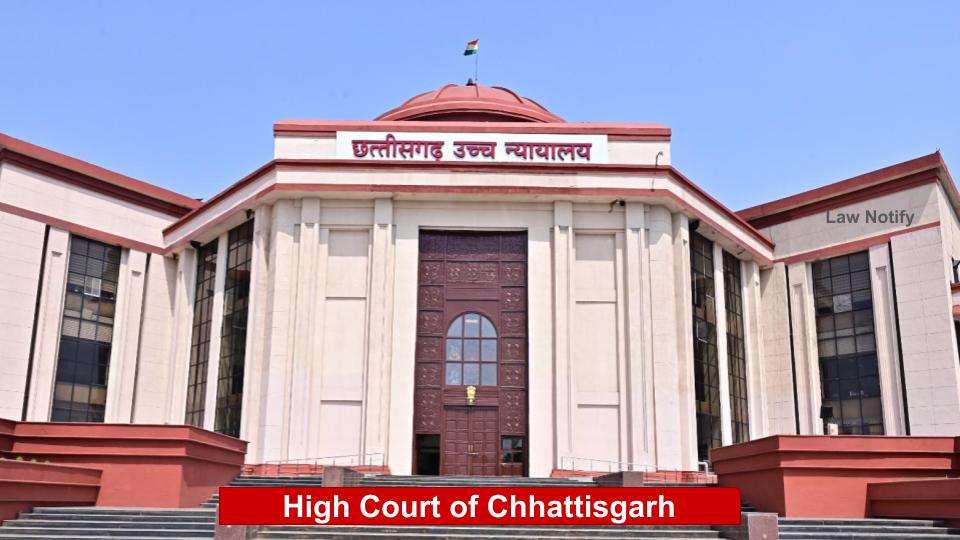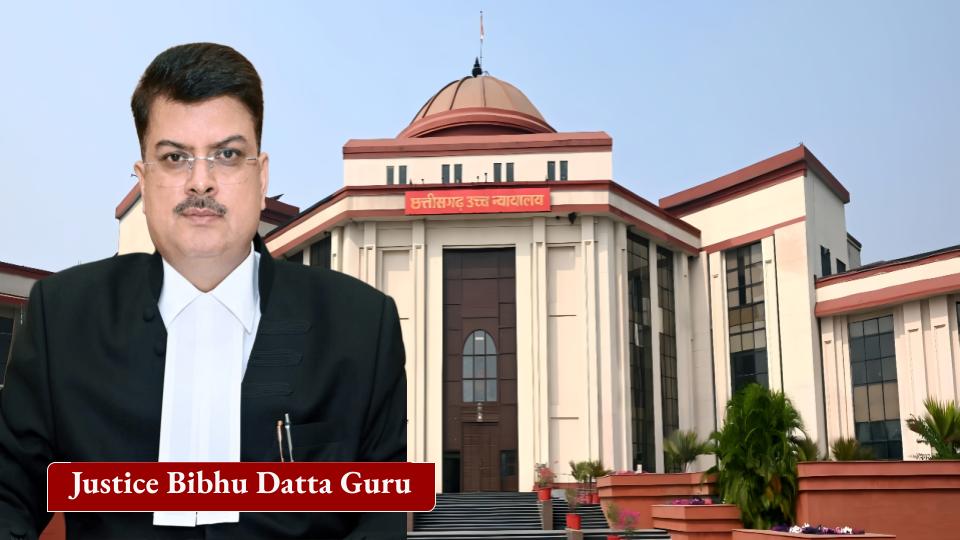
BIlaspur : The Chhattisgarh High Court at Bilaspur has dismissed a batch of writ petitions filed by serving government doctors seeking extension of their already sanctioned 24-month study leave to 36 months under a State Government relaxation issued in March 2025. Justice Bibhu Datta Guru held that the relaxation enhancing the maximum study leave for specified doctors to 36 months could not be applied retrospectively to leave that had already been sanctioned and availed before the new order came into force.
The petitions were filed by doctors serving under the Health and Family Welfare Department of Chhattisgarh. The doctors had obtained the necessary permission or No Objection Certificate from the competent authorities for pursuing postgraduate medical education and were granted study leave under the Chhattisgarh Civil Services (Leave) Rules, 2010. In the leading petition, WPS No. 5391 of 2026, the petitioner had been sanctioned 24 months of study leave from 2 December 2022 to 1 December 2024, followed by 12 months of extraordinary leave.
The dispute arose after the State Government issued an order dated 3 March 2025 relaxing Rule 44 of the 2010 Leave Rules. Under the order, serving doctors pursuing postgraduate MD/MS courses were permitted study leave for a maximum period of 36 months, subject to specified conditions. The order also stipulated conditions concerning five years of service after completion of study leave and recovery of government expenditure with 8% compound interest in certain circumstances.
The petitioners argued that the March 2025 relaxation was a beneficial measure and that similarly situated doctors had received the benefit of three years’ study leave. They contended that denying them the additional 12 months merely because their original study leave had been sanctioned before 3 March 2025 would amount to unequal treatment under Articles 14 and 16 of the Constitution. They also relied upon a departmental order dated 13 June 2025 under which an earlier two-year study leave followed by one year of extraordinary leave had been treated as three years of study leave.
The State Government opposed the petitions, arguing that the doctors had already exhausted their 24-month study leave under the rules applicable at the relevant time. According to the State, the March 2025 order did not automatically confer another 12 months of study leave on every employee who had previously availed 24 months. The State also pointed out that the departmental order relied upon by the petitioners had subsequently been cancelled after the Finance Department expressed disagreement with the decision.
The High Court accepted the State’s interpretation. The Court noted that the petitioners’ 24-month study leave had already been sanctioned and availed before the March 2025 relaxation came into existence. Therefore, their entitlement had already been determined under the earlier legal regime.
The Court emphasised that a subsequent beneficial or relaxing provision cannot ordinarily be used retrospectively to reopen a concluded entitlement unless the later order expressly or necessarily provides for retrospective operation. The Court observed, “The enhancement of the permissible ceiling to 36 months cannot, by itself, be construed as conferring an automatic right upon every employee who had already availed 24 months of study leave to claim another 12 months.”
The Court also distinguished between doctors whose three-year study leave had already been sanctioned and those, like the petitioners, who had originally received only 24 months of study leave. According to the Court, the two situations could not automatically be treated as identical. Converting every earlier 24-month sanction into a 36-month sanction would effectively reopen earlier administrative orders, which would require clear language in the Government order.
The High Court further rejected reliance on the June 2025 departmental order concerning Dr. Meenakshi Sood. That order had subsequently been reconsidered following the Finance Department’s communication dated 13 February 2026 and was cancelled with immediate effect on 31 July 2026. The Court held that an order which had ceased to operate could not create an enforceable right in favour of other employees merely on the ground of parity.
On the question of retrospectivity, the Court relied upon the Supreme Court’s decision in Assistant Excise Commissioner, Kottayam & Others v. Esthappan Cherian and Another, (2021) 10 SCC 210, and reiterated the established principle that a law or rule is generally presumed to operate prospectively unless a contrary intention is expressed or necessarily implied. The Court also referred to the principle that subsequent legislation or delegated legislation should not ordinarily alter past transactions or accrued rights without clear authority.
The Court found that the Government order dated 3 March 2025 contained no express provision converting every earlier 24-month study leave sanction into a 36-month sanction. Nor did the Court find any necessary implication requiring such retrospective enlargement. The subsequent communication dated 6 April 2026 was also held to be explanatory of the March 2025 order rather than an amendment or withdrawal of any existing benefit.
The High Court also rejected the petitioners’ reliance on the doctrine of legitimate expectation and their claim of discrimination under Articles 14 and 16. The Court explained that legitimate expectation cannot create a substantive right contrary to the governing rules, while a claim of discrimination requires the persons being compared to be similarly situated in all material respects. The date of NOC or permission, the date and nature of the study leave sanction and the legal regime applicable at that time were considered material factors.
Significantly, the Court held that its jurisdiction under Article 226 of the Constitution could not be used to enlarge the benefit of a Government relaxation beyond the terms in which the competent authority had granted it. The Court concluded that the March 2025 order was intended to operate for eligible candidates applying for study leave on or after 3 March 2025 and could not retrospectively enlarge study leave that had already been sanctioned and availed before that date.
Consequently, the High Court dismissed all the writ petitions and held that the doctors had failed to establish a legal entitlement to an additional 12 months of study leave. The Court also declined to award costs. The ruling provides an important clarification on the prospective operation of administrative relaxations and makes clear that an enhancement of the permissible ceiling of a statutory benefit does not, by itself, reopen earlier concluded cases.
For serving government doctors, the practical implication is that the 36-month study leave relaxation under the 3 March 2025 order cannot be claimed merely because a doctor had previously availed 24 months of study leave. Eligibility must be determined with reference to the terms of the Government order and the circumstances existing when the study leave was sought and sanctioned.
Case Reference: Dr. Bhumika Dewangan v. State of Chhattisgarh & Others, WPS No. 5391 of 2026, along with connected writ petitions including WPS Nos. 5446, 5443, 5441, 5440, 5439, 5437, 5431, 5422, 5421, 5418, 5415, 5400 and 5399 of 2026; For the Petitioners: Mr. S.C. Verma, Senior Counsel, with Mr. Sajal Kumar Gupta, Advocate. For the State: Mr. Y.S. Thakur, Additional Advocate General, with Ms. Apurva Nigam, Panel Lawyer.