News Citation : 2026 LN (HC) 288 | 2026:CGHC:20052
April 30, 2026 : The High Court of Chhattisgarh has set aside an order directing recovery of alleged excess salary from an excise department employee, holding that such recovery from a Class-III employee is impermissible in law when the overpayment was not due to any fault of the employee.
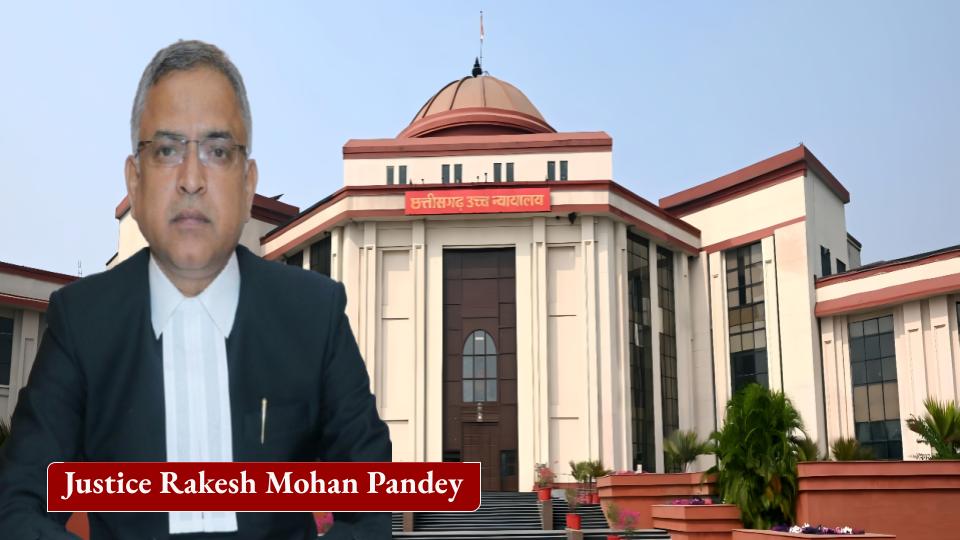
In a judgment delivered on April 30, 2026, Justice Rakesh Mohan Pandey allowed a writ petition filed by Gambhir Sai, an Excise Constable, challenging a 2021 order that cancelled his earlier pay fixation and directed recovery of excess payments.
The petitioner had initially been appointed in 1993 as a contingency-paid salesman when the state government took over liquor sales operations. Over time, his service conditions evolved, and in 2008, he was regularised as an Excise Constable. In 2018, the department issued an order counting his service from the initial appointment date for pay fixation, leading to a revision in salary that continued without objection.
However, in January 2021, authorities abruptly withdrew the 2018 order and ordered recovery of what they termed excess payments, without providing the petitioner an opportunity to be heard.
The state argued that the earlier pay fixation was erroneous and contrary to service rules, justifying its withdrawal and recovery. The petitioner, on the other hand, relied on the Supreme Court’s ruling in State of Punjab v. Rafiq Masih (White Washer), which laid down limits on recovery of excess payments from employees.
The High Court noted that the petitioner belonged to a Class-III category and had received the benefits through a valid departmental order. There was no allegation of misrepresentation or fraud on his part. The court emphasised that recovery in such cases would be unjust and contrary to the principles laid down by the Supreme Court.
It further observed that the impugned order had been passed without granting the petitioner an opportunity of hearing, adding to its legal infirmity.
Relying on established legal principles, the court held that recovery from Class-III employees, especially after a long period and in the absence of any wrongdoing, is not permissible. Accordingly, the 2021 order was quashed, and the authorities were directed to refund any amount already recovered.
The writ petition was allowed, with no order as to costs.