News Citation : 2026 LN (HC) 414
August 3, 2026 : In a significant ruling on the scope of Section 170-B of the Chhattisgarh Land Revenue Code, 1959, the Chhattisgarh High Court has held that proceedings for restoration of tribal land cannot be decided merely on the basis of old revenue entries or the absence of a registered sale deed. Instead, revenue authorities are legally required to conduct a comprehensive factual inquiry into how a non-tribal came into possession of land originally belonging to a Scheduled Tribe.
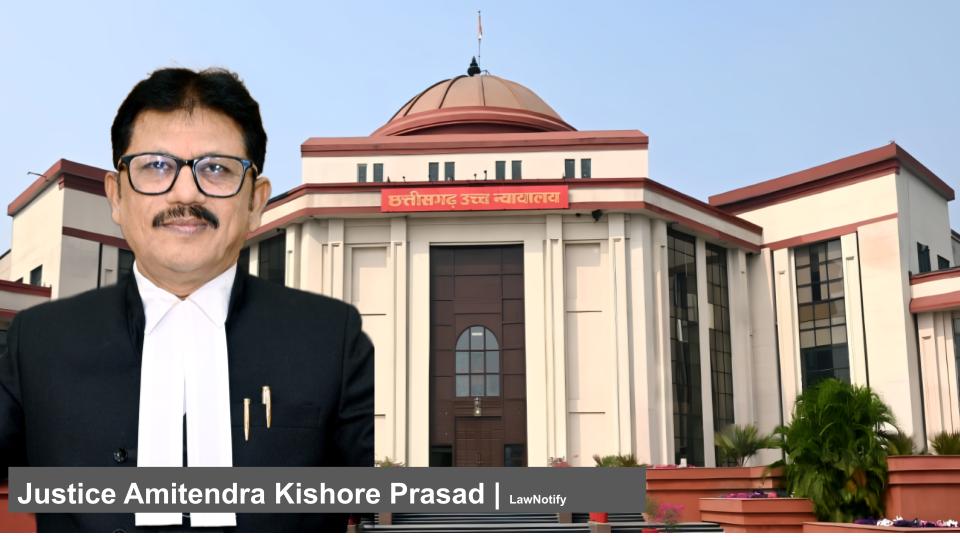
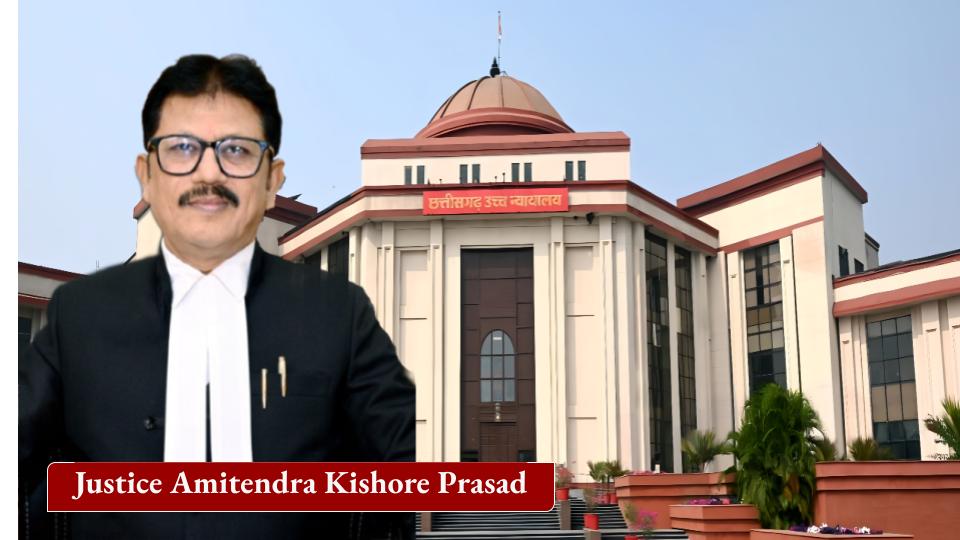
Delivering the judgment in Rajendra & Others v. Vimal & Others, WPC No. 1493 of 2022, decided on August 3, 2026, Justice Amitendra Kishore Prasad set aside the orders passed by the Board of Revenue, Commissioner, Collector and even the Sub-Divisional Officer (SDO), directing the SDO, Sitapur, Surguja, to conduct a fresh adjudication after examining all relevant evidence.
The dispute concerns agricultural land measuring 3.96 acres in Village Batauli, District Surguja. According to the respondents, the land originally belonged to their tribal ancestor, Late Pandra Oraon, whose name appeared in the Surguja State Settlement records of 1939. They alleged that after the family shifted to another village around 1975 due to financial hardship, members of the Roniyar community illegally managed to have the land mutated in their names and later sought restoration of possession under Section 170-B of the Chhattisgarh Land Revenue Code, 1959.
The petitioners denied any illegal transfer and asserted that there had never been a sale or other private transaction between the tribal landholders and their predecessors. They contended that during the statutory settlement proceedings of 1954-55, the competent Settlement Officer lawfully allotted the land to their predecessors through an order dated 8 April 1956, following which their names were entered in the Adhikar Abhilekh (Record of Rights). According to them, the land had vested in their family long before 2 October 1959, the date from which Section 170-B operates, making the restoration proceedings legally unsustainable.
Initially, the Sub-Divisional Officer accepted this contention and dismissed the restoration application in December 2014, holding that the alleged transfer or settlement had taken place before the enforcement of the Code and therefore Section 170-B was inapplicable. However, the Collector, Commissioner and subsequently the Board of Revenue reversed that decision, observing that the petitioners had failed to produce any legally recognised document such as a registered sale deed or gift deed establishing lawful acquisition of title. They consequently ordered restoration of the land to the tribal claimants.
Before the High Court, the petitioners argued that the revenue authorities had misunderstood the nature of their claim. They maintained that their rights flowed not from a private transfer requiring a registered conveyance but from statutory settlement proceedings conducted under the then applicable land revenue law. They further relied upon earlier High Court decisions holding that Section 170-B does not apply to transactions completed before 2 October 1959 and that statutory settlement records carry a presumption of correctness unless lawfully displaced.
The respondents and the State, on the other hand, contended that mere mutation entries or possession could not confer ownership over land originally belonging to a Scheduled Tribe. They argued that in the absence of any legally recognised transfer document, the petitioners had failed to establish a lawful source of title and that the concurrent findings of the Collector, Commissioner and Board of Revenue deserved no interference.
Examining the statutory framework, the High Court explained that Section 170-B is a beneficial provision enacted to protect Scheduled Tribes from fraudulent or unlawful alienation of their agricultural land. The Court observed that the jurisdiction under the provision extends far beyond examining the date of mutation or revenue entries. Instead, the prescribed authority must investigate the entire chain of events leading to possession, determine whether there was any lawful transfer, assess whether fraud or misrepresentation was involved, and evaluate the legal source of title claimed by the non-tribal occupant.
Justice Amitendra Kishore Prasad held that the Sub-Divisional Officer had committed an error by simply concluding that pre-1959 revenue entries automatically excluded the operation of Section 170-B without conducting a complete inquiry into how possession changed hands. At the same time, the appellate authorities also adopted an incorrect approach by focusing almost exclusively on the absence of a registered sale deed without properly examining the petitioners’ claim that the land had been acquired through statutory settlement proceedings.
Emphasising the correct legal position, the Court observed that “the enquiry contemplated under Section 170-B is therefore not confined to examination of revenue entries but extends to determination of the legality of possession, the existence or otherwise of a lawful transfer, the circumstances under which the tribal was allegedly divested of possession and whether such divestment was brought about by fraud.” The Court further stated that “mere reliance upon the date of mutation or the date of recording of names in the revenue records, without examining the surrounding circumstances leading to such entries, cannot satisfy the mandatory requirement of Section 170-B.”
The High Court also reiterated that although mutation entries do not by themselves create or extinguish title, revenue entries originating from statutory settlement proceedings cannot be ignored without examining the legality and evidentiary value of those proceedings. The Court relied on several earlier precedents of the Supreme Court, the erstwhile Madhya Pradesh High Court and the Chhattisgarh High Court interpreting Section 170-B as a welfare provision intended to safeguard tribal land rights while ensuring that non-tribal occupants receive a fair opportunity to establish lawful possession.
Finding that none of the revenue authorities had carried out the comprehensive inquiry mandated by law, the High Court quashed the orders of the Board of Revenue dated 3 March 2022, the Commissioner dated 9 July 2018, the Collector dated 8 March 2018, and even the SDO’s order dated 10 December 2014. The matter has been remanded to the Sub-Divisional Officer, Sitapur, for fresh adjudication after examining the original settlement records of 1954-55, the alleged settlement order dated 8 April 1956, the Adhikar Abhilekh, revenue records, oral and documentary evidence, and the rival claims regarding abandonment, lawful possession and alleged fraudulent deprivation of tribal land. The parties have been directed to appear before the SDO on 19 August 2026, and the authority has been requested to complete the inquiry within six months.
The ruling is likely to have significant implications for pending tribal land restoration disputes across Chhattisgarh. It clarifies that proceedings under Section 170-B cannot be decided mechanically either by relying solely on historical revenue entries or by insisting only on registered conveyance documents. Revenue authorities must instead conduct a detailed, evidence-based inquiry into the legality of possession and the origin of title before ordering restoration of tribal land.
Case Reference: Rajendra & Others v. Vimal & Others, WPC No. 1493 of 2022.