News Citation : 2026 LN (HC) 409
July 27, 2026 : The Chhattisgarh High Court has set aside the result of the Assistant Fisheries Officer selection process conducted by the State Government in 2025, holding that the authorities failed to comply with the binding directions issued by a Division Bench and violated the statutory recruitment rules governing the selection process. In a significant judgment reinforcing transparency and adherence to recruitment procedures, the Court directed the State to undertake a fresh exercise strictly in accordance with the Chhattisgarh Fisheries Non-Gazetted Class-III (Executive) Service Recruitment Rules, 2009 and earlier judicial directions.
The petitions arose out of a recruitment process that began with an advertisement issued on 3 March 2014 for eight posts of Assistant Fisheries Officer. The petitioners had applied for the posts but were declared ineligible in May 2014. Over the next several years, the dispute travelled through multiple rounds of litigation before the High Court, including writ petitions, writ appeals and contempt proceedings. While an earlier Single Judge had directed the State to appoint the petitioners, that order was later modified by a Division Bench, which instead directed the authorities to reconsider the petitioners’ candidature “along with all the other persons” participating in the recruitment process on their own merits.
Following the Division Bench’s order, the Fisheries Department conducted fresh interviews in April 2025 and subsequently published the results on 30 April 2025 and 19 May 2025. Challenging those results, the petitioners contended that the authorities merely carried out a superficial exercise instead of genuinely reconsidering their cases. They alleged that the interview process was altered midway by expanding the interview panel from three members to five members without statutory authority, and that the exercise was designed only to justify the earlier appointments rather than objectively evaluate all eligible candidates. They also argued that one of the original appointees had already been promoted before their cases were fairly reconsidered, defeating the purpose of the earlier court directions.
The State Government defended the selection process by asserting that it had fully complied with the Division Bench’s directions. It submitted that the petitioners were interviewed by a duly constituted committee and had secured fewer marks than the wait-listed candidate, making them unsuitable for appointment. The State also argued that the inclusion of two additional members in the interview panel was intended to provide subject expertise and did not affect the fairness of the selection process.
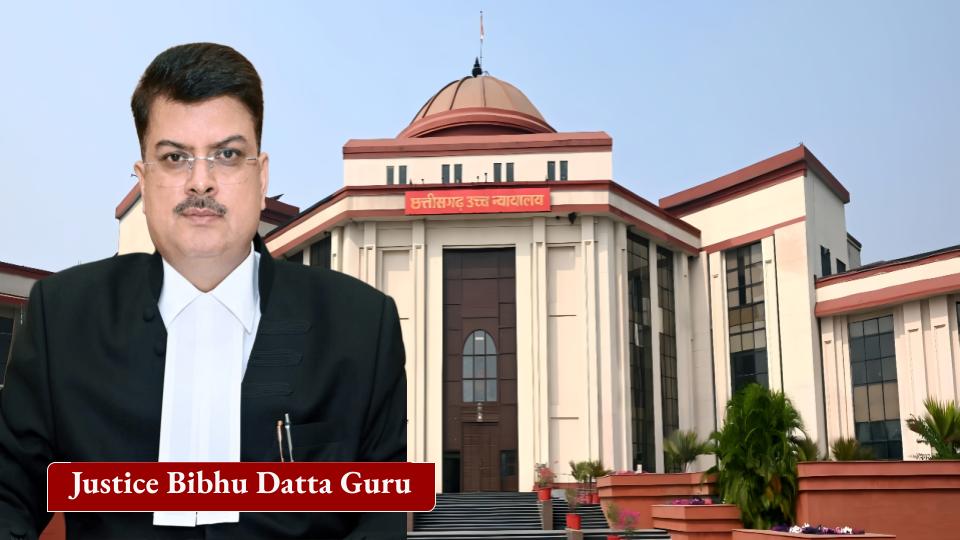
The High Court, however, found serious legal defects in the manner in which the reconsideration exercise had been undertaken. Justice Bibhu Datta Guru observed that the Division Bench had not merely directed a fresh interview of the petitioners but had specifically required a comprehensive reassessment of their candidature together with all candidates who formed part of the original recruitment process. The Court held that restricting the comparison only to a wait-listed candidate fundamentally departed from the Division Bench’s mandate.
Explaining the significance of the earlier appellate order, the Court observed that the phrase “along with all the other persons” could not be ignored or interpreted narrowly. According to the Court, the direction required a common comparative assessment of every candidate involved in the recruitment process so that the petitioners would be evaluated on equal terms with others. Since the authorities confined their exercise only to a comparison with a single wait-listed candidate, they failed to comply with the judicial directions.
The Court also examined whether the Interview Committee itself had been legally constituted. Referring to Rules 13 and 14 read with Schedule IV of the Chhattisgarh Fisheries Non-Gazetted Class-III (Executive) Service Recruitment Rules, 2009, the Court noted that the statutory scheme prescribed a three-member Selection Committee consisting of the Director of Fisheries as Chairman, the Joint Director and the Deputy Director as members. The respondents failed to identify any provision in the Rules authorising the addition of two extra members.
Relying upon the Supreme Court’s decision in Meera Sahni v. Lieutenant Governor of Delhi (2008) 9 SCC 177, the High Court reiterated the settled principle that where a statute prescribes the manner in which an act must be performed, it must be carried out in that manner alone. Quoting the well-established doctrine from Nazir Ahmad v. King Emperor, the Court emphasised that “where a power is given to do a certain thing in a certain way, the thing must be done in that way or not at all.”
Justice Guru concluded that the selection process suffered from two independent and substantial legal infirmities. First, the respondents failed to undertake the comparative reconsideration directed by the Division Bench. Second, the Interview Committee itself was not shown to have been constituted in accordance with the Recruitment Rules, 2009. Either defect was sufficient to invalidate the process, and together they rendered the entire exercise legally unsustainable.
Rejecting a preliminary objection raised by certain caveators appointed in 2018, the Court clarified that their appointments were not under challenge. The only issue before the Court was whether the authorities had faithfully implemented the earlier judicial directions while reconsidering the petitioners’ candidature. Therefore, the existing appointees had no independent right to resist adjudication merely because the outcome might incidentally affect them.
Allowing all three writ petitions, the High Court quashed the result published on 30 April 2025 and the consequential publication dated 19 May 2025. The State Government has been directed to conduct a fresh exercise strictly in accordance with the Recruitment Rules, 2009 and the binding directions issued by the Division Bench in Writ Appeal No. 673 of 2024.
The judgment reinforces an important principle of Indian administrative law that public recruitment must strictly adhere to statutory recruitment rules and judicial directions. It also serves as a reminder that government authorities cannot modify the composition of a selection committee or alter the prescribed recruitment procedure unless expressly authorised by law. The ruling is likely to have broader implications for recruitment disputes across government departments where deviations from statutory rules or court directions are alleged.
Case Reference: Devendra Kumar Sen v. State of Chhattisgarh & Others (WPS No. 7976 of 2025) along with Savitri Luxmi Chandrakar v. State of Chhattisgarh (WPS No. 7978 of 2025) and Jageshwar Prasad Sahu v. State of Chhattisgarh (WPS No. 8003 of 2025)