Bilaspur : The Chhattisgarh High Court at Bilaspur has quashed penalty and recovery orders imposed on liquor manufacturers for alleged loss and breakage of foreign liquor at depots of the Chhattisgarh State Beverages Corporation Limited (CSBCL), holding that mere breakage of bottles after delivery cannot automatically make the manufacturer liable. The Court ruled that the Excise authorities must establish that the loss was caused by defective or improper packing or a manufacturing defect before liability can be fastened on the seller. 1(10)
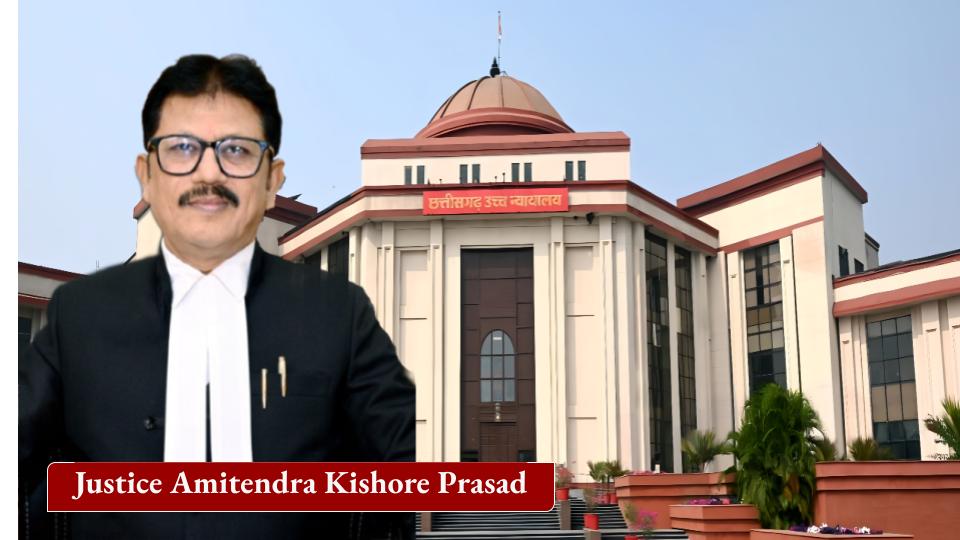
Justice Amitendra Kishore Prasad delivered the judgment on October 6, 2026, in a batch of writ petitions filed by Legend Distilleries Pvt. Ltd., Som Distilleries and Breweries entities and Scottmen Alco Bev Fillers Pvt. Ltd. against the State of Chhattisgarh, the concerned Collectors (Excise) and the Chhattisgarh State Beverages Corporation Limited. Since the petitions involved substantially the same grievance and common questions of law, the High Court heard and decided them together. 1(10)
The dispute arose from recovery and penalty orders passed by the Excise authorities under Rule 17(2) of the Chhattisgarh Foreign Liquor Rules, 1996. In the lead matter, the authorities had imposed a penalty of Rs. 6,24,785 in connection with alleged loss or breakage of 1,724.02 proof litres of foreign liquor. The manufacturers challenged the action before the High Court under Article 226 of the Constitution.
The manufacturers argued that their contractual responsibility was limited and that once the liquor had been delivered to and accepted by the CSBCL depot, the stock came under the custody and control of the Corporation. According to the petitioners, they could be held responsible for breakage after delivery only where the loss was attributable to defective or improper packing or a manufacturing defect. They relied particularly upon Clauses 2.3 and 3.10 of the agreement governing the supply of foreign liquor. 1(10)
Clause 2.3 provided that, until resale to third parties, “the risk and property in the stock lies with the purchaser”, while making an exception for godown breakages falling within Clause 3.10. Clause 3.10, in turn, placed responsibility on the seller for damage or breakage caused by defective or improper packing or by a manufacturing defect in the contents. The High Court found that these provisions did not create an absolute liability on the manufacturer for every bottle that was broken at a CSBCL depot. 1(10)
The Court noted that the alleged breakage in the lead case had occurred after the liquor had reached the CSBCL godown and during subsequent handling or movement. The impugned orders, however, did not contain a clear finding that the breakage had resulted from defective packing, improper packing or a manufacturing defect attributable to the manufacturers. The Court therefore found a material distinction between loss caused by a defect attributable to the seller and loss resulting from subsequent handling, custody or transportation by the Corporation or its agencies. 1(10)
An important issue before the Court was the effect of the petitioners’ failure to respond to the show-cause notices. The Excise authorities had treated the absence of a reply as supporting the conclusion that the manufacturers had accepted the alleged liability. The High Court rejected this approach.
The Court observed that “non-filing of a reply could at the highest entitle the authority to proceed ex parte.” It made clear that an absence of response could not create facts that were never alleged in the show-cause notice and could not substitute for the authority’s obligation to establish the ingredients necessary for imposing liability. Silence, the Court held, could not by itself establish defective packing, a manufacturing defect or a causal connection between such defect and the breakage. 1(10)
The Court also examined Rules 17 and 19 of the Chhattisgarh Foreign Liquor Rules, 1996. Rule 17(2) provides that no wastage allowance is permissible for storage of bottled foreign liquor with specified licensees and permits recovery of duty and bottle fee where a deficiency is found. Rule 19 deals with penalties for contravention of the Act, Rules or relevant orders. The High Court accepted that the Excise authorities possess statutory powers to recover amounts and impose penalties in appropriate cases, but held that those powers must be exercised after determining the facts and applying the relevant contractual provisions correctly. 1(10)
The Court further rejected the State’s preliminary objection that the writ petitions should be dismissed because the petitioners had an alternative statutory remedy of appeal. Referring to Supreme Court decisions including Harbanslal Sahnia v. Indian Oil Corporation Ltd., Godrej Sara Lee Ltd. v. Excise and Taxation Officer-cum-Assessing Authority and State of Uttar Pradesh v. Ehsan, the Court reiterated that the rule requiring exhaustion of an alternative remedy is one of judicial discretion and not an absolute bar to writ jurisdiction. 1(10)
The High Court found that the present cases involved a common legal issue capable of determination from the contractual documents and the admitted record. It therefore held that the availability of an alternative remedy did not prevent it from exercising jurisdiction under Article 226.
The Court also declined to reject the petitions merely because multiple orders had been challenged in the batch. Since the contractual framework, grievance and legal questions were substantially common and the matters had already been heard together, the objection was treated as a technical ground that did not warrant non-suiting the petitioners. 1(10)
On the merits, the High Court concluded that the impugned orders could not stand because the authorities had failed to establish the essential contractual basis for shifting liability to the manufacturers. The Court emphasized that the mere existence of shortage or breakage was insufficient. The authority had to determine whether the loss was actually caused by defective or improper packing or by a manufacturing defect.
The Court specifically held that the signing of a panchnama by a manufacturer’s representative may establish that the breakage was noticed and recorded, but it does not, by itself, establish the cause of the breakage. The contractual conditions governing liability still had to be examined. 1(10)
In a significant observation concerning administrative and fiscal orders, the Court held that an order carrying civil and financial consequences must demonstrate proper consideration of the relevant facts and applicable legal and contractual provisions. Liability cannot be imposed merely because a deficiency has been recorded without determining the legal basis for attributing that deficiency to the concerned party. 1(10)
Accordingly, the High Court allowed all the writ petitions and quashed the respective orders passed by the Collectors imposing or recovering penalties from the petitioners for the alleged loss or breakage of foreign liquor. The petitioners were absolved of the liability imposed under those orders, and consequential recovery proceedings were also quashed.
The Court, however, clarified that its judgment would not prevent the competent authority from taking action in accordance with law in respect of any future deficiency, provided the matter is adjudicated strictly in accordance with the statutory provisions and applicable contractual terms. 1(10)
The judgment is significant for excise administration and government procurement contracts involving liquor manufacturers because it makes clear that contractual allocation of risk cannot be ignored while exercising statutory recovery or penalty powers. For manufacturers and suppliers, the ruling means that post-delivery breakage cannot by itself be treated as proof of contractual liability. For Excise authorities and state corporations, it underscores the need to establish the precise cause of loss and comply with the contractual and statutory requirements before imposing financial liability.
The petitioners were represented by Senior Advocate Shri Kishore Bhaduri along with Advocate Shri Harsh Dave. The State was represented by Deputy Advocate General Shri Anand Dadariya, while the CSBCL was represented by Shri Syed Majid Ali and Ms. Kajal Chandra appearing for Shri Malay Shrivastava, Advocates. 1(10)
Case Reference: Legend Distilleries Pvt. Ltd. & Others v. State of Chhattisgarh & Others, batch of WPCs including WPC No. 1216/2021.